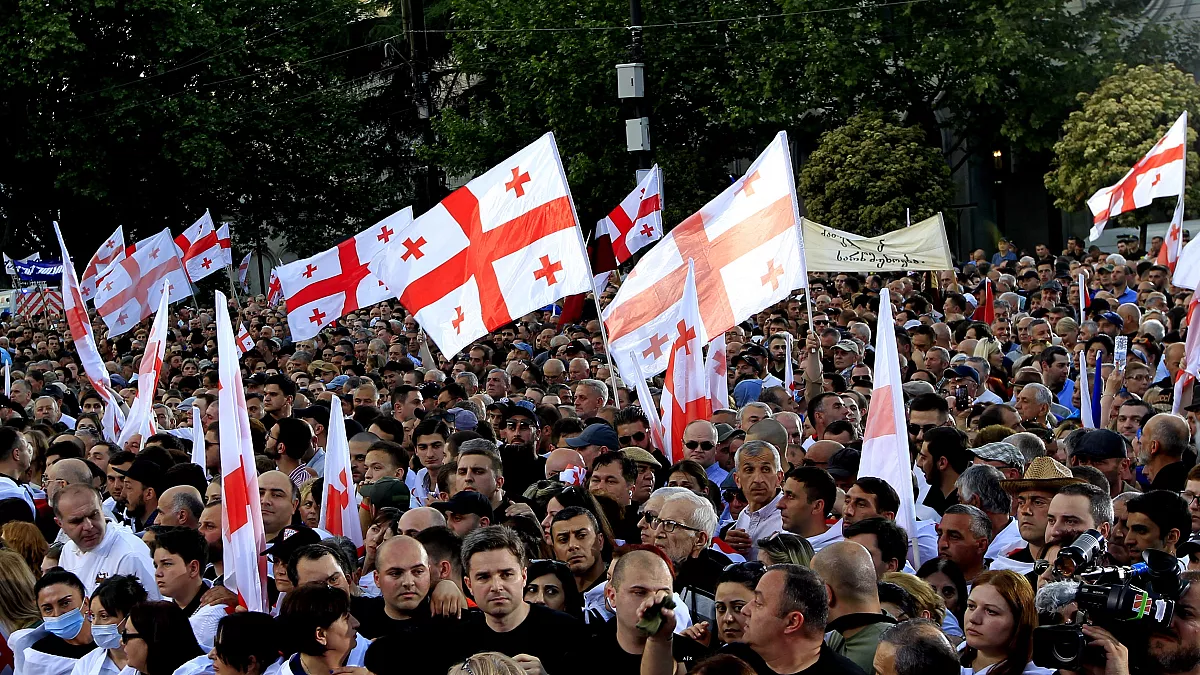
Economically and strategically, Europe may need Georgia more than at any time since the country became independent.
The latest sign of political deterioration comes from Germany. The Konrad Adenauer Foundation, closely associated with Germany's governing Christian Democratic tradition, is closing its office in Tbilisi after years of activity in Georgia.
It comes amid a much broader confrontation between the Georgian government and European institutions over democratic standards, civil society, foreign-funded organisations and Georgia's stalled path toward EU membership.
Only a few years ago Georgia was regarded as one of the most pro-European countries in the former Soviet Union.
Yet look at a map of Europe's emerging Eurasian strategy and another Georgia appears.
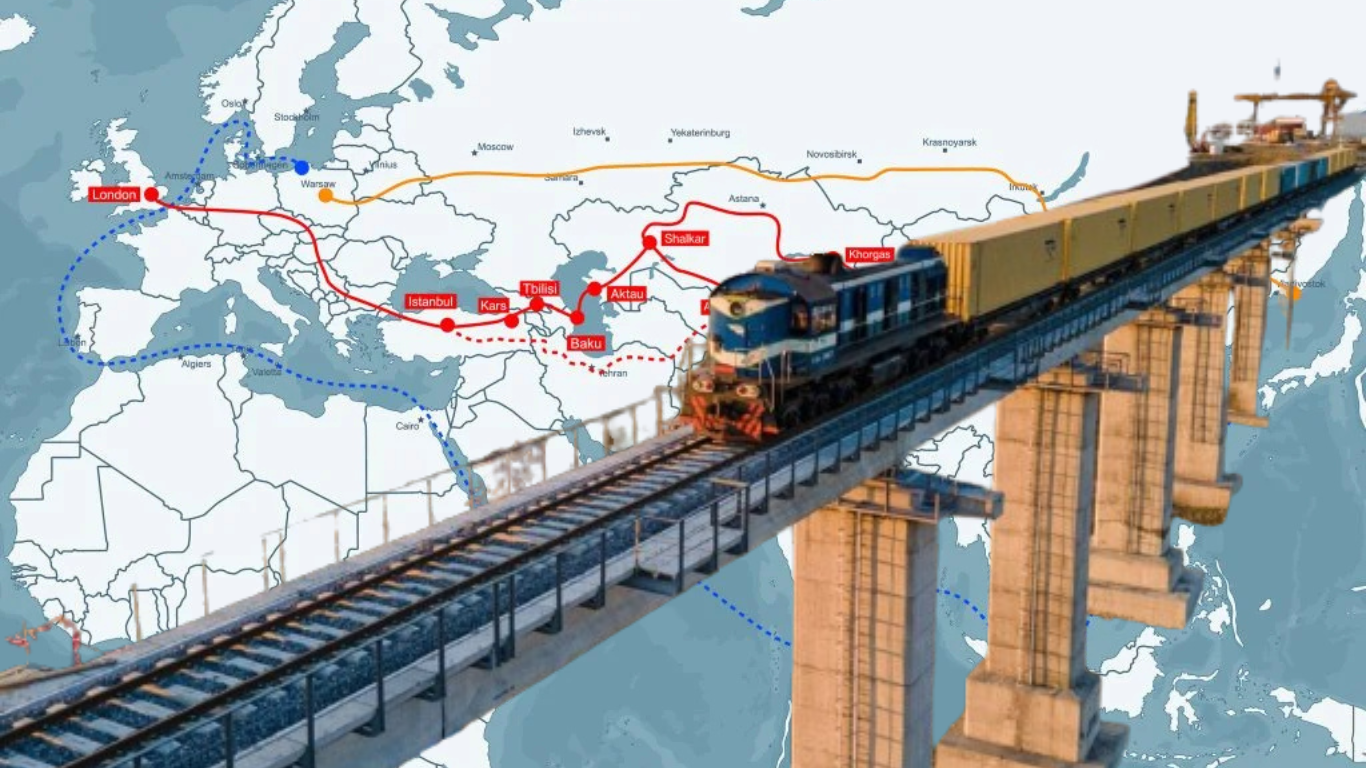
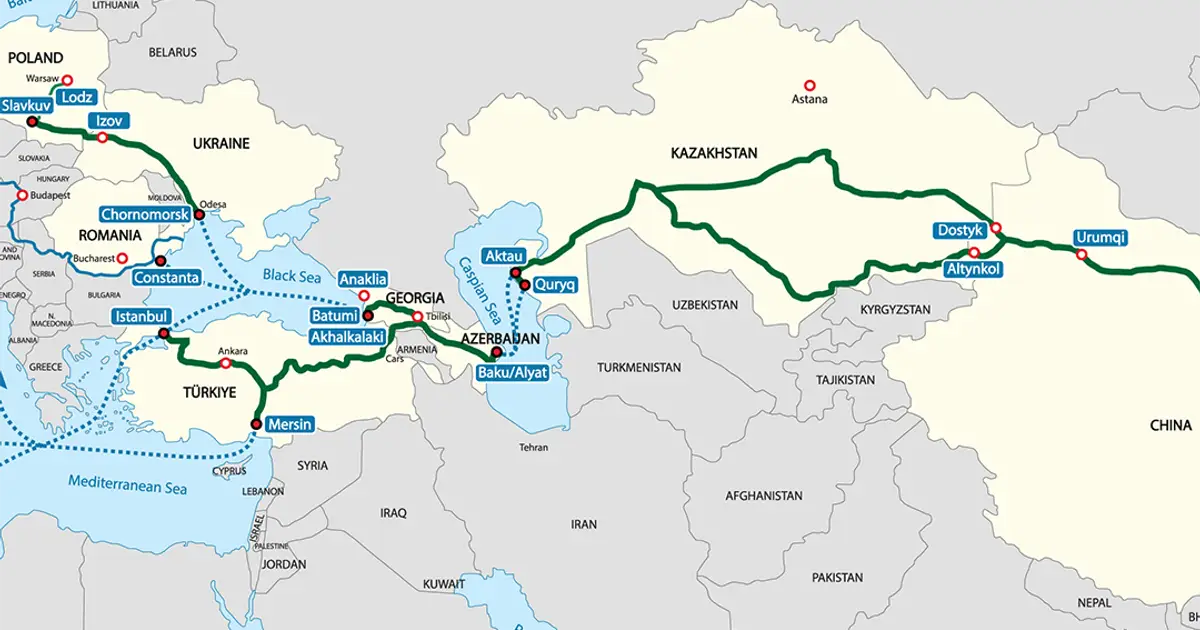
Europe wants a transport corridor connecting Central Asia with the European market without crossing Russia.
Start in Kazakhstan.
Move freight across the Caspian Sea to Azerbaijan.
Then try reaching Europe.
Georgia suddenly becomes extremely difficult to avoid.
The Baku–Tbilisi–Kars railway connects Azerbaijan through Georgia with Turkey. Georgian Black Sea ports provide another gateway into European maritime networks.
“It received EU candidate status in 2023. Today the accession process is effectively frozen.”
EuroAsia.News, reporting from Brussels
The same geography applies to energy.
The Southern Gas Corridor carrying Caspian gas toward Europe crosses Georgia.
Plans for a Black Sea electricity cable connecting the South Caucasus with the EU also rely heavily on Georgia.
The country is therefore simultaneously becoming politically more problematic for Brussels and strategically more important.
That contradiction could intensify.
The EU wants access to Central Asian critical minerals, energy and rapidly growing markets. European policymakers also want transport systems resilient to disruptions in Russia and the Middle East.
The Middle Corridor offers part of the answer.
But a corridor is only as politically secure as the countries through which it passes.
Georgia knows this.
Its government has increasingly cultivated relationships not only with Azerbaijan and Turkey but with Kazakhstan, Uzbekistan, China and other Asian partners.
China is particularly important.
Beijing and Tbilisi signed a strategic partnership in 2023, and Chinese involvement in Georgian infrastructure and investment has expanded. Georgia can therefore argue that it possesses alternatives if Brussels makes European integration increasingly difficult.
For the EU, the calculation is uncomfortable.
Economic disengagement from Georgia could weaken European influence over exactly the transport corridor Europe wants to develop.
But ignoring concerns about Georgia's domestic political direction would undermine the EU's claim that membership and deeper integration depend on democratic standards.
This is not the first time geography has collided with values in European foreign policy.
Azerbaijan has become increasingly important to European energy security despite persistent criticism of its political system.
Turkey remains indispensable to European security, migration policy and trade despite years of political disputes with Brussels.
Georgia may be moving toward a similar category: a country Europe finds difficult politically but cannot easily bypass strategically.
There is another complication.
Georgia's geography is valuable precisely because Russia remains dominant immediately to its north and controls Abkhazia and South Ossetia, territories internationally recognised as Georgian.
That means weakening Georgia's Western orientation could eventually undermine the very objective behind Europe's Middle Corridor strategy — reducing strategic dependence on Russia.
The result is a policy paradox.
Brussels wants a Georgia that is democratic, European-oriented and deeply connected to the EU.
The Georgian government increasingly insists that it will determine its domestic politics independently and diversify its international relationships.
Meanwhile freight trains, pipelines and electricity cables care little about political arguments.
They follow geography.
And geography gives Georgia something Brussels cannot sanction away.
Europe can freeze Georgia's accession process. It cannot move Georgia off the map.