The United States and Armenia are expanding discussions on cooperation in critical minerals as Washington searches globally for supply chains that reduce dependence on China and other concentrated sources.
For Armenia, the opportunity could add an entirely new economic dimension to its rapid geopolitical repositioning.
The country is already an important mining producer.
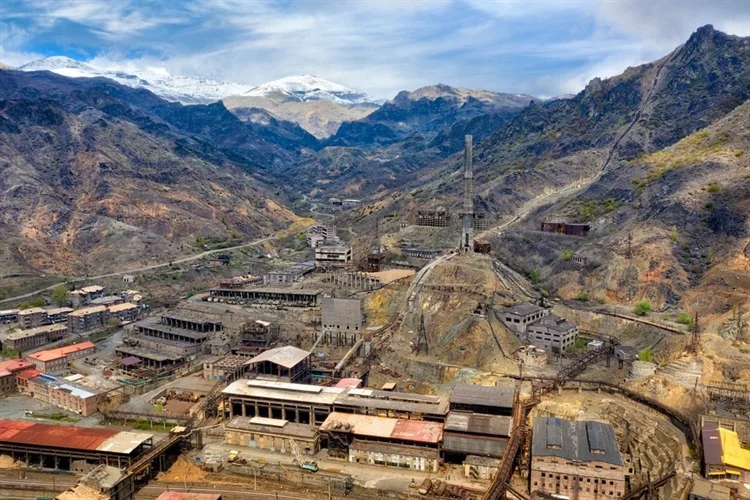
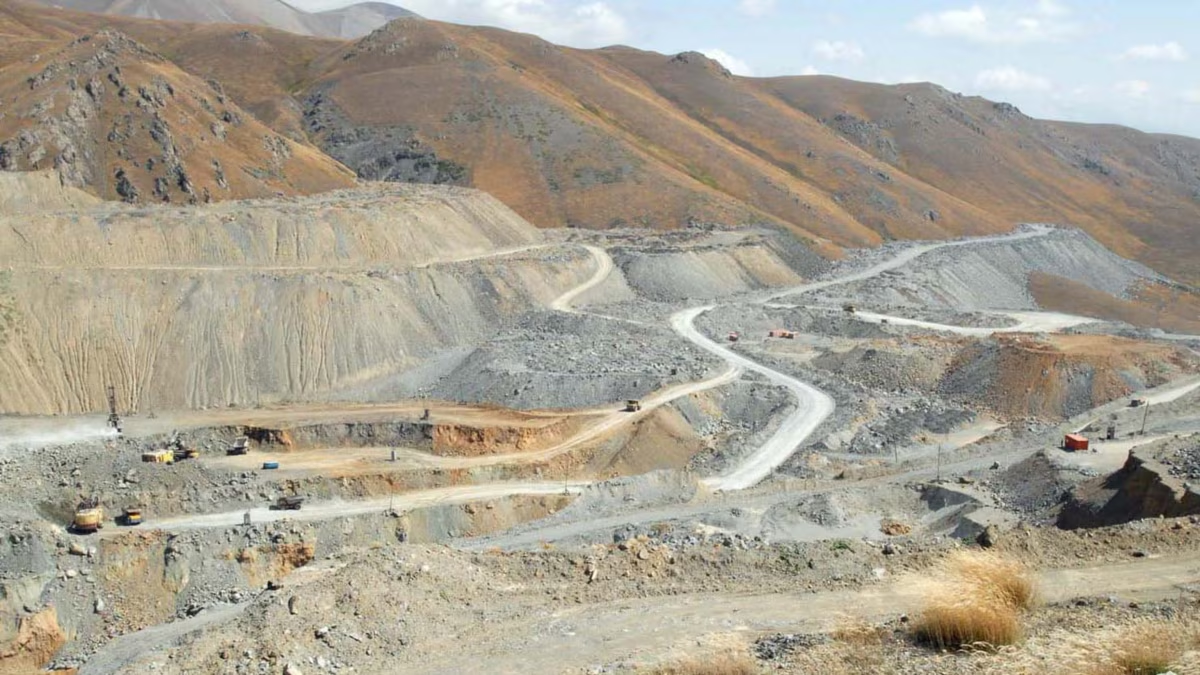
Copper, molybdenum and gold are among Armenia's principal mineral resources and mining products account for a significant part of exports. The Zangezur Copper-Molybdenum Combine is one of the country's largest industrial enterprises and taxpayers.
Molybdenum is particularly interesting.
It is used to strengthen steel and improve resistance to heat and corrosion, making it important for energy infrastructure, aerospace, defence equipment and advanced industrial applications.
Renewable electricity networks, charging infrastructure, data centres and the enormous grid expansion associated with electrification are all increasing long-term demand.
The International Energy Agency has repeatedly warned that supplies of several critical minerals could become a bottleneck for the global energy transition.
“Copper is even more strategically important. Electric vehicles require substantially more copper than conventional combustion-engine vehicles.”
EuroAsia.News, reporting from Jerevan
That has turned geology into geopolitics.
China dominates the processing of many critical minerals and rare earth elements. The United States and European Union are therefore trying to diversify extraction, processing and refining through partnerships stretching from Australia and Canada to Africa and Central Asia.
The South Caucasus is now entering that competition.
Armenia offers several attractions.
It possesses an established mining industry, a technically educated workforce and geographic proximity to both Europe and the rapidly developing Central Asian resource region.
Its foreign policy is also changing.
For decades Armenia depended heavily on Russia for security, energy and trade. Relations deteriorated sharply after the Karabakh crisis and Yerevan's conclusion that Moscow had failed to provide the security guarantees Armenia expected.
Since then Prime Minister Nikol Pashinyan's government has expanded cooperation with the EU and United States while simultaneously pursuing normalisation with Azerbaijan and Turkey.
Critical minerals fit almost perfectly into that strategy.
Western investment could diversify Armenia's economy while tying the country more closely to American and European industrial supply chains.
But geology alone does not create a mining boom.
New mines require enormous capital, transport infrastructure, electricity and sometimes more than a decade of permitting and construction.
Environmental concerns are particularly important in Armenia, where mining projects have repeatedly generated public opposition.
The controversial Amulsar gold project demonstrated how quickly questions of water, ecosystems, foreign investment and national economic interests can become politically explosive.
Processing is another problem.
Extracting ore while sending concentrates abroad for refining captures only part of the economic value. Armenia would benefit far more if investment created processing, engineering and manufacturing industries inside the country.
Transport could determine whether that becomes possible.
A lasting Armenia–Azerbaijan peace settlement and reopening of regional connections would transform Armenia from a country constrained by closed Turkish and Azerbaijani borders into a potential participant in east-west Eurasian trade.
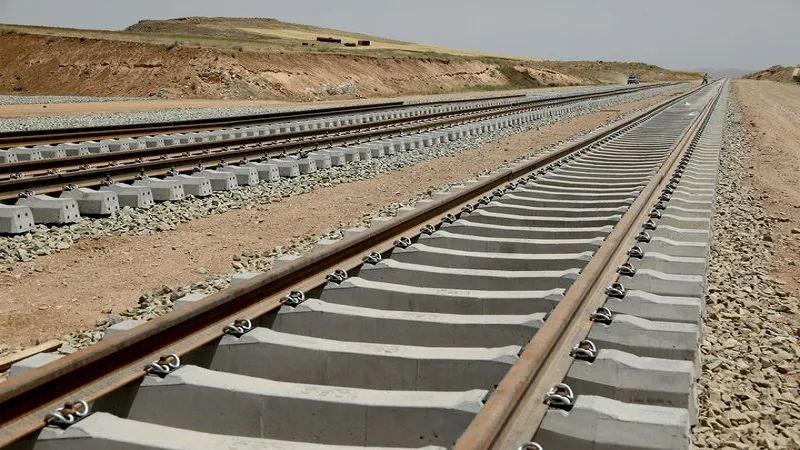
TRIPP and other proposed transport projects could eventually connect Armenian production more efficiently with Azerbaijan, Turkey, Central Asia and European markets.
That means three developments usually reported separately may actually be interconnected:
peace, transport and minerals.
Washington's interest in Armenian resources is therefore not simply another mining story.
It forms part of a much larger contest over who supplies the raw materials required for the twenty-first-century economy.
Armenia cannot compete with China on scale.
It does not need to.
In a world where governments increasingly value secure and diversified supply more than the absolute lowest price, smaller producers can acquire strategic importance far beyond their production volumes.
For most of its modern history Armenia's strategic value came from where it was located.
The next chapter may depend increasingly on what lies beneath it.