A package of transport agreements worth $462 million is giving fresh momentum to the Trans-Caspian International Transport Route, as Kazakhstan and its European partners seek to turn the Middle Corridor from an alternative trade route into a permanent artery between Asia and Europe.
The four agreements were presented in Brussels during President Kassym-Jomart Tokayev’s June visit to Belgium. They cover road infrastructure, Black Sea logistics, container shipping and the digitalisation of airports — a mix that illustrates how the Middle Corridor is evolving beyond a railway project into a broader transport ecosystem.
The 234-kilometre section forms part of the Western Europe–Western China corridor and is intended to improve both domestic connections and international transit capacity.
“One of the largest components is an agreement between Kazakhstan’s road operator QazAvtoZhol and the European Bank for Reconstruction and Development for the Aktobe–Ulgaisyn road project.”
EuroAsia.News
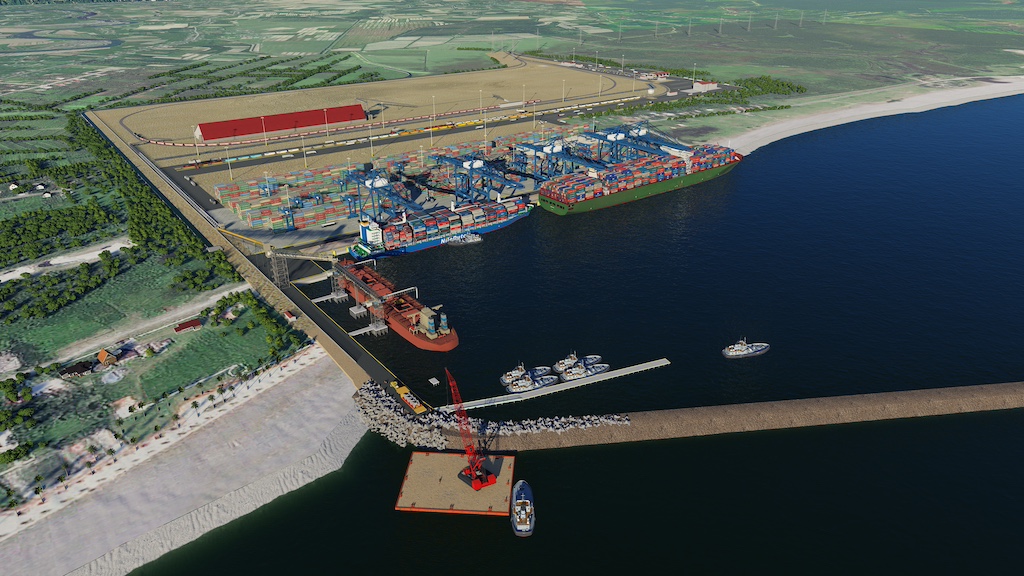
Kazakhstan Temir Zholy subsidiary KTZ Express also signed an agreement with Midia Marine Terminal to develop a joint project at Romania’s Port of Midia. The Black Sea connection is strategically important because cargo moving west across the Caspian and through the South Caucasus ultimately needs efficient access into European logistics networks. A separate agreement between KTZ Express and A.P. Moller–Maersk targets additional container traffic along the Trans-Caspian route.
The fourth document, between Kazakhstan’s Ministry of Transport and aviation technology provider SITA, focuses on digitalising state airports, including biometric identification. Although aviation is not a core element of the Middle Corridor, the agreement reflects Kazakhstan’s wider ambition to modernise the country as a multimodal Eurasian transport hub.
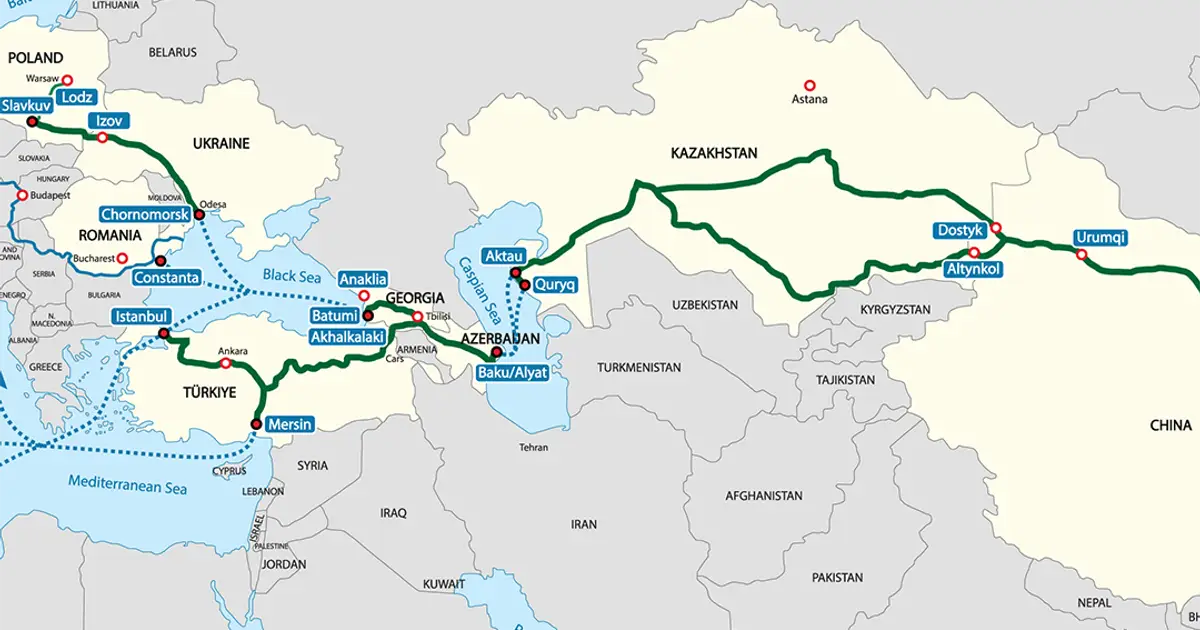
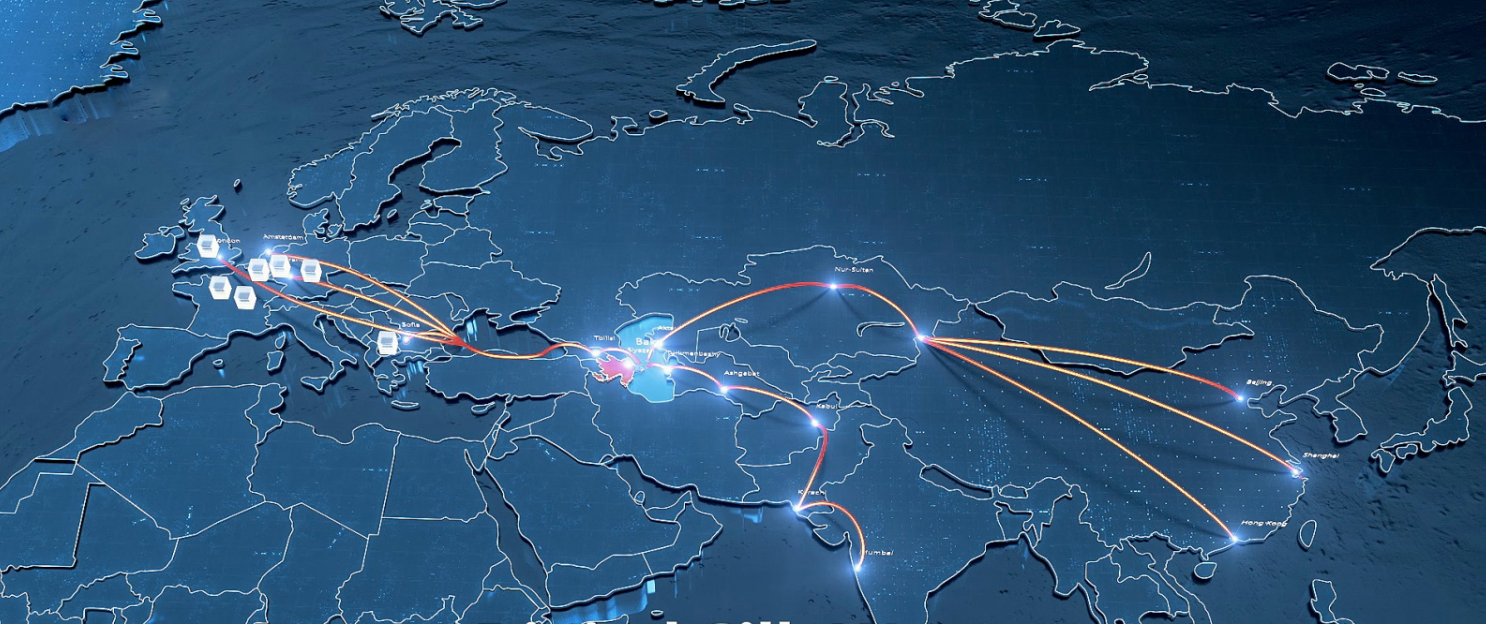
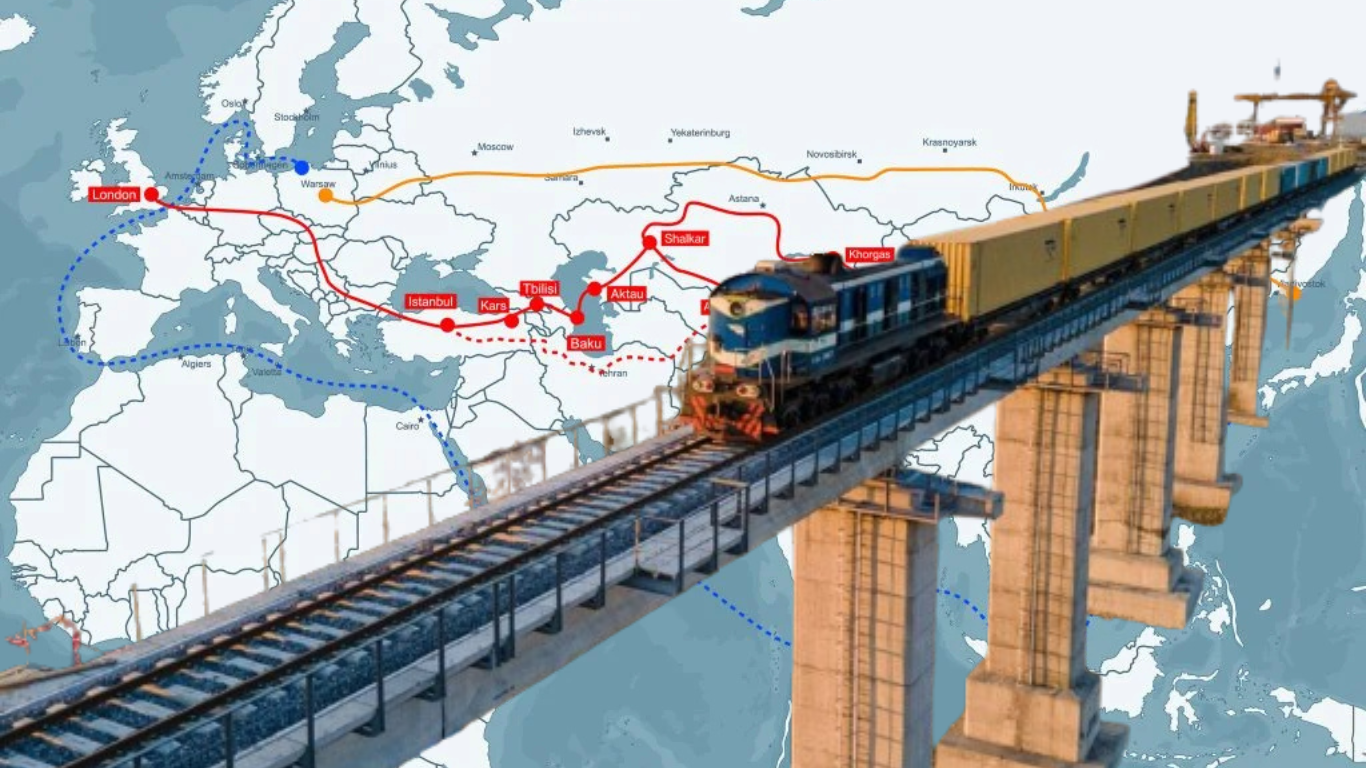
The route itself runs from China through Kazakhstan, across the Caspian Sea to Azerbaijan and Georgia, before reaching Europe through the Black Sea or Türkiye. Its strategic value has risen sharply as companies and governments look for diversified supply chains between Asia and Europe.
The attraction is no longer purely geopolitical. Freight volumes on the Trans-Caspian corridor have risen more than threefold in recent years, while investments in ports, railways, terminals, customs systems and digital documentation have reduced transit times. The EU is also supporting the corridor through its Global Gateway strategy, including a €30 million Trans-Caspian transport programme and work linked to Aktau port and cross-border procedures.
Kazakhstan sits at the centre of this transformation. The EU was already the country’s largest trade and investment partner, with bilateral trade reaching $45.1 billion in 2025 and cumulative EU foreign direct investment exceeding $200 billion.
The $462 million package will not by itself determine the future of Eurasian logistics. The Middle Corridor still faces bottlenecks at ports, border crossings and trans-shipment points, and its competitiveness depends on reliable schedules and coordinated tariffs across several countries. But the significance of the Brussels agreements is that investment is moving from political declarations into specific infrastructure and operating partnerships.
For Europe, that means another route into Central Asia and China. For Kazakhstan, it strengthens an ambition that has been building for years: to become not simply a country that freight crosses, but one of the principal logistics platforms connecting the two ends of Eurasia.