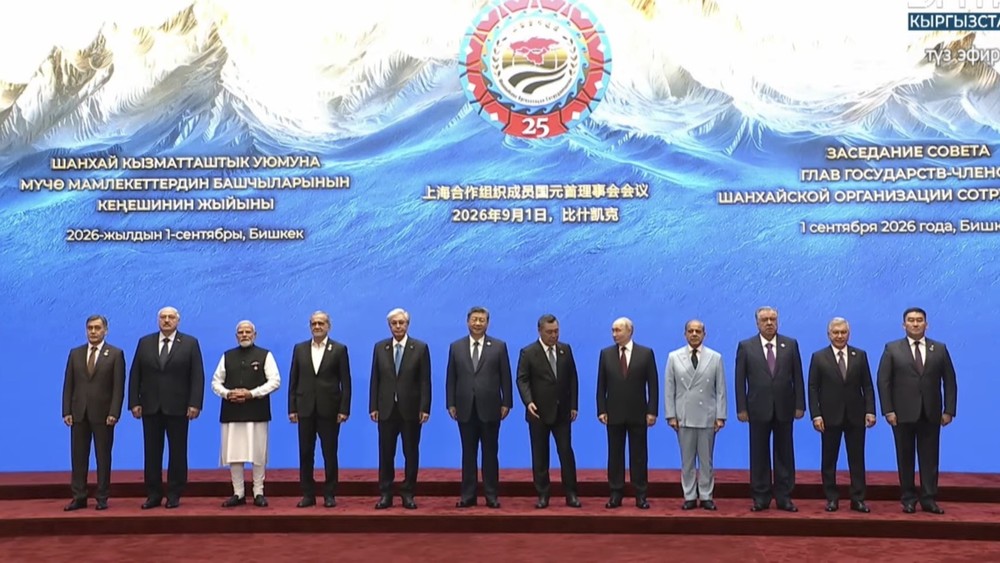
The 26th SCO Council of Heads of State meeting, held in Bishkek on August 31 and September 1, brings together the leaders of the organisation's ten members: China, Russia, India, Pakistan, Iran, Belarus, Kazakhstan, Kyrgyzstan, Tajikistan and Uzbekistan.
Chinese President Xi Jinping, Russian President Vladimir Putin and Indian Prime Minister Narendra Modi are among the most important participants, while the expanded SCO Plus meeting brings additional partner countries and international organisations into the discussions. Leaders or senior representatives of 17 countries, together with UN Secretary-General António Guterres, have been expected in Bishkek.
The anniversary is significant because the organisation today bears little resemblance to the original "Shanghai Five" border-security mechanism from which it emerged.
Its ten member countries cover approximately 36 million square kilometres, contain more than 3.4 billion people and generate roughly 25% of global GDP. SCO members account for more than 15% of international trade.
“3.4 Billion People and a Quarter of World GDP The numbers illustrate the SCO's potential.”
EuroAsia.News, reporting from Bishkek
The broader SCO family now encompasses 27 countries through full membership, observer and dialogue-partner arrangements, extending from China and Russia through Central and South Asia to the Middle East and parts of Southeast Asia.
Its economic weight is matched by extraordinary natural resources.
Estimates suggest SCO countries contain around one-fifth to one-quarter of global oil reserves, roughly half of known natural-gas reserves, more than a third of coal reserves and a very large share of global uranium resources. The bloc simultaneously includes major energy exporters — Russia, Iran and Kazakhstan — and two of the world's largest energy consumers, China and India.
This creates something unusual: producers, consumers and the countries controlling many of the transport corridors between them all sit within the same organisation.
From Security to Economics
Security nevertheless remains the SCO's original core mission.
Terrorism, separatism and extremism remain priorities, but the agenda has broadened to include cybersecurity, organised crime, narcotics trafficking and border security. In 2026, SCO anti-narcotics agencies agreed to strengthen intelligence exchange and prepare another joint international operation against cross-border drug trafficking.
The organisation is also modernising its security structure. New SCO centres agreed during the previous Tianjin summit cover security threats, transnational organised crime, information security and narcotics control.
But the greatest unfinished business is now economic.
The Roadmap to 2035
At the 2025 Tianjin summit, SCO leaders adopted a Development Strategy for 2026–2035, effectively providing the roadmap for the organisation's second quarter-century.
Its priorities include easier trade and investment, energy cooperation, transport corridors, digitalisation, artificial intelligence, green industries, technological cooperation and stronger financial mechanisms. An SCO energy roadmap to 2030 was also approved.
China says implementation is already producing results. Nearly three quarters of a planned 10 GW programme of solar and wind projects connected with SCO cooperation had been implemented by mid-2026.
Transport may ultimately prove even more important.
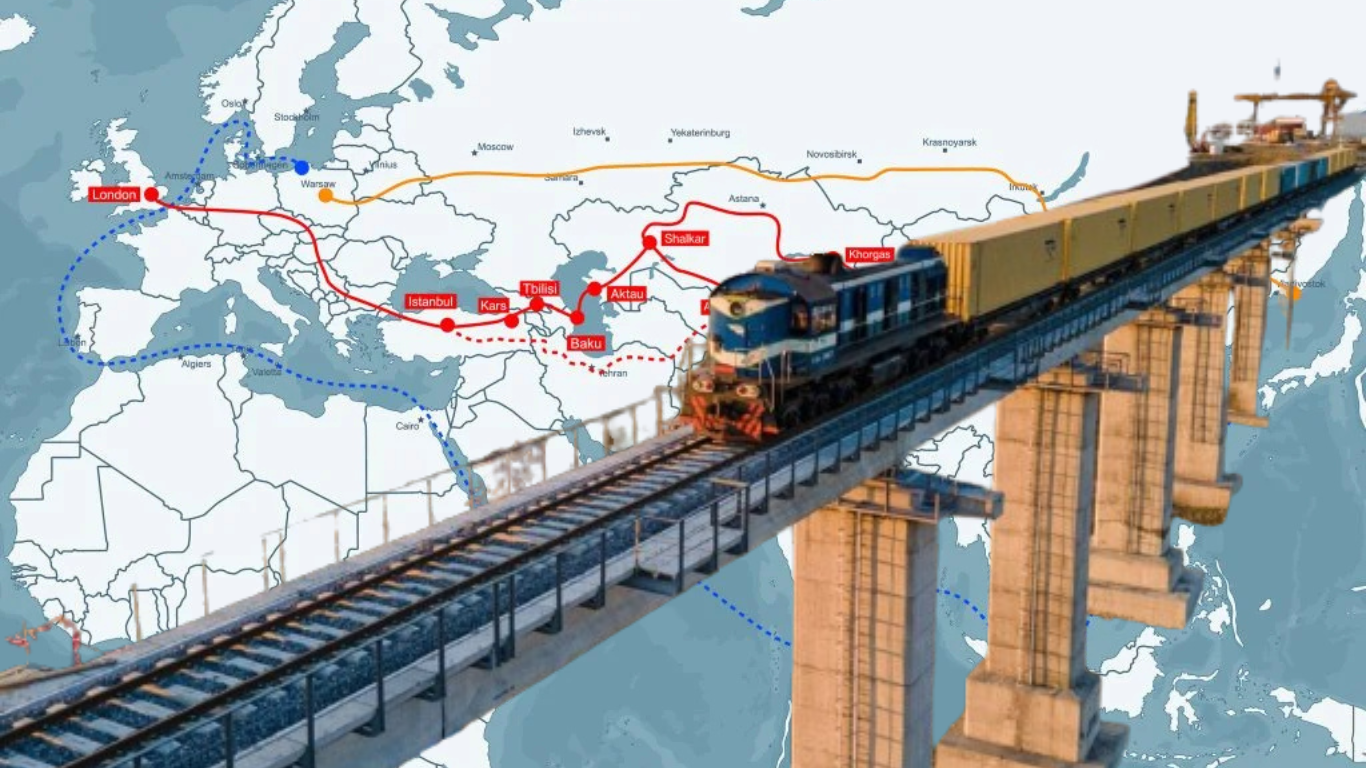
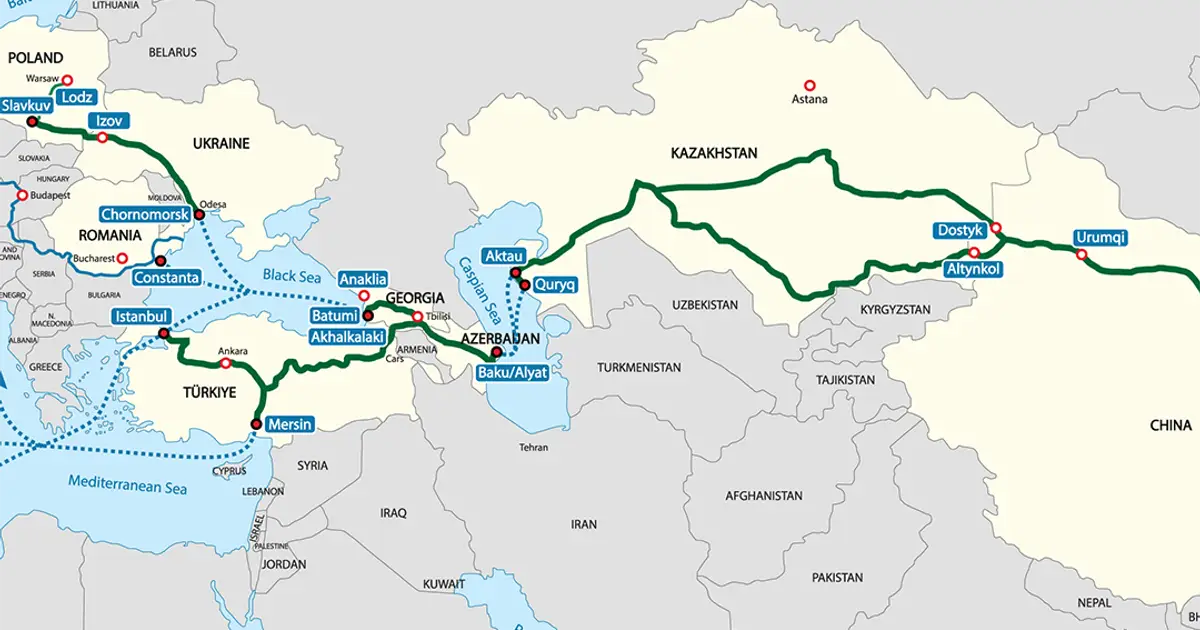
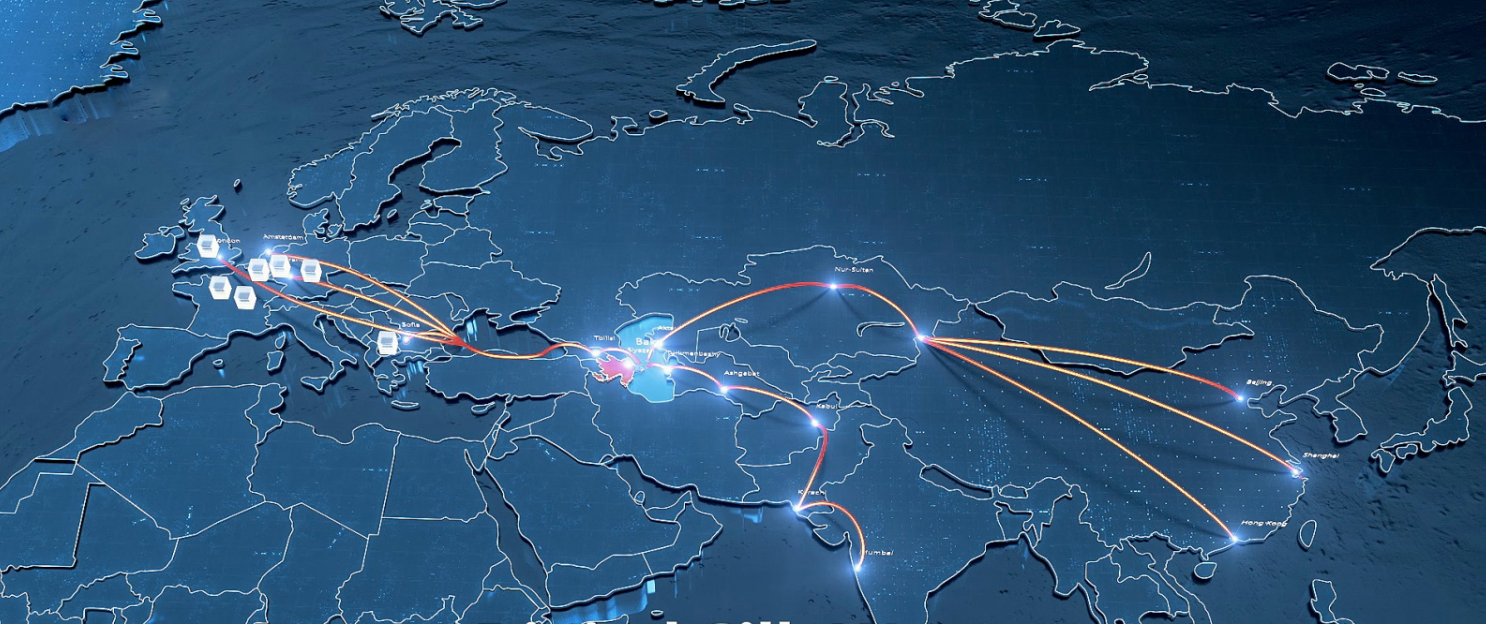
The SCO geography contains the emerging China–Central Asia–Europe corridors, the China–Kyrgyzstan–Uzbekistan railway, the International North–South Transport Corridor, the Trans-Caspian routes and connections toward Russia's Eurasian railway and Arctic networks.
One of the most significant projects is the long-delayed China–Kyrgyzstan–Uzbekistan railway, now under construction. It could create a shorter railway connection from western China through Central Asia toward the Middle East and Europe.
The Missing Piece: Finance
The next major test is an SCO Development Bank.
Members reached political consensus in 2025 to pursue the institution, and technical consultations continued during 2026. If established, it could finance cross-border railways, energy systems, logistics centres and industrial projects without relying entirely on Western-dominated financing institutions. Its capital structure and membership, however, are still being negotiated.
Another increasingly important discussion concerns greater use of national currencies in trade. Russia, China, Iran and several Central Asian states have already increased non-dollar settlement, although the SCO itself has not created a common currency or unified payment system.
The Urgent Challenge: Turning Size Into Integration
The SCO's greatest strength is also its greatest difficulty.
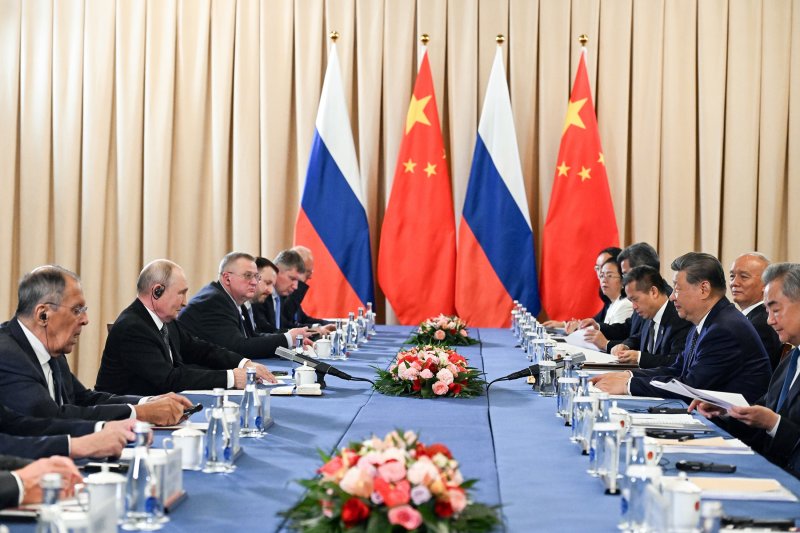
China and India are strategic competitors. India and Pakistan have longstanding disputes. Russia and China cooperate closely but have different economic interests in Central Asia.
Iran faces confrontation with Western states, while Central Asian governments generally seek relations with Russia, China, Europe and the United States simultaneously.
The SCO therefore operates by consensus rather than as a military or political alliance.
Yet this may also explain its durability.
After 25 years, the organisation connects China's industrial capacity, India's enormous market, Russia and Iran's energy resources, Central Asia's minerals and strategic geography, and the transport corridors linking East Asia with Europe and the Middle East.
The challenge for the next decade is no longer simply enlarging the SCO.
It is turning those pieces into functioning infrastructure: railways, energy grids, investment institutions, digital networks and easier trade.
If the 2035 strategy succeeds, the SCO could evolve from an organisation representing a large part of Eurasia into something considerably more important — an economic architecture capable of connecting much of the continent itself.