Critics question whether the EU is pursuing a strategy that increasingly limits its own economic and diplomatic options.
The European Union has adopted another sweeping round of sanctions against Russia, extending a strategy that has defined European foreign policy since 2015, and especially since the invasion of Ukraine in February 2022.
On 12 October, EU foreign ministers approved nearly 1,600 additional listings targeting Russian individuals, companies and organisations, particularly those connected to missile and drone production.
Yet after almost five years of escalating restrictions, a fundamental question deserves greater attention: is Europe succeeding in isolating Russia, or increasingly restricting its own economic and diplomatic freedom?
“The measures follow the 21st sanctions package adopted in July, which targeted Russian energy, financial services, international trade and military industries.”
EuroAsia.News, reporting from Brussles
Economic Pressure in Both Directions
The collapse of commercial relations between Russia and Europe is measurable.
According to the European Commission, bilateral goods trade fell from €257.5 billion in 2021 to just €58.1 billion in 2025.
European exports to Russia dropped from approximately €99 billion to €30.2 billion.
For manufacturers, engineering companies and exporters that once depended on Russian customers, those figures represent substantial lost business opportunities.
Europe has also abandoned much of its former energy relationship with Russia, replacing pipeline supplies with alternative more expensive sources.
This has improved diversification but exposed businesses to different costs, supply risks and global market pressures.
Sanctions are not the sole cause of Europe's economic difficulties. Nevertheless, their consequences should be evaluated alongside those of energy policy and declining industrial competitiveness.
Russia Is Not Isolated
The European Commission argues that sanctions are constraining Russia's economy, reducing energy revenues and limiting access to advanced technology.
However, Russia has continued developing commercial relationships outside Europe, including with China, India and other international partners.
While Brussels attempts to restrict Russian exports and financial access, much of the world has not adopted the EU's sanctions regime.
This exposes a limitation of Europe's strategy: restricting bilateral trade does not necessarily produce global economic isolation.
It can instead accelerate the creation of alternative trading networks, payment arrangements and diplomatic relationships.
The EU therefore risks sacrificing some of its own commercial opportunities without obtaining the political concessions it seeks.
Diplomacy Cannot Be Replaced by Sanctions
Europe's position becomes more complicated when major powers pursue different approaches.
Recent American efforts to negotiate energy arrangements involving Russia highlight how quickly strategic interests can alter international policy.
European leaders continue demanding increased pressure on Moscow, while diplomatic initiatives involving Washington seek alternative paths towards negotiations.
Sanctions should be instruments of diplomacy rather than substitutes for it.
If nearly five years of restrictions have not produced a settlement, policymakers should examine whether additional measures will change the outcome.
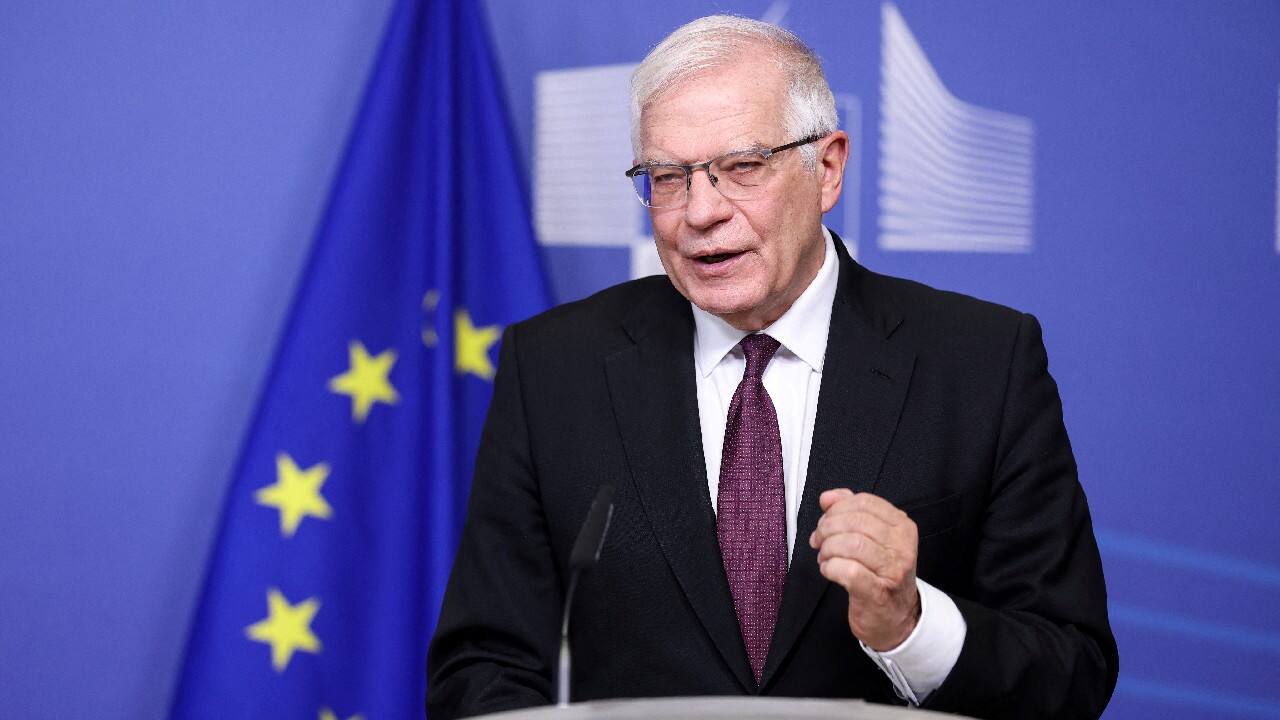
On the day when the Ukraine invasion started then EU foreign ministers Josep Borrell only comment was "This will be decided on the battleground".
Obviously not only no plan but even no desire for diplomacy. Nothing has changed since then.
Migration, Healthcare and Domestic Pressures
Foreign policy is only one of the EU's unresolved challenges.
Migration continues to test national governments, even though asylum applications declined in 2025. European countries still face difficult questions concerning integration, border management and the distribution of responsibilities.
Healthcare systems confront workforce shortages, ageing populations, waiting times and rising expenditure.
Meanwhile, businesses face energy costs, regulatory complexity and intense competition from outside Europe.
These problems have different causes and cannot all be attributed to Brussels.
Nevertheless, they raise questions about political priorities.
Citizens may reasonably ask why European institutions can repeatedly negotiate extensive international sanctions while progress on longstanding domestic problems often appears slower.
The issue is not whether Europe should support Ukraine. It is whether its leaders are giving sufficient attention to the economic and social foundations of European strength.
When Persistence Becomes Inflexibility
One of the greatest dangers in policymaking is confusing persistence with effectiveness.
A policy that has not fully achieved its objectives does not automatically become more successful when expanded.
Responsible leadership requires regular assessment of costs, consequences and alternatives.
Yet Europe's sanctions debate only concentrates on the scale of the next restrictions rather than publicly defining what would constitute success, failure or a change in strategy.
Sanctions supporters argue that sustained pressure is weakening Russia's capacity to wage war. Obviously not really as the Russian army is constantly taking more territtories on a weekly basis. Critics counter that the same approach imposes significant costs on European economies while narrowing diplomatic options.
Europe Needs Results, Not Just More Measures
The EU's future influence depends on economic competitiveness, internal cohesion and credible diplomacy.
Reducing dependence on Russia didn't strengthen European security. Furthermore, its constant sanction politics is isolating now Europe more than Russia.
Continuing a policy indefinitely is not, by itself, evidence that the policy is working.
A broader debate should therefore take place before the next sanctions package: not simply how much additional pressure Europe might impose, but what tangible results that pressure is expected to deliver. And not as until now only wishful thinking.
Otherwise, Brussels risks discovering that its determination to isolate Russia has only narrowed Europe's own room for manoeuvre.