As Armenia and Azerbaijan cautiously move beyond decades of confrontation, new transport routes are suddenly becoming possible across a region that has been fragmented since the collapse of the Soviet Union.
Washington has put its political weight behind TRIPP — the Trump Route for International Peace and Prosperity — intended to improve connectivity between Azerbaijan and its Nakhchivan exclave through Armenian territory.
Now another idea has returned from the Soviet past: restoring the railway from Russia through Abkhazia and Georgia to Armenia.
During the Soviet period, trains could travel along the Black Sea coast through what is now Russia and Abkhazia, continue through Georgia and ultimately reach Armenia.
“Russian advocates have already given it a politically loaded nickname: “Putin’s Path.” The railway itself is not new.”
EuroAsia.News
War destroyed that connectivity.
The Georgian-Abkhaz conflict in the early 1990s severed the route, while Russia's recognition of Abkhazia as an independent state after the 2008 Russia–Georgia war made restoration politically explosive.
For Armenia, however, the economics are obvious.
Armenia is landlocked. Its borders with Turkey and Azerbaijan were closed for decades, while Georgia became the country's principal transport gateway. Cargo travelling between Armenia and Russia generally moves by road through Georgia, particularly through the Upper Lars crossing in the Caucasus Mountains.
Weather can close it. Capacity is limited.
A functioning railway to Russia could therefore dramatically alter Armenian logistics.
But what looks economically rational on a map is politically almost impossible under current conditions.
Georgia considers Abkhazia part of its sovereign territory occupied by Russia. Allowing a Russian-controlled railway through Abkhazia without resolving the territory's status would touch one of the most sensitive questions in Georgian politics.
That is precisely why the proposal matters.
It arrives as Washington is promoting a completely different Caucasus architecture.
TRIPP is associated with the emerging Armenia–Azerbaijan peace process and would create another east-west connection linking Azerbaijan proper with Nakhchivan through southern Armenia.
Its strategic importance extends much farther.
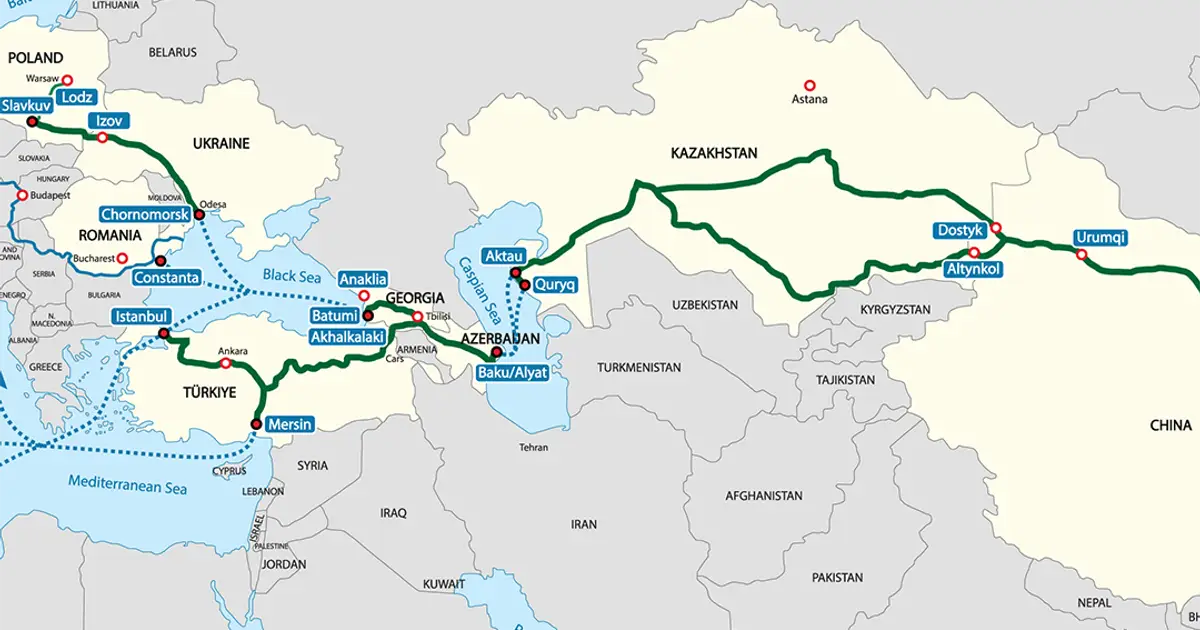
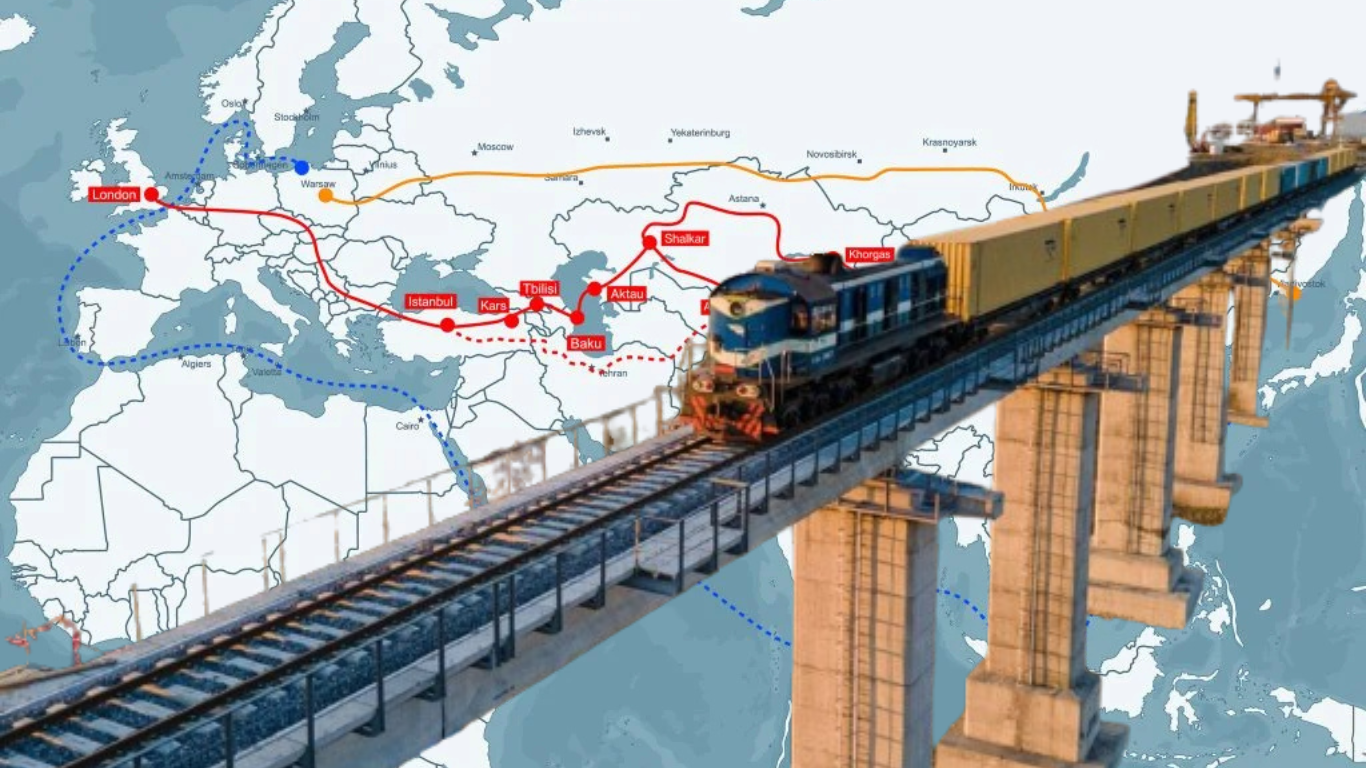
Combined with existing transport networks, it could strengthen a chain running from Central Asia across the Caspian Sea through Azerbaijan and Armenia or Georgia toward Turkey and Europe.
The Caucasus therefore increasingly contains competing transport visions.
One points north toward Russia.
Another points west toward Turkey and Europe.
Iran wants stronger north-south routes connecting Central Asia with the Persian Gulf. China wants efficient corridors connecting its western regions with European markets.
Georgia and Azerbaijan are developing the Middle Corridor. Armenia wants to escape decades of regional isolation.
This is why railways have become geopolitics.
During the Soviet era Moscow sat at the centre of almost every important regional transport network. After 1991, new borders transformed domestic Soviet infrastructure into international corridors.
Today the process is reversing.
Countries that spent three decades separated by conflict are considering reopening connections precisely when global trade is looking for alternatives to Russia, the Red Sea and increasingly vulnerable maritime chokepoints.
Russia has an obvious interest in remaining part of that new architecture.
If Caucasus connectivity develops entirely around Turkey, Azerbaijan, Central Asia and Western-backed projects, Moscow risks watching one of Eurasia's most important emerging transport regions increasingly bypass Russian territory.
Restoring the Abkhazia railway would put Russia back into the centre of Caucasus transit.
But calling it “Putin’s Path” risks exaggerating how close the project is to reality. Unlike TRIPP, which benefits from the Armenia–Azerbaijan diplomatic opening, the Abkhazia railway would require overcoming one of the region's most entrenched unresolved conflicts.
The more important story is therefore not which railway will be built first.
It is that the South Caucasus is no longer being viewed mainly as a collection of frozen conflicts.
It is increasingly being viewed as infrastructure.
And whoever determines where its railways run may influence where its economies — and eventually its politics — are oriented.
The next struggle for the Caucasus may be fought not over territory, but over which direction the trains travel.