A major European investigation exposes how organised criminal networks allegedly turned the EU’s single market into a profitable instrument for tax fraud.
Europe’s largest single market is designed to eliminate barriers between member states, allowing goods to move freely across national borders. But an investigation announced on 7 October suggests that the same system has been exploited by sophisticated criminal organisations to extract hundreds of millions of euros from taxpayers.
Investigators estimate that the suspected schemes caused at least €410 million in VAT losses to EU member states.
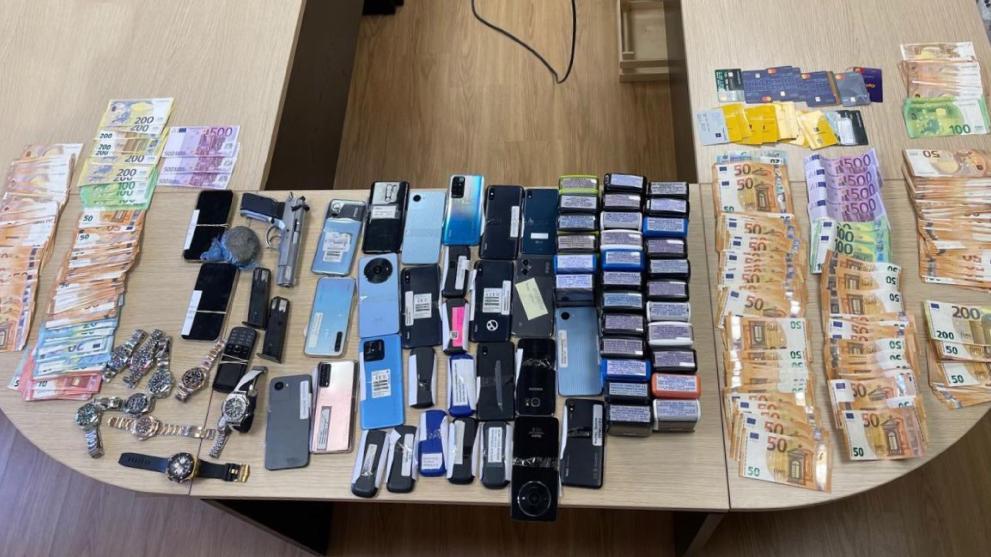
“The European Public Prosecutor’s Office (EPPO) announced the detention of 62 suspects in Operation Hermes, a multinational investigation into alleged value-added tax fraud involving mobile phones and electronic equipment.”
EuroAsia.News
Eight Countries, Hundreds of Searches
On 7 October, authorities conducted more than 300 searches in Austria, France, Germany, Italy, Malta, the Netherlands, Portugal and Spain.
Of the 62 people detained, 39 were in Portugal, 20 in Spain and three in Italy. Investigators targeted private homes, company offices and premises connected to intermediaries, lawyers, tax advisers and logistics businesses.
Authorities also executed orders to seize up to €310 million in suspected criminal assets. Bank accounts and company shares were frozen, while investigators confiscated property including vehicles, luxury cars, cash and gold coins.
However, seizure orders should not be confused with money already recovered. The investigation remains ongoing, and suspects are presumed innocent unless convicted.
How the Fraud Allegedly Worked
The suspected scheme exploited a vulnerability in European VAT arrangements.
Goods traded between VAT-registered companies in different member states can generally move without the seller charging domestic VAT. When those products are subsequently sold within a member state, VAT becomes payable.
According to investigators, the networks created complicated chains of companies that repeatedly traded electronics across borders.
Some businesses allegedly collected VAT from customers and disappeared without paying the tax authorities. Other companies in the trading chain then claimed VAT reimbursements or deductions.
These arrangements are commonly known as missing-trader or carousel fraud.
The damage can multiply as the same products move through successive transactions, allowing criminal organisations to generate tax advantages without creating genuine economic value.
Two Networks Working Together
Operation Hermes is particularly significant because investigators identified two allegedly separate criminal syndicates that cooperated.
According to the EPPO, the groups shared companies, merchandise and logistical services. Investigators also suspect that they channelled illicit proceeds through each other’s businesses and coordinated activities using encrypted communications.
One suspect allegedly previously led a VAT fraud network targeting Sweden between 2019 and 2023. After investigations disrupted that operation, prosecutors believe the individual relocated to Portugal and established another network through relatives and trusted associates.
The pattern illustrates a serious challenge for European authorities: shutting down individual companies does not necessarily dismantle the organisations behind them.
The EPPO also identified similarities with earlier investigations known as Admiral and Moby Dick.
Why Legitimate Businesses Lose
The victims of these alleged schemes extend beyond tax authorities.
Companies that illegally avoid paying VAT can offer goods at prices that compliant businesses cannot sustainably match.
Honest distributors, electronics retailers and importers may therefore lose customers to operators whose competitive advantage comes from suspected tax evasion rather than efficiency.
Lost tax revenue also reduces the money available for infrastructure, education, healthcare and other government services.
For the EU, this raises an uncomfortable question about the effectiveness of cross-border financial supervision.
Can Europe Close the Loopholes?
The investigation demonstrates that European prosecutors and national police forces can coordinate large multinational operations.
Yet the estimated €410 million loss also illustrates how much suspected fraud can accumulate before enforcement intervenes.
Improved electronic invoicing, faster cross-border tax-data exchange, stronger beneficial-ownership checks and earlier identification of suspicious trading patterns could reduce opportunities for these networks.
The fundamental challenge is to preserve the economic benefits of free trade while preventing criminal operators from exploiting differences between national tax systems.
Operation Hermes is therefore about more than mobile phones.
It is a test of whether Europe can protect the financial integrity of the single market it created.