Although the latest protests began over education and public spending, the unrest comes amid increasingly bitter arguments over immigration, integration and the European Union's migration policies.
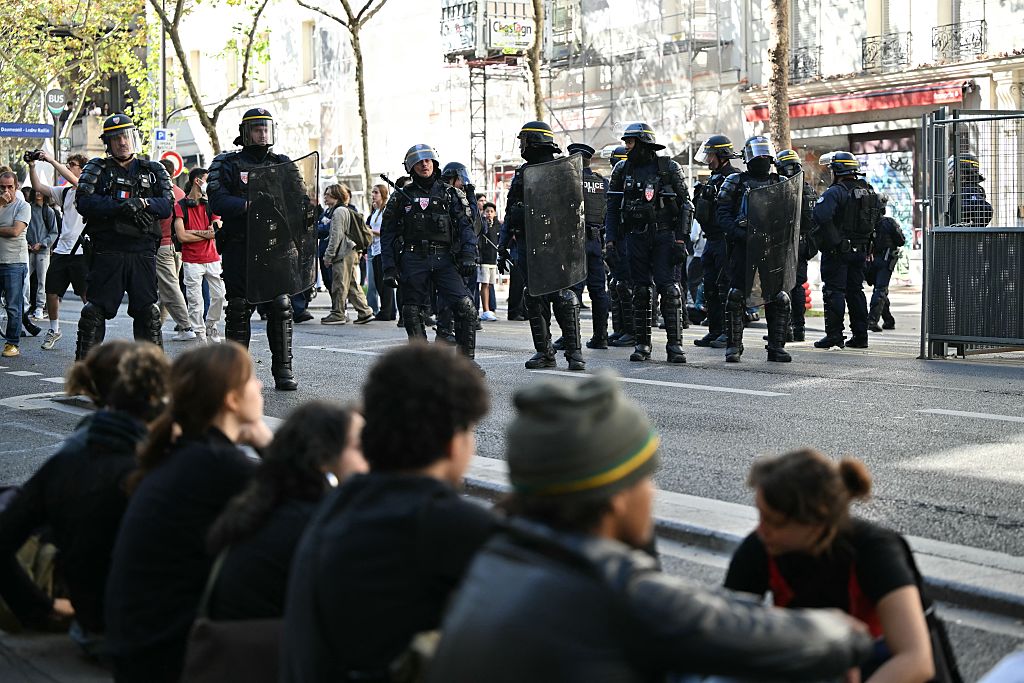
France is once again witnessing mass demonstrations, confrontations with police and growing public anger toward its political leadership. Across the country, protesters have taken to the streets as President Emmanuel Macron's final months in office become overshadowed by another wave of social unrest.
On October 6, French authorities counted approximately 266,000 demonstrators nationwide, while organisers estimated 450,000. Thousands of schools have experienced disruptions since protests began in mid-September, and police have made more than 6,500 arrests.
But meanwhile, they unfold against a broader political crisis in which immigration remains one of France's most divisive subjects.
“The immediate cause is deteriorating educational conditions, including teacher shortages, overcrowded classrooms and inadequate facilities.”
EuroAsia.News, reporting from Paris
Immigration and the Failure of Political Consensus
For decades, successive French governments have struggled to reconcile immigration, integration, public security and the country's republican principles.
Critics argue that political leaders have underestimated the challenges of integrating newcomers into communities already facing unemployment, housing shortages and declining public services.
Others counter that immigrants themselves are disproportionately affected by poverty, discrimination and inadequate investment, and that blaming migration for longstanding structural failures offers no credible solution.
Both concerns now influence a political debate increasingly dominated by competing visions of France's future.
Brussels and the Migration Question
The European Union has attempted to establish a common response through its Pact on Migration and Asylum, introducing new procedures for border screening, asylum applications and cooperation between member states.
Yet the reforms have failed to produce political consensus.
Supporters believe coordinated European rules are necessary to manage irregular migration and distribute responsibilities more fairly. Opponents argue that Brussels has not adequately addressed border enforcement, unsuccessful asylum claims or the practical consequences for individual countries.
France has also supported tougher European return procedures, while opposing proposals for certain offshore return centres.
The controversy demonstrates how immigration policy increasingly influences relations between national governments and European institutions.
This controversy is intensifying as France adapts its immigration legislation to the European Union's new Pact on Migration and Asylum, which began applying on June 12, 2026.
The French government introduced legislation in April to bring national law into line with the European framework. The changes concern asylum screening, accelerated procedures, reception conditions and the responsibilities of EU member states.
Supporters argue that the reforms will make immigration management more effective, speed up decisions and reduce pressure on national asylum systems. Critics question whether the new procedures adequately protect asylum seekers' rights and whether stronger border controls will address the underlying causes of migration.
An additional French legislative proposal, introduced in May 2026, sought to suspend family reunification for two years for people granted subsidiary protection. Its supporters argued that France's housing and integration systems were under growing pressure.
A parliamentary report accompanying the proposal recorded that beneficiaries of subsidiary protection had increased from approximately 18,300 in 2014 to more than 166,000 in 2024. Applications for family reunification involving this group exceeded 7,000 in 2024.
Opponents raised concerns about separating families and restricting established legal protections.
For France, the fundamental disagreement is no longer simply about admitting migrants. It concerns who should determine immigration policy, how national governments can manage integration and what obligations remain under European and international law.
France's Political Establishment Under Pressure
As the 2027 presidential election approaches, immigration has become a central subject of political competition.
National Rally has long demanded substantially tighter immigration controls, while figures from the traditional centre are increasingly adopting restrictive proposals of their own.
Former prime ministers Édouard Philippe and Gabriel Attal have both called for tougher approaches, reflecting the pressure on establishment parties to respond to public concerns.
At the opposite end of the political spectrum, left-wing organisations warn that increasingly restrictive policies risk undermining fundamental rights and encouraging discrimination.
In June, thousands demonstrated in Paris against racism and the far right, illustrating that France's streets are mobilising on both sides of the debate.
A Deeper Crisis Than Immigration Alone
The latest demonstrations highlight a fundamental challenge facing France: public expectations have risen while the government's financial and political room for manoeuvre has narrowed.
Proposed spending reductions, pressure on public services and dissatisfaction with political leadership have combined to create an increasingly volatile atmosphere.
Immigration adds the other dimension to these tensions, particularly where concerns about integration, housing and public resources overlap.
The larger political question is whether France's leadership can restore confidence through effective public services, credible immigration management and a coherent approach to national integration.
Without progress on these fronts, France risks entering not only the next presidential election with social divisions deeper than ever.
.