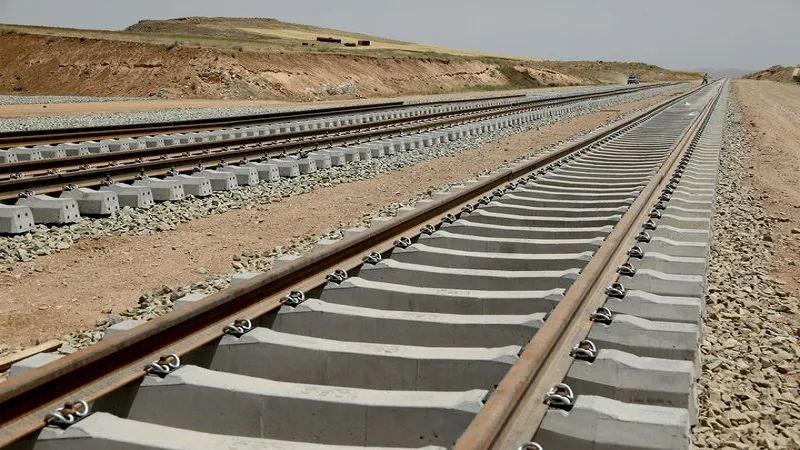
The reason lies not simply in poverty or mountains, but in more than a century of rivalry between the British, Russian and later Soviet spheres. Today, old railway fragments are finally beginning to form something resembling a network.
The idea of a railway across Afghanistan is far older than today’s Belt and Road Initiative or the Five Nations Railway Corridor. Already in the 1850s and 1870s, British strategists were examining railways toward Afghanistan as part of the “Great Game” with the Russian Empire.
In 1876 London decided that a railway should approach Afghanistan through the Bolan Pass so troops could rapidly reinforce the frontier. Construction accelerated during the Second Anglo-Afghan War of 1878–80. The system eventually reached Quetta and then Chaman in 1891 — stopping only about 200 metres short of the Afghan frontier. Rails, sleepers and bridge components were reportedly stockpiled so the railway could be pushed toward Kandahar quickly in wartime.
“Britain’s railway system was advancing north from colonial India.”
EuroAsia.News
From the opposite direction, Russia was building the Trans-Caspian Railway from 1880, advancing across Central Asia toward Afghanistan. By 1898 a branch had reached Kushka, today’s Serhetabat in Turkmenistan, immediately north of the Afghan border and Herat region. Once again, the railway stopped at the frontier.
The missing railway through Afghanistan was therefore partly deliberate.
Railways were seen as invasion routes
Afghan ruler Amir Abdur Rahman Khan, who ruled from 1880 to 1901, strongly resisted allowing either Russian or British railways into the country. Afghanistan was the buffer between two empires, and a railway that transported wheat and cotton in peacetime could transport an army in wartime.
Abdur Rahman reportedly described the British railway approaching Chaman as “pushing a knife into my vitals.”
He argued that Afghanistan should permit railways only when it had sufficient military strength to prevent a foreign power from using them against the country.
The result was extraordinary. Two of the world’s rapidly expanding railway systems approached Afghanistan from north and south — but neither was permitted to connect through it.
As early as 1885, proposals were circulating for a railway linking the Russian Trans-Caspian system through Herat and Kandahar with British India. By around 1910, planners were again discussing Chaman–Kandahar–Herat and onward connections with the Russian network. Strategic concerns repeatedly outweighed the economic arguments.
Amanullah tried to change course
The first genuine railway inside Afghanistan arrived under King Amanullah Khan. Around 1922–23, an approximately eight-kilometre narrow-gauge railway was constructed between Kabul and the new government district of Darulaman using German locomotives. It was tiny, but symbolically important: Afghanistan had finally begun building railway infrastructure of its own.
Amanullah’s ambitions went much further.
After his European tour, German, French and other foreign companies were invited to examine a national network. Plans drawn up between 1928 and the early 1930s envisaged Kabul–Jalalabad–Peshawar, Kabul–Kandahar, Kandahar–Herat and eventual connections with the Soviet railheads at Termez and Kushka. One scheme envisioned roughly 1,400–1,600 kilometres of railway crossing the country.
Had it been completed, Afghanistan could have become the rail bridge between Europe, the Soviet Union and India almost a century ago.
But Amanullah was overthrown in 1929. Political instability, financing difficulties and continuing strategic concerns killed the schemes.
Three railway empires — three different gauges
The historical division left Afghanistan with another problem that survives today.
The former Russian and Soviet republics to the north use approximately 1,520 mm Russian gauge. Pakistan inherited the 1,676 mm Indian broad gauge from British India. Iran — and China — use the international 1,435 mm standard gauge.
Afghanistan consequently sits at the meeting point of three incompatible railway systems. Freight crossing between them may require changing bogies, dual-gauge infrastructure or unloading cargo from one train and reloading it onto another. A US National Defense University study identified precisely this gauge fragmentation as one of the biggest obstacles to creating an efficient Afghan national network.
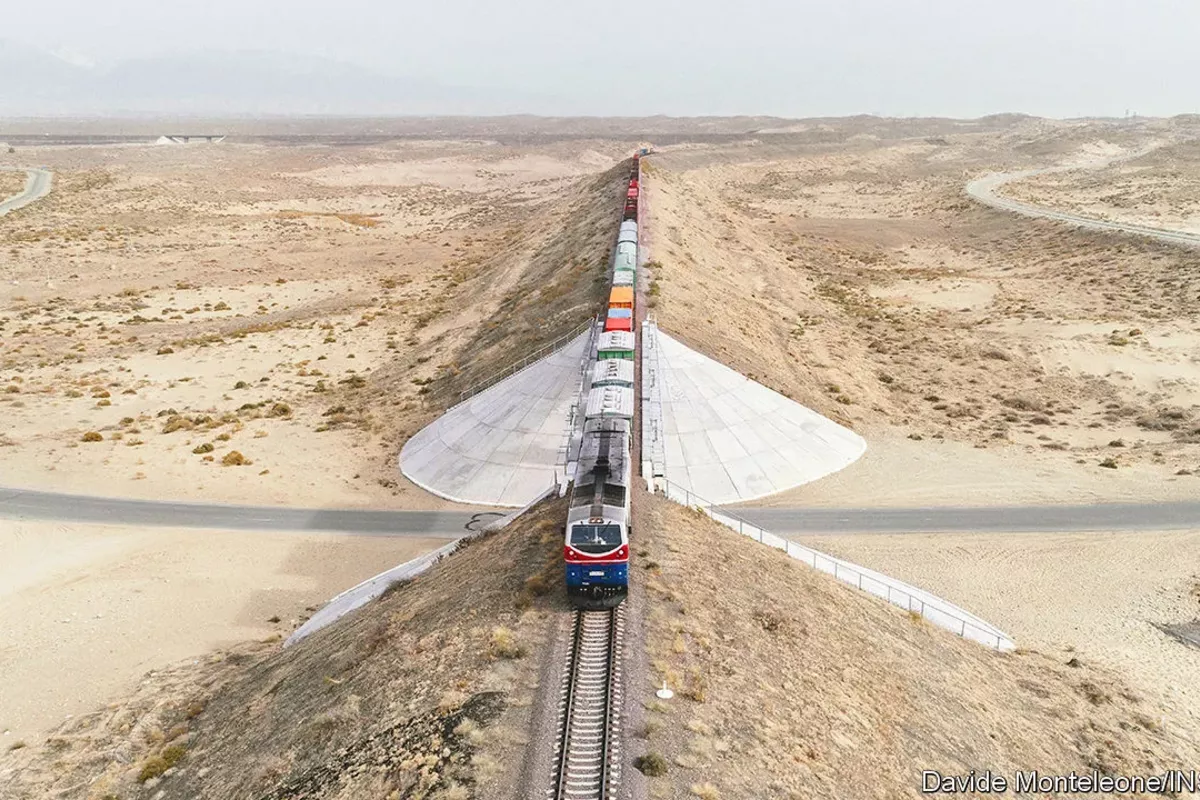
It is therefore misleading to think of Afghanistan as simply having “no railway.” What developed instead were foreign railway fingers entering the country from different directions, each connected to the neighbouring country that built it.
The Soviets extended their 1,520-mm system into Towraghondi from Turkmenistan and later across the Amu Darya at Hairatan. The Hairatan Friendship Bridge, completed in 1982 during the Soviet intervention, was primarily a military and logistics link. It was never developed into the nationwide Afghan railway once envisaged.
Iran later approached from the west using standard gauge.
The fragments are finally beginning to connect
The major change came after 2010. The Hairatan–Mazar-i-Sharif railway opened in 2011, extending the Uzbek/Central Asian system roughly 75 kilometres into northern Afghanistan. In May 2026 another 70-kilometre section of the wider Hairatan–Mazar system, including five stations and branch lines, was reactivated.
From the west, Iran and Afghanistan developed the 225-kilometre Khaf–Herat railway. The line originated in agreements dating back well before the current government; construction began in 2007 and the first cross-border sections were inaugurated in 2020. Freight operations have since expanded substantially. Afghanistan’s Ministry of Public Works reported 137,687 tonnes on the Khaf–Herat route in August 2026 alone.
But the historical problem remains visible on the map: the Iranian railway in western Afghanistan and the Central Asian railway in northern Afghanistan still do not meet.
That makes the proposed Herat–Mazar-i-Sharif railway, approximately 657 kilometres, potentially transformational. Afghanistan and Iran have been discussing engineering standards, financing and implementation of the project during 2026. Its construction would link the Iranian railway entering Herat with northern Afghanistan and the Central Asian network.
China adds the final strategic dimension. Chinese freight can already reach Afghanistan via Kazakhstan and Uzbekistan or through Central Asia, Iran and the Khaf–Herat line. A direct railway across the Wakhan Corridor into China remains far more difficult and is not required for an Iran–China transit corridor to function.
The significance is therefore historical as much as economic.
For approximately 140 years, British India, Russia, the Soviet Union, Iran and Central Asian states built railways toward Afghanistan — but Afghanistan never developed the internal spine connecting them.
Now the logic is reversing. What once made Afghanistan valuable as a buffer separating rival empires could make it valuable as a corridor connecting them.
If Herat, Mazar-i-Sharif and eventually Kandahar become connected by rail, Afghanistan would finally begin assembling the national railway that planners were already drawing on maps in the 1880s.