The agreements unveiled in Almaty on 25 September point toward something broader — local production, artificial intelligence, robotics, data centres and joint industrial ecosystems.
President Kassym-Jomart Tokayev told the Kazakhstan-China Investment Forum that the industrial cooperation portfolio now contains 260 major projects worth more than $62 billion. More than 600 government and business representatives attended. Tokayev also proposed turning the forum into an annual “Almaty Investment Dialogue” and said cooperation should progress from individual projects toward production systems capable of serving Central Asia, the Eurasian Economic Union, the South Caucasus and Europe.
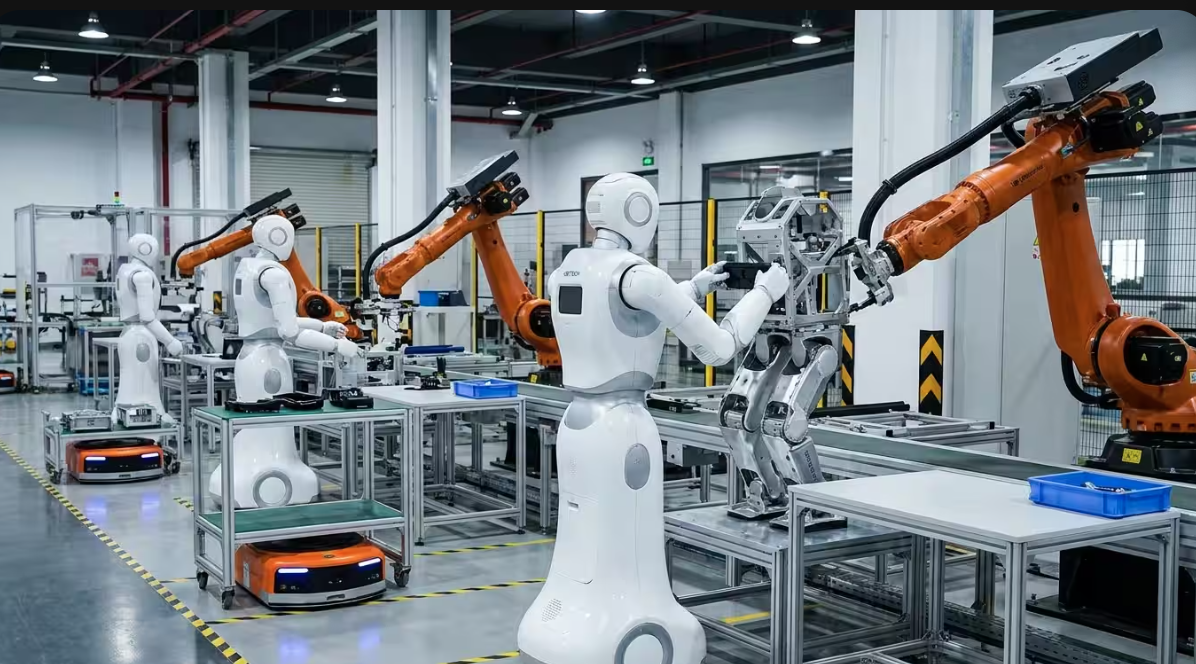
The project is intended to include manufacturing, research and development, programming and jobs inside Kazakhstan. Industry reports describe it as UBTech’s first humanoid-robot manufacturing operation outside China if implemented as planned.
“The headline technology project is a $440 million plan involving Shenzhen-based UBTech Robotics and Kazakhstan’s Nero Group to localise robotics production.”
EuroAsia.News, reporting from Almaty
Artificial intelligence is becoming the second pillar. Tokayev announced plans for a Kazakhstan-China AI school in Astana and called for technology transfer, joint engineering centres and research cooperation. Kazakhstan is simultaneously building its Data Center Valley at Ekibastuz. One current proposal begins at roughly 100 MW of IT load with expansion potential to 1 GW. Separate agreements involving Firebird and NVIDIA have been presented by the Kazakh government as a $10 billion AI-infrastructure package, with 300 MW of power capacity already available at the site.
The scale of the economic relationship explains Beijing’s interest. Chinese customs data put bilateral trade at a record $48.7 billion in 2025, although Kazakhstan’s own customs methodology recorded $34.1 billion. In the first seven months of 2026, Kazakh officials said trade with China reached $32.4 billion, up 24.1% year on year. More than 9,000 companies with Chinese capital now operate in Kazakhstan.
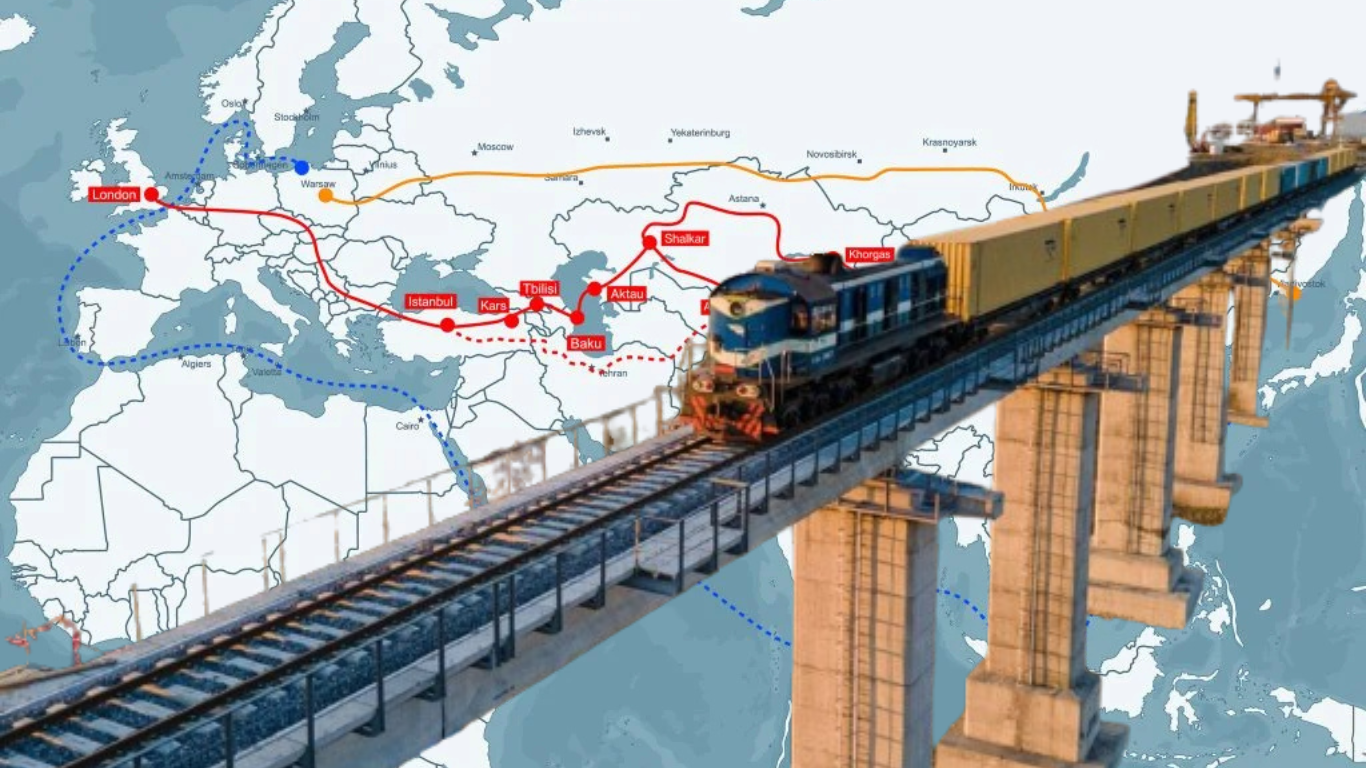
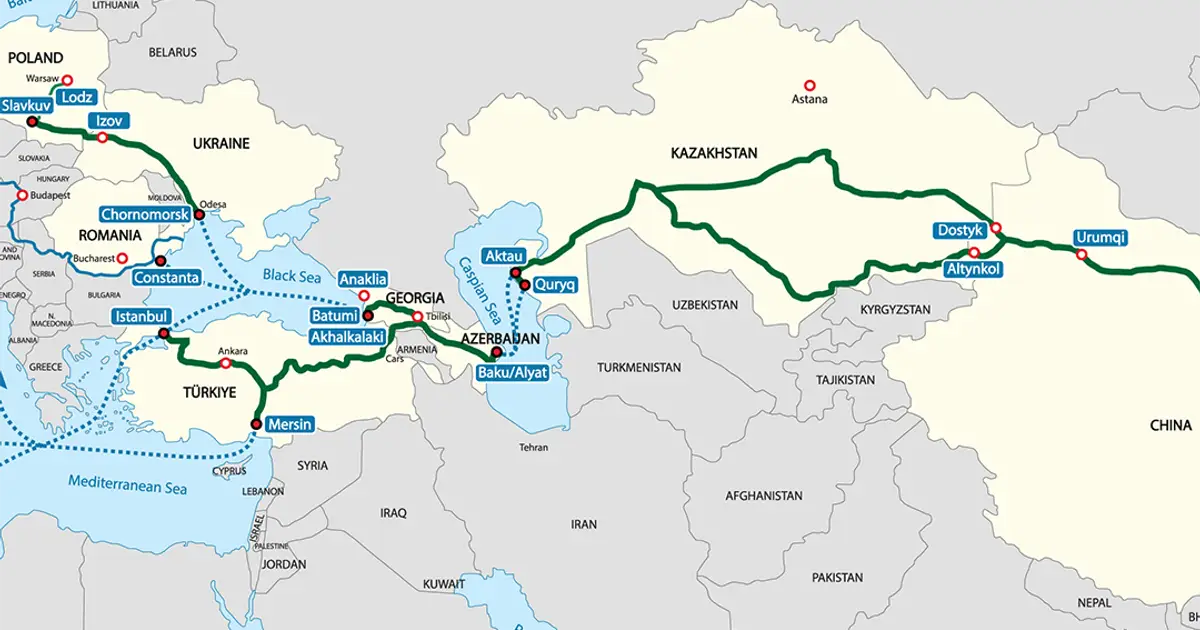
Geography is equally important. Kazakhstan says approximately 85% of land-based rail freight between China and Europe passes through its territory. New railways, border crossings, the Trans-Caspian Middle Corridor and digital “smart border” systems are intended to turn that transit role into industrial leverage rather than simply collecting transit fees. Kazakhstan and China have set a longer-term ambition of increasing bilateral trade toward $100 billion.
The strategy carries both opportunity and risk. Kazakhstan has spent decades balancing relations with China, Russia, Europe, the United States and other Asian powers. A larger Chinese role in AI infrastructure, robotics and manufacturing could accelerate diversification away from commodity exports, but it could also increase dependence on Chinese technology, financing and supply chains.
Astana’s answer appears to be localisation. The stated objective is not merely to host warehouses or final assembly lines but to create engineering, data infrastructure, research capacity and export-oriented production inside Kazakhstan.
If that strategy succeeds, Kazakhstan could become considerably more than the land bridge connecting China and Europe. It could become one of the places where Chinese technology is adapted, manufactured and exported into the wider Eurasian market.