Eighty billion dollars can transform a country’s global image, create industries and attract millions of visitors. It can also be consumed by missiles, military operations and the reconstruction of infrastructure destroyed by those same weapons.
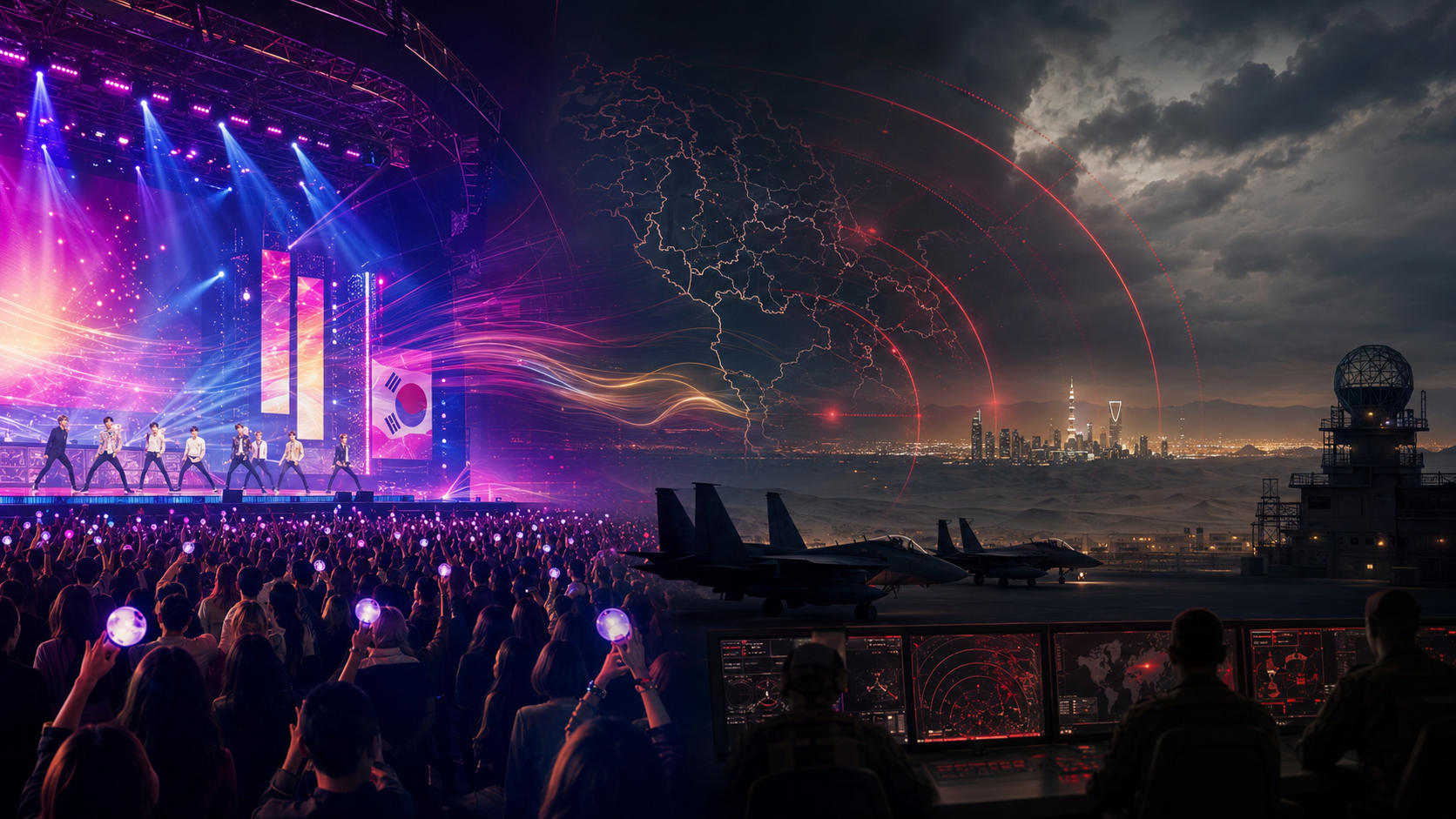
The contrast between South Korea’s cultural rise and the economic consequences of the Iran war illustrates two radically different uses of national resources: investment in influence and economic development versus expenditure on military power and destruction.
The Pentagon has sought tens of billions more, including an earlier request described as an $80 billion package for the Iran war and other government obligations.
“As of July 21, 2026, the Pentagon’s official estimate placed the direct cost of the United States’ war in Iran at approximately $37.5 billion.”
EuroAsia.News Editorial, reporting from Dubai
Comparing what $80 billion could produce through long-term cultural investment with what it can finance in war exposes the true economic meaning of public spending.
South Korea: investing in attraction
South Korea did not simply spend $80 billion to “create K-pop.” Its cultural success emerged over several decades through a combination of government policy, education, digital infrastructure, private entertainment companies, television, music production and highly competitive creative talent.
Following the Asian financial crisis of the late 1990s, South Korea increasingly treated culture as an export industry. It supported creative companies, broadband development, training, overseas promotion and cultural institutions. Private companies then carried much of the commercial risk and created globally marketable music, television, films, games, cosmetics and fashion.
By 2021, South Korea’s broader cultural-content industry generated approximately $12.45 billion in annual exports and KRW 137.5 trillion in sales. UNCTAD notes that cultural exports associated with phenomena such as BTS and Squid Game reached about $12.4 billion in 2021. Invest Korea, UN Trade and Development
K-pop itself is only the visible centre of a much larger economic ecosystem. Its influence supports:
Concerts, streaming, publishing and merchandise
Tourism, hotels, restaurants and airlines
Korean cosmetics and fashion
Consumer electronics and mobile technology
Food exports and restaurant franchises
Language education and universities
Film, television, gaming and digital platforms
South Korea’s reputation as a modern and innovative economy
A fan who first discovers Korea through music may later buy Korean cosmetics, watch Korean television, learn the language, visit Seoul, purchase a Samsung device or choose a Korean automobile. Cultural attraction becomes commercial trust.
What could $80 billion accomplish?
If $80 billion were invested over ten years in cultural industries, education, media technology, tourism and international distribution, it would represent $8 billion annually.
That would be enough to finance:
International film, television and music production centres
Thousands of creative-industry start-ups
National digital broadcasting and streaming platforms
Scholarships and academies for music, film, design and technology
Cultural districts, theatres and performance venues
Tourism infrastructure and international marketing
Artificial-intelligence tools for translation and content distribution
Major export funds for fashion, food, beauty and entertainment companies
If such an ecosystem eventually generated cultural exports comparable to South Korea’s 2021 level—approximately $12.4 billion annually—it could theoretically recover the original $80 billion through export revenues in roughly six to seven years once full scale was reached. That is an illustration, not a guaranteed investment return, but it demonstrates the productive potential of cultural expenditure.
Unlike a missile, a successful song, film, brand or digital platform can be sold repeatedly around the world. Its economic value is renewable.
Iran: the economics of destruction
Military expenditure also generates production and employment, particularly for defence contractors. But its output is fundamentally different. Weapons are generally consumed rather than used to create recurring civilian income.
The United States has already spent approximately $37.5 billion directly on the Iran war. If total appropriations ultimately reach or exceed $80 billion, the expenditure would include military operations, munitions, logistics, force protection and replenishment of depleted weapons inventories.
Iranian losses extend far beyond military targets. By late July, estimates cited in international reporting placed physical and economic damage as high as $270 billion, although such figures remain provisional and cannot yet be independently audited. They may include destroyed infrastructure, lost production, damaged factories, interrupted trade and wider economic contraction—not simply the replacement value of bombed buildings. The Guardian
The damage includes or potentially affects:
Energy, electricity and transport infrastructure
Industrial and steel-production facilities
Ports, warehouses and supply chains
Residential and civilian buildings
Telecommunications and digital infrastructure
Government and military facilities
Employment, business confidence and private investment
Food availability and household purchasing power
The real economic cost will continue long after military operations end. Destroyed infrastructure must be rebuilt, production remains interrupted, skilled people leave the country, investors demand higher risk premiums and public funds are redirected from education, healthcare and development toward reconstruction.
Damage to American bases and the United States
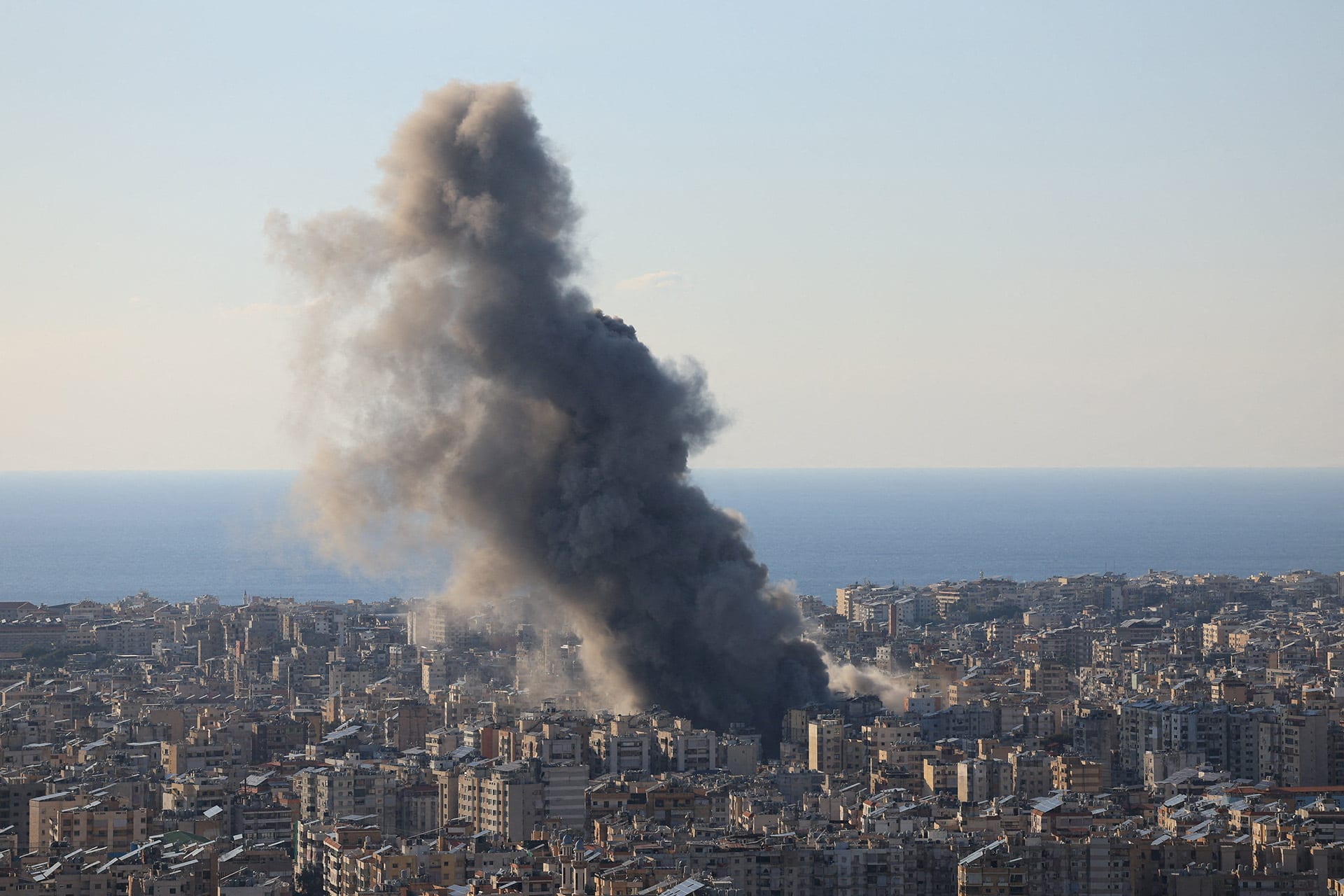
Iranian missile and drone attacks also imposed costs on American and allied military installations throughout the region. Public information remains incomplete, so a reliable aggregate figure for damage to U.S. bases cannot yet be established.
The financial consequences nevertheless include:
Repairs to airfields, buildings, radar and defensive systems
Replacement of aircraft, vehicles and equipment
Deployment and operating costs
Medical treatment and long-term veterans’ care
Replacement of expensive interceptor missiles
Higher security costs at American facilities worldwide
Reduced military readiness in other regions
The cost imbalance is significant. Relatively inexpensive drones or missiles can require interception by Patriot or THAAD systems costing several million dollars per shot. Even a successful defence may therefore produce a substantial financial loss for the defending side.
For the wider U.S. economy, the war also contributes to energy-price volatility, higher transportation and insurance costs, inflationary pressure and additional federal borrowing. These costs do not appear entirely in the Pentagon’s $37.5 billion calculation.
The Gulf: collateral economic damage
The war’s economic geography extends well beyond Iran. The Gulf’s tourism, aviation, logistics, finance and real-estate industries depend on three fundamental expectations: security, reliable air connections and the uninterrupted movement of energy and goods.
Iranian attacks and regional airspace disruptions weakened all three.
In the UAE, vacation-rental cancellations more than doubled immediately after the initial attacks, reaching approximately 8,450 cancelled units for planned March stays. Dubai hotel occupancy reportedly fell from approximately 85% during the first two months of 2026 to below 25% during one of the worst weeks of the conflict. Some hotels temporarily closed, while airlines, restaurants, retailers and events lost revenue. Reuters on Gulf tourism
The effects spread through the economy:
No credible, comprehensive figure yet exists for total UAE tourism and real-estate losses. Any precise claim would therefore be misleading.
A reasonable scenario analysis would place the UAE’s combined tourism, aviation, hospitality, real-estate and associated business losses in the several-billion-dollar range, with the potential to rise into the tens of billions if insecurity persists. Real-estate “losses” must also be treated carefully: a decline in property valuations is not the same as cash lost, although it reduces household wealth, collateral values, transaction volumes and developer financing capacity.
Despite the disruption, Dubai has shown resilience. New registrations at the Dubai International Financial Centre increased by 30% over the year to June 2026, and hotel performance began recovering in July. This suggests severe sector-specific damage rather than complete economic collapse. Reuters on DIFC, Reuters on hotel recovery
Two different forms of power
South Korea demonstrates the compounding power of attraction. Cultural investment creates intellectual property, companies, employment, exports, tourism and international goodwill. Its influence encourages people to engage voluntarily with the country.
War represents coercive power. It can destroy military capacity and infrastructure, but it also consumes capital, generates retaliation and imposes losses on neighbouring countries and international businesses. Even when military objectives are achieved, the economic assets created by the expenditure are limited.
The contrast can be summarised simply:
Conclusion: the opportunity cost of $80 billion
The central question is not whether defence is ever necessary. Every state has legitimate security responsibilities. The question is how much lasting value society receives for each dollar committed.
South Korea’s cultural development shows how patient investment in people, creativity, technology and international distribution can turn a relatively small country into a global cultural power. Its music and entertainment opened doors for tourism, cosmetics, food, electronics and countless other Korean businesses.
By contrast, the Iran war has already cost the United States approximately $37.5 billion directly, caused potentially hundreds of billions of dollars in Iranian damage and imposed additional losses on military bases, airlines, energy markets, international businesses and Gulf economies. If U.S. expenditure ultimately reaches $80 billion, the wider economic damage created around it could be several times larger.
Eighty billion dollars invested productively can build an industry that continues earning for generations. Eighty billion dollars spent on war can disappear within months—leaving behind destroyed infrastructure, disrupted economies and another bill for reconstruction.