Europe is not primarily suffering from a shortage of money or people. It is suffering from weak productivity, expensive energy, insufficient investment, ageing infrastructure and political systems that promise considerably more than their economies can sustainably finance.
France is perhaps the clearest warning. It maintains one of Europe’s most comprehensive welfare states, yet economic growth remains weak, public deficits remain excessive and debt-servicing costs consume an ever larger share of government revenue. Every attempt to reform pensions, spending or labour markets produces enormous political resistance. Governments therefore postpone decisions, borrow again and leave the structural problem for whoever comes next.
For decades it relied on cheap energy, world-leading industrial exports and access to rapidly growing international markets. That model has weakened dramatically. Energy remains expensive, infrastructure investment has lagged, bureaucracy slows construction and business formation, while traditional industries face increasingly strong Chinese competition.
Berlin nevertheless frequently debates redistribution, migration and fiscal rules as though Germany's fundamental problem were how to divide existing prosperity. The more important question is how to create new prosperity.
“Germany faces a different version of the same crisis.”
EuroAsia.News
Italy demonstrates another European contradiction. Giorgia Meloni came to power promising tougher migration control, yet Italy intends to issue hundreds of thousands of legal work permits because companies simply cannot find enough workers. Italy has one of Europe's oldest populations and one of its lowest birth rates.
This reveals something important that both sides of Europe's migration debate frequently ignore.
Europe does need migrants.
But Europe does not need uncontrolled migration.
A functioning immigration system should distinguish clearly between humanitarian protection and labour requirements. If Europe needs nurses, engineers, electricians, software developers, agricultural workers or construction specialists, governments should create transparent legal pathways for exactly those people.
Allowing uncontrolled migration first and attempting to integrate whoever arrives afterwards is not an economic strategy.
Neither is pretending that Europe can close itself completely while its population ages and its workforce contracts.
Spain provides perhaps the strongest evidence that immigration can support economic expansion. A significant part of its recent employment and GDP growth has been generated by foreign workers. Spain has consequently grown faster than Germany, France or Italy.
But even Spain illustrates the limitations of the argument. More workers increase total GDP. That does not automatically increase productivity or prosperity per citizen. If population grows faster than housing, hospitals, schools and transport infrastructure, the result can be economic growth accompanied by deteriorating living standards.
That distinction is largely absent from political debate.
The Welfare State Needs an Economy
European politics increasingly treats social justice as a question of government spending. It is not.
Social justice ultimately depends upon economic productivity.
A country can finance good hospitals, affordable education, pensions and support for vulnerable citizens only if its productive economy generates enough income to pay for them.
Borrowing can temporarily hide this relationship. It cannot eliminate it.
A welfare state financed through permanently rising debt is not generous. It is transferring today's promises to tomorrow's taxpayers.
Europe therefore needs to stop measuring political success by how much money governments announce and begin measuring what citizens actually receive.
Healthcare provides the perfect example.
Many EU countries spend enormous amounts on health services while simultaneously suffering from shortages of doctors, nurses and carers, long waiting lists and ageing hospital infrastructure.
The answer cannot simply be another budget increase.
Europe needs to train more doctors and nurses, reduce administrative burdens, expand digital healthcare, use artificial intelligence where it genuinely improves diagnostics and administration, shift more resources toward prevention and allow medical professionals to spend more time treating patients rather than completing paperwork.
Importing medical staff indefinitely from countries that themselves desperately need doctors is not a sustainable European healthcare model.
Europe Must Produce Again
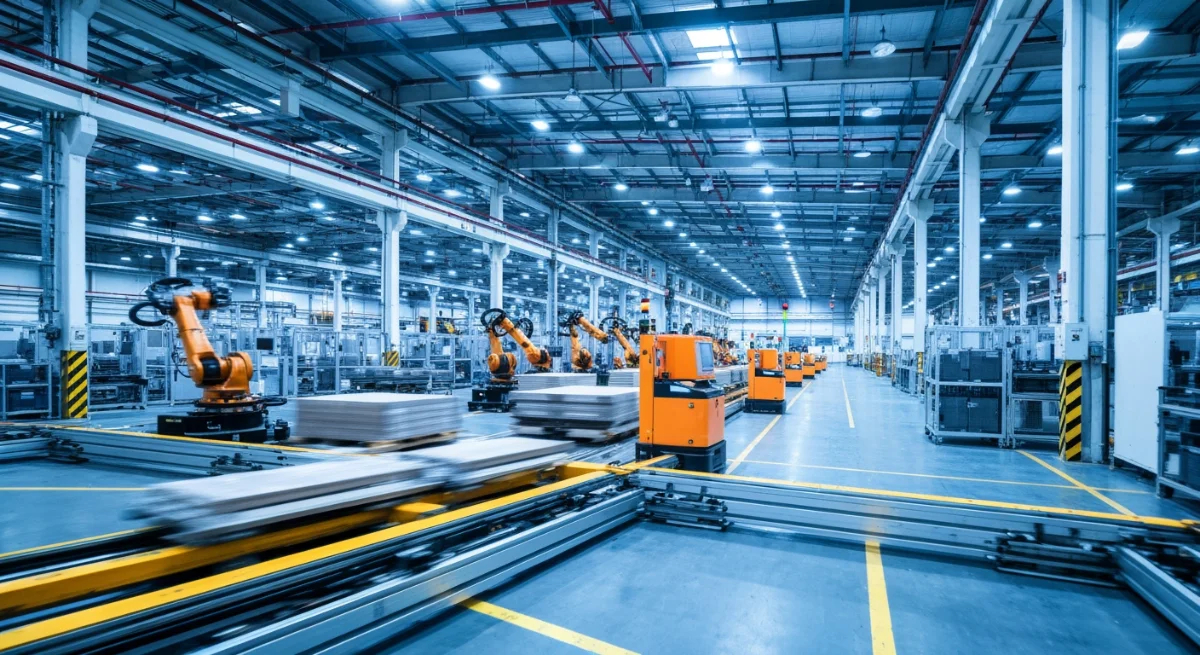
The uncomfortable truth is that Europe has spent too much political energy discussing redistribution and too little discussing production.
The continent needs cheaper reliable energy.
It needs faster approvals for factories, power plants, housing and infrastructure.
It needs deeper capital markets so European companies can grow without moving to the United States.
It needs serious investment in artificial intelligence, robotics, biotechnology, energy technology, advanced manufacturing and defence industries.
It needs vocational education designed around the jobs companies actually require rather than qualifications disconnected from the labour market.
And Europe desperately needs to make entrepreneurship easier.
Building a company, hiring employees or investing capital should not require navigating layers of national and EU bureaucracy that frequently protect existing structures rather than encourage new competitors.
At the same time, governments cannot simply dismantle the social model in the name of competitiveness.
That would fail politically and socially.
Workers who are asked to accept technological change, pension reform, industrial restructuring and global competition must reasonably expect affordable healthcare, functioning education, housing opportunities and protection when genuine hardship occurs.
The social contract must therefore become simpler: Europe protects people, not inefficiency.
Migration Is Part of the Solution — Not the Economic Model
The coming demographic challenge makes selective immigration necessary. Europe's working-age population will decline substantially over coming decades while the number of pensioners requiring healthcare and retirement support increases.
But immigration should complement productivity growth, not replace it.
A country cannot solve low productivity by continuously importing additional low-productivity workers. Nor can it solve a collapsing birth rate permanently by assuming that another country's young population will always be available.
Europe also needs higher employment among its own citizens, better childcare, retraining for older workers, stronger incentives to work and housing policies that allow younger families to establish themselves.
The objective should not be maximum population growth.
It should be maximum sustainable prosperity per citizen.
That is the measure European politics has largely forgotten.
The future European model should therefore combine disciplined government finances, selective migration, competitive taxation, affordable energy, technological investment and a strong but efficient social safety net.
It is neither the unrestricted free-market model sometimes associated with America nor the increasingly debt-funded welfare model emerging in parts of Europe.
It is essentially the original European social-market idea: businesses create wealth, workers participate in that prosperity, governments protect citizens against genuine hardship and the state spends within the productive capacity of the economy.
Europe remains wealthy, educated and technologically capable.
Its decline is therefore not inevitable.
But neither taxation, borrowing nor migration can substitute for productivity.
Europe's real choice is not between left and right, austerity and welfare, or open and closed borders. It is between reforming the economic foundations of the continent now—or gradually discovering that even the most generous social promises become meaningless when there is no longer sufficient growth to pay for them.