For more than a century, ships carrying goods between China and Germany have generally sailed south from the Chinese coast, through the South China Sea and Strait of Malacca, across the Indian Ocean, through the Red Sea and Suez Canal, then across the Mediterranean and around Western Europe to Hamburg.
The alternative goes in almost exactly the opposite direction.
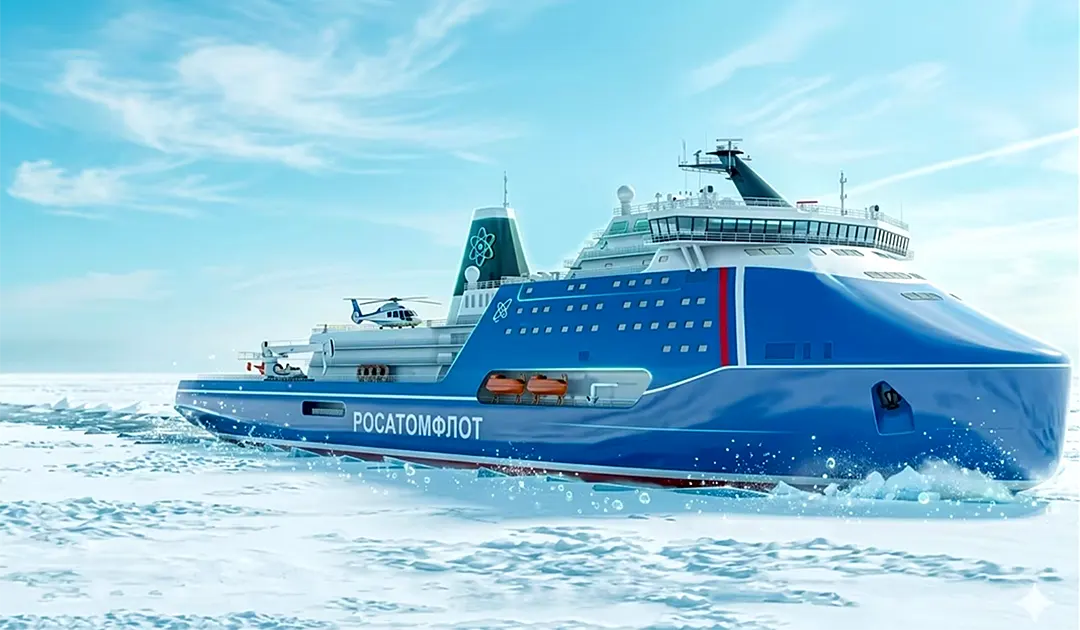
“A vessel leaving Shanghai for the Northern Sea Route (NSR) sails north past Korea and Japan, enters the Pacific Arctic through the Bering Strait, follows Russia's enormous Siberian coastline and emerges into the Barents Sea before continuing toward northern Europe.”
EuroAsia.News
The difference in distance is substantial.
Recent research comparing Shanghai and Hamburg estimates the voyage through the Suez Canal at approximately 10,778 nautical miles — almost 20,000 kilometres. The corresponding route through the Arctic is around 7,967 nautical miles, or roughly 14,750 kilometres.
That means the Arctic eliminates approximately 2,811 nautical miles, or 5,200 kilometres, from a single China–Germany voyage — a reduction of about 26 percent.
Shanghai–Hamburg: Two Very Different Routes
Northern Sea Route
• Approx. 7,967 nautical miles
• Approx. 14,750 km
• Potential seasonal transit: roughly 18–25 days
Via Suez Canal
• Approx. 10,778 nautical miles
• Approx. 19,960 km
• Typical direct theoretical sailing: around 27–30 days
• Commercial services with port calls can take 35–40 days or more
The difference becomes even more significant when ships are forced to avoid the Red Sea and Suez Canal and sail around the Cape of Good Hope. That diversion can add thousands of additional kilometres and more than a week to an Asia–Europe voyage.
The Arctic Express Is No Longer Only a Theory
China has already begun testing the commercial potential of this geographical shortcut.
In September 2025, the container vessel Istanbul Bridge departed Ningbo-Zhoushan on China's east coast on the new China–Europe Arctic Express. Its route continued through the Northern Sea Route toward Felixstowe, Rotterdam, Hamburg and Gdansk.
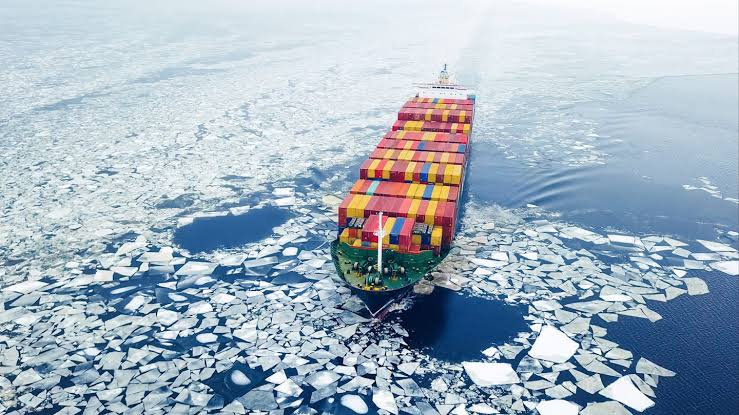
The Ningbo–Felixstowe section covered approximately 7,500 nautical miles and was completed in around 18–20 days. The ship travelled through favourable late-summer Arctic conditions without icebreaker assistance and reportedly maintained speeds of around 15–17 knots.
Chinese operators compared that with roughly 40 days through Suez and around 50 days when ships are diverted around Africa.
For Hamburg, which lies closer to the Arctic exit than many southern European ports, the basic geography is particularly favourable.
Why 5,000 Kilometres Matters
Saving more than 5,000 kilometres affects far more than the arrival date.
Every day removed from a voyage reduces fuel consumption, crew and vessel operating costs and the amount of capital tied up in cargo at sea. For high-value goods — electronics, batteries, machinery, automotive components and e-commerce shipments — saving ten days can be commercially significant.
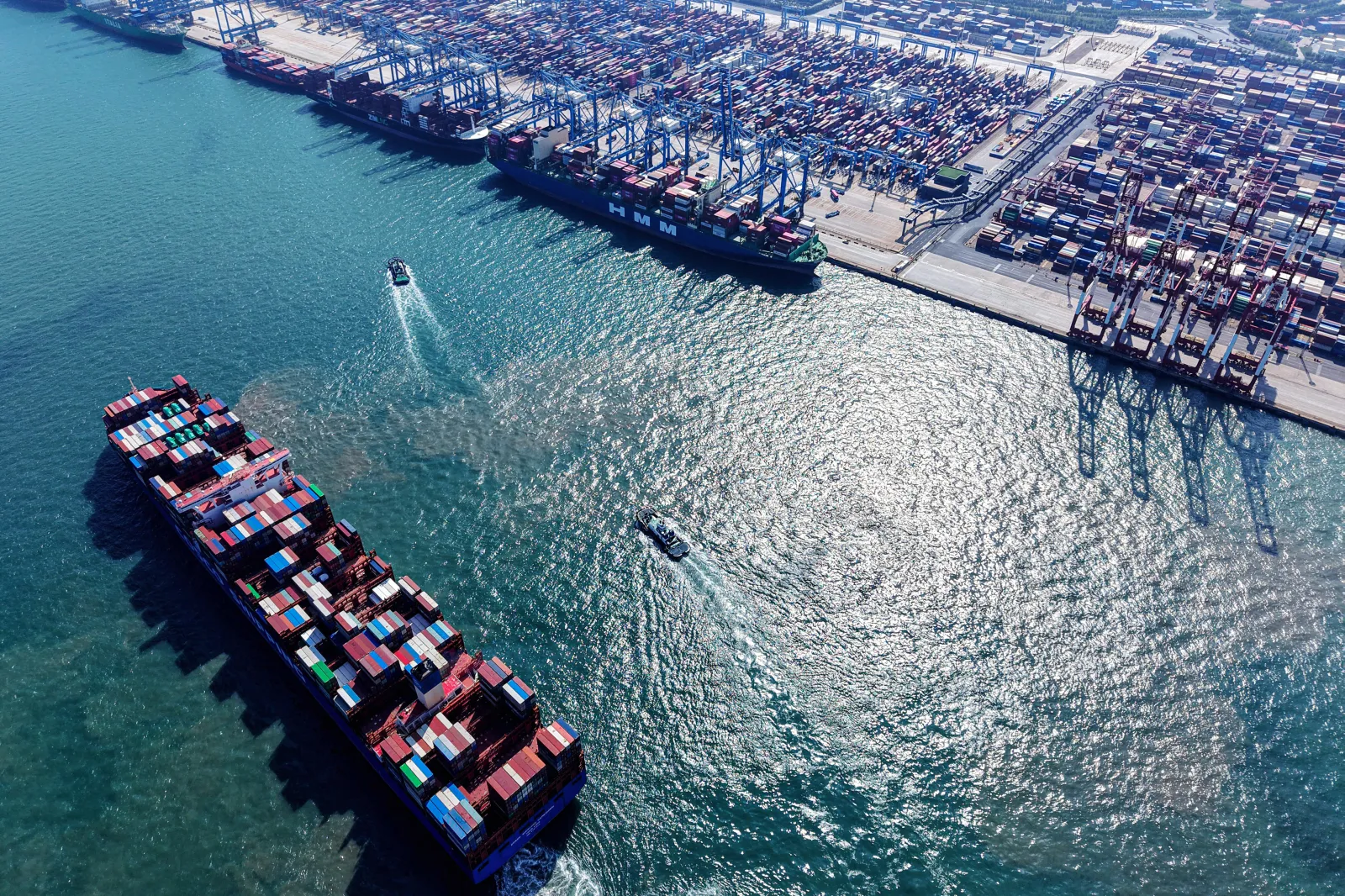
A ship capable of delivering Chinese goods to northern Europe in around three weeks begins to occupy an interesting position between conventional ocean freight and the much more expensive China–Europe railway.
Recent Chinese Arctic services have therefore concentrated particularly on time-sensitive and higher-value cargo rather than low-value bulk container traffic.
There is also a geopolitical advantage. The Northern Sea Route avoids the Strait of Malacca, Gulf of Aden, Bab el-Mandeb, Red Sea and Suez Canal — several of the world's most strategically sensitive maritime chokepoints.
But Shorter Does Not Always Mean Faster
The comparison is not as simple as dividing kilometres by ship speed.
On the Suez route, a container vessel can maintain relatively predictable speeds for most of the journey. Arctic navigation is different. Ice conditions can change rapidly, visibility can deteriorate and ships may require ice-class certification or Russian icebreaker assistance.
One recent comparative study found that although the Shanghai–Rotterdam Arctic route was significantly shorter, reduced speeds through ice could actually produce a 29-day voyage compared with 27 days through Suez under certain conditions.
This is the central contradiction of Arctic shipping: the route is dramatically shorter, but ice can consume part of the time advantage.
During favourable summer and early-autumn conditions, however, the calculation changes dramatically. The 2025 Chinese Arctic Express demonstrated that an approximately 18–20-day Asia–Europe transit is technically achievable.
For China and Russia, that is why the Northern Sea Route matters.
Between Shanghai and Hamburg, the planet itself offers a shortcut of more than 5,000 kilometres. If Russia's expanding nuclear icebreaker fleet and improving Arctic infrastructure can eventually turn that shortcut into a predictable year-round shipping corridor, the traditional route through Suez may no longer be the automatic choice for trade between China and northern Europe.