Researchers at Princeton have identified a potentially less energy-intensive path towards self-sustaining nuclear fusion, challenging conventional assumptions about how future fusion reactors should operate.
For more than seventy years, scientists have pursued one of humanity's most ambitious technological goals: generating electricity through the same nuclear process that powers the Sun.
The potential rewards are enormous.
Nuclear fusion could eventually provide large quantities of low-carbon electricity without the long-lived radioactive waste associated with conventional nuclear fission reactors.
Yet despite decades of scientific advances and billions of dollars in investment, commercially viable fusion power remains elusive.
Now researchers at the US Department of Energy's Princeton Plasma Physics Laboratory (PPPL) have proposed an unexpectedly simple change in strategy.
The findings were announced on 5 October 2026.
“Instead of increasing a plasma's density before heating it to extreme temperatures, their calculations suggest that heating it first and adding fuel later could offer a significantly more efficient route towards ignition.”
EuroAsia.News
The problem of creating a miniature Sun
Nuclear fusion occurs when light atomic nuclei combine, releasing energy.
In experimental reactors, researchers commonly use isotopes of hydrogen, particularly deuterium and tritium.
To overcome the electrical repulsion between their positively charged nuclei, the fuel must reach temperatures of approximately 100 million degrees Celsius or higher.
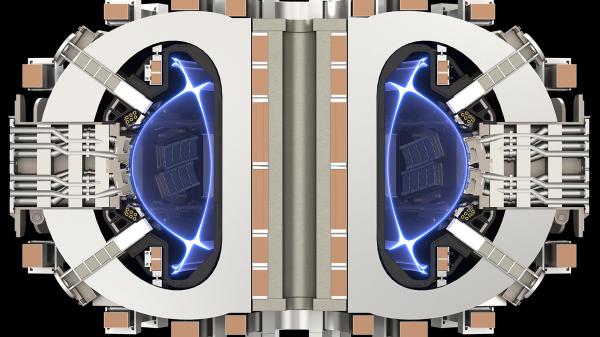
At such temperatures, matter exists as plasma — an electrically charged gas that can be confined using powerful magnetic fields.
But reaching extreme temperatures is only part of the challenge.
The plasma must also be sufficiently dense and remain confined long enough for fusion reactions to sustain the necessary heating.
For decades, scientists have used a framework known as the Lawson criterion to evaluate these conditions.
The difficulty is not merely knowing where the ignition threshold lies. It is determining the most efficient route to reaching it.
An unexpected change of direction
The Princeton researchers approached this problem by examining different pathways through the conditions governing fusion ignition.
Their calculations indicate that heating a relatively low-density plasma first, before increasing its density, can reduce the energy required along the route towards self-sustaining fusion.
The approach exploits a feature of the theoretical operating landscape known as the Cordey saddle.
This represents a comparatively favourable passage between conditions requiring external heating and those in which the fusion reaction can sustain itself.
The researchers also examined how extremely powerful magnetic fields and impurities such as tungsten affect the process.
These details matter because real reactors are not idealised scientific models.
Tungsten, for example, is an important candidate material for reactor components, but particles entering the plasma can cause radiation losses and complicate ignition.
The new framework helps identify how these practical limitations influence the optimal operating pathway.
Why this matters economically
One of the largest obstacles facing commercial fusion is the cost and complexity of sustaining suitable plasma conditions.
Reactors require powerful magnetic systems, sophisticated control technologies, specialised materials and extensive supporting infrastructure.
Reducing the external energy needed to reach ignition could improve future reactor designs and potentially lower operating costs.
However, the Princeton findings are theoretical and computational. They do not demonstrate a functioning commercial reactor or prove that fusion electricity will become inexpensive.
The distinction is important.
Fusion developers must still resolve major engineering challenges involving materials durability, heat extraction, tritium supply, reactor maintenance and reliable electricity production.
Even achieving ignition does not automatically mean a power station produces more usable electricity than its entire facility consumes.
A global race with enormous consequences
The Princeton research arrives as investment in fusion technology accelerates.
On 6 October, US fusion developer Type One Energy announced a $200 million funding round backed by investors including Siemens Energy's venture arm.
The company is developing stellarator technology, an alternative to the tokamak approach used in many major fusion experiments.
Meanwhile, Europe's ITER project in France remains one of the world's largest international scientific collaborations, while researchers in China, Japan, South Korea and the United Kingdom continue developing advanced plasma systems.
The competition reflects more than scientific ambition.
Countries that succeed in commercialising fusion could gain advantages in energy security, advanced manufacturing and industrial competitiveness.
For Europe, where electricity prices and dependence on imported energy remain important economic concerns, commercially viable fusion could eventually change long-term energy planning.
But such benefits depend on future breakthroughs that have not yet occurred.
A smarter route rather than a bigger reactor?
The significance of the Princeton findings lies in challenging the assumption that fusion progress always requires increasingly powerful equipment.
If laboratory experiments validate the proposed pathway, future reactors may be able to exploit better operating strategies rather than relying exclusively on greater heating power or stronger magnetic fields.
That could have major implications for the economics of fusion development.
The dream of abundant electricity remains distant, and no mathematical shortcut can eliminate the engineering challenges ahead.
Nevertheless, seventy years of fusion research have demonstrated that progress sometimes comes not from finding a new destination, but from discovering a better way to reach it.
Princeton's latest work suggests that the route towards practical fusion energy may be just as important as the reactor itself.