The smartphone battle of 2027 may therefore be less about who can make a foldable phone — and more about whether Apple and Samsung can catch China’s hardware pace.
The most striking example is Huawei.
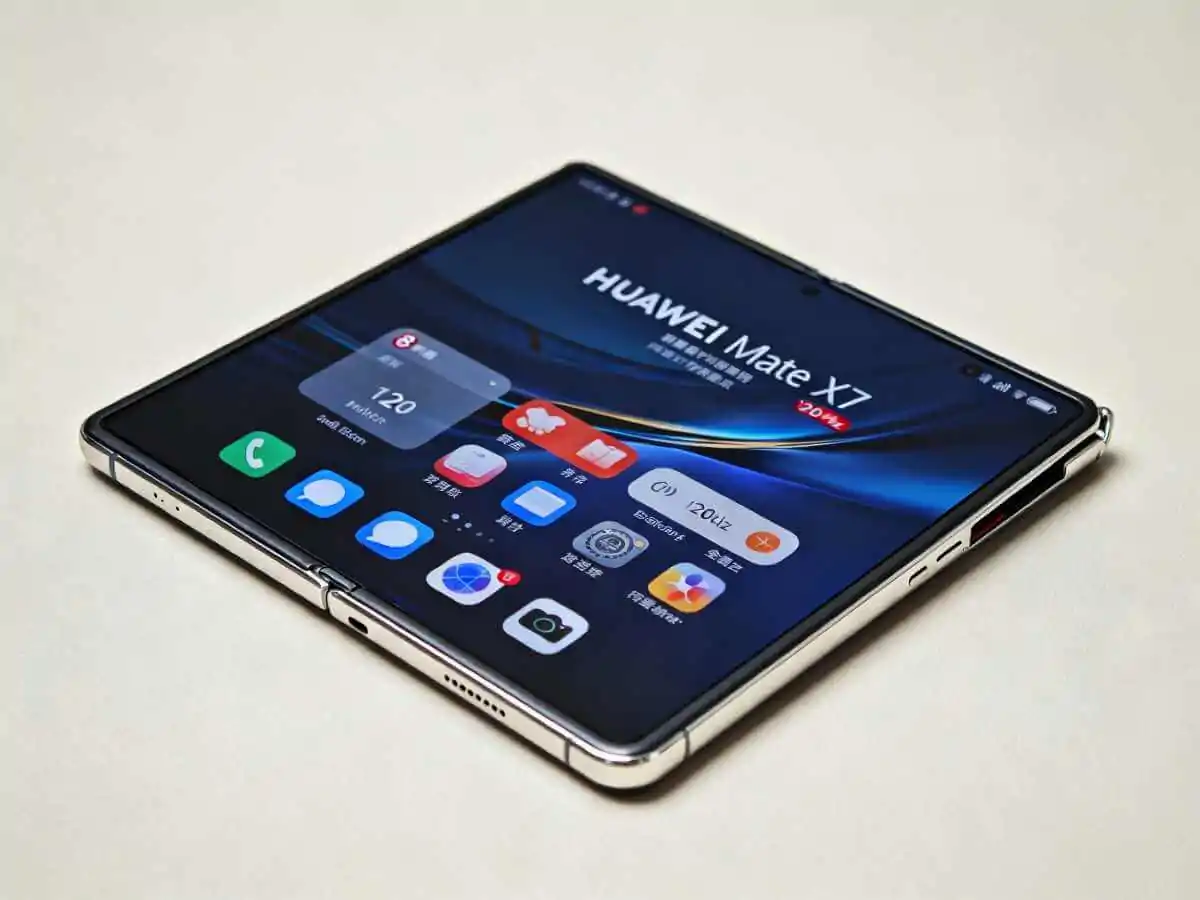
The Huawei Mate X7 opens into an 8-inch OLED tablet but is only 9.5mm thick when folded. It combines a 5,600mAh battery, 66W wired and 50W wireless charging with a 50MP main camera, telephoto macro lens and Huawei's sophisticated foldable architecture. It currently sells from around $1,770–$1,906.
The current Chinese version starts at ¥17,999, while pricing for Huawei's tri-fold line ranges around $2,682.
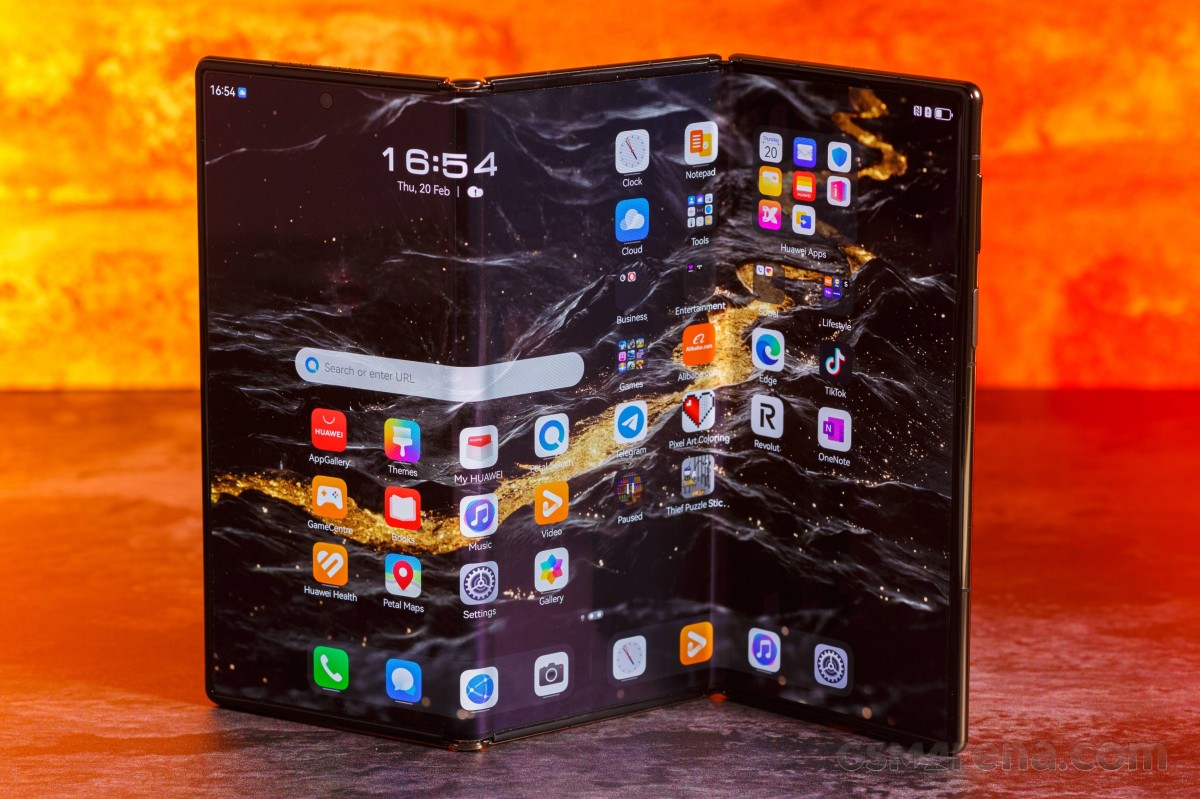
“But Huawei has gone considerably further. Its Mate XTs Ultimate Design is a genuine tri-fold device: rather than opening once into a small tablet, two hinges allow the display to expand into something approaching a compact tablet computer.”
EuroAsia.News, reporting from London
Huawei is also experimenting with shape itself. The new Pura X Max uses an unusually wide foldable format with a 5.4-inch outer display and 7.7-inch internal screen. It carries a 5,300mAh battery, 66W wired and 50W wireless charging and starts at ¥10,999 in China.
Huawei's weakness remains software outside China. Global models use EMUI rather than the full Chinese HarmonyOS ecosystem, and Huawei phones remain disadvantaged by the absence of Google's standard Mobile Services out of the box. For buyers deeply embedded in Gmail, Google Maps, Android Auto or Google-backed banking applications, this can still outweigh Huawei's hardware superiority.
Vivo turns the folding phone into a mobile computer
The more conventional but arguably more threatening competitor is Vivo's X Fold6, launched in June 2026.
Its 8.02-inch inner display and 6.51-inch external screen hide a remarkable 7,000mAh equivalent battery, almost 46% larger than the 4,800mAh battery Samsung lists for its new Galaxy Z Fold8. Vivo combines that with 80W wired and 40W wireless charging.
The phone runs Vivo's foldable-specific OriginOS 6 Fold and can operate four application windows simultaneously. A new desktop mode allows the phone to connect to a monitor or television and effectively become a portable computer. The X Fold6 starts at only $1,192 in China.
That illustrates one of the biggest differences between Chinese and Western smartphone development. Apple increasingly sells integration; Chinese manufacturers are selling specifications and new use cases.
Honor: 6,660mAh in a body thinner than many normal phones
Honor's Magic V6 is perhaps the clearest demonstration of how rapidly foldables have matured.
Folded, it is just 8.75mm thick and weighs 219g. Yet inside is a 6,660mAh silicon-carbon battery with 80W wired and 66W wireless charging, Snapdragon 8 Elite Gen 5 processing, a 64MP periscope camera, IP68/IP69 protection and a hinge tested for 500,000 folds.
Honor has also deliberately attacked Apple's strongest defence: its ecosystem. The V6 can interact with iPhones, Macs, AirPods and Apple Watches and can even extend a Mac's display onto the unfolded phone.
It sells for about $1,906
Oppo attacks the crease
Oppo's new Find N6, launched globally this year, concentrates on another traditional foldable weakness: the visible line running down the centre of the screen.
Oppo calls its solution a “Zero-Feel Crease”. The phone is 8.93mm thick folded, carries a 6,000mAh battery, 80W wired and 50W wireless charging, Snapdragon 8 Elite Gen 5 hardware and, unusually for a foldable, a 200MP main camera.
Its Free-Flow Window software turns the unfolded display into a multi-application workspace, while an optional AI Pen moves the concept even closer to a miniature tablet-PC.
Pricing is $2,450 for 16GB RAM and 512GB storage.
And Xiaomi comes next
Xiaomi is expected to reveal its Xiaomi 18 Fold around September 7 following its IFA appearance. Pre-launch reports point to Xiaomi's own XRING 03 processor and a renewed push into the book-style folding market, but final specifications and price should be treated as unconfirmed until Xiaomi formally launches the device.
The significance is bigger than one model. Xiaomi already controls phones, tablets, wearables, smart-home products and electric cars through HyperOS. A foldable increasingly becomes the portable control centre for the entire ecosystem.
China versus Samsung
Samsung remains the global benchmark for mature foldable software and worldwide support.
Its newly launched Galaxy Z Fold8 starts at $1,960, while the Fold8 Ultra starts at $2,178. The regular Fold8 weighs an exceptionally light 201g and uses Snapdragon 8 Elite Gen 5 for Galaxy, but its battery is only 4,800mAh. The Ultra raises the camera to 200MP and battery to 5,000mAh.
That produces an increasingly uncomfortable comparison.
Vivo offers 7,000mAh. Honor offers 6,660mAh. Oppo offers 6,000mAh. All charge substantially faster than Samsung.
Samsung's advantage is no longer necessarily hardware. It is software maturity, Galaxy AI, distribution, warranty support and the reliability of buying into a globally established Android ecosystem.
And then there is Apple
Apple's current iPhone 17 starts at $926 and the 17 Pro range at around $1,280. The ordinary iPhone offers excellent performance, cameras, long software support and probably the industry's strongest ecosystem — but it remains a conventional single-screen smartphone.
That may change almost immediately.
Apple's September 9 event is widely expected to include its first folding iPhone, currently referred to in reports as the iPhone Ultra or iPhone Fold. Industry estimates place the likely price above $2,000, potentially $2,100–$2,300 or more. Until Apple announces it, however, specifications and pricing remain speculation.
Apple would therefore be entering a market in which Huawei is already selling tri-folds, Vivo has reached 7,000mAh batteries, Oppo is attacking the screen crease and Honor has produced a foldable only 8.75mm thick.
The 2027 battle will not be about folding
By 2027, simply producing a foldable phone will no longer represent technological leadership.
The real competition will be over battery chemistry, AI, desktop-style multitasking, cameras, satellite communications, cross-device integration and whether a smartphone can replace part of what users currently do on laptops and tablets.
Chinese manufacturers currently hold an important hardware advantage. Silicon-carbon batteries have allowed them to put 6,000–7,000mAh capacities into bodies that would have seemed physically impossible only a few years ago. Charging at 66W, 80W or more is routine.
Apple's strength remains the opposite: software, applications, privacy, ecosystem integration, customer loyalty and resale value. Samsung sits between the two camps, combining the Android ecosystem with years of foldable experience and global distribution.
For consumers, however, the comparison has changed dramatically.
Five years ago the question was whether a Chinese phone could compete with an iPhone.
In 2027 the question may increasingly be why a $2,000 Apple foldable has a smaller battery, slower charging and fewer displays than a Chinese competitor that arrived a generation earlier.
The foldable market itself will remain relatively small — Reuters reported that analysts still expect foldables to account for less than 3% of global smartphone shipments by 2027. But premium smartphones are where manufacturers demonstrate their engineering ambitions.
And in that particular race, China is no longer following.
It is increasingly setting the specifications everyone else has to match.
I can also prepare a short comparison box for the article with Huawei Mate X7, Vivo X Fold6, Honor Magic V6, Oppo Find N6, Samsung Fold8 and the expected Apple foldable showing screen, battery, charging and price at a glance.