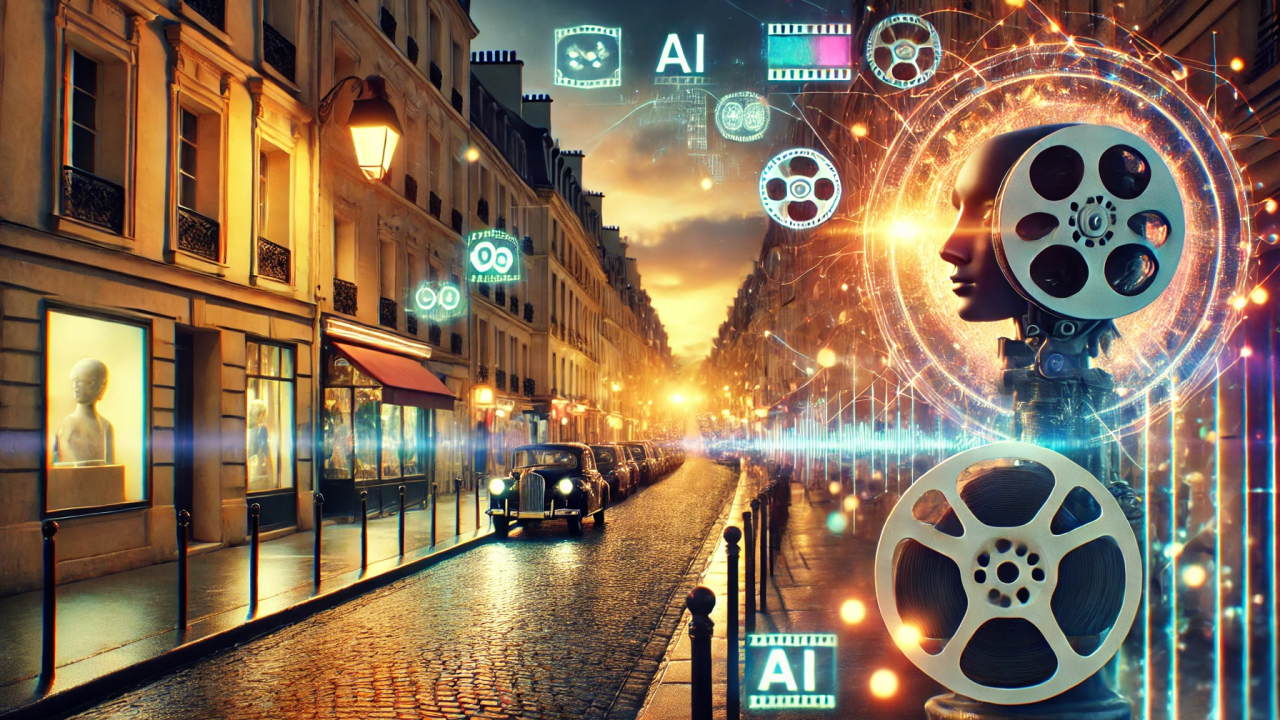
Two years ago, AI filmmaker Zhu Zhili said Shenzhen was the obvious place to establish an AI studio. In 2026, he says officials from cities and industrial parks across China contact him almost daily, offering rent support, computing resources and other incentives to bring his business to them. Local governments increasingly see AI-generated video not as an experiment but as an industry they want located inside their city.
The attraction is cost.
According to figures cited by Reuters from state broadcaster CCTV, the production cost of AI short dramas fell during the first half of 2026 from about 5,000 yuan per minute — roughly €650 — to only a few hundred yuan, in some cases below €70. Film-directing student Pan Xiaojun gave an even more dramatic example: a wedding scene that might cost 60,000 yuan, around €7,850, to shoot conventionally could be created with AI for roughly 1,400 yuan, or €180.
Data firm DataEye counted 221,900 new AI shows launched on Douyin during the first half of 2026. Only 1,055 exceeded 100 million views — a hit rate below 0.5%. China’s broadcasting regulator separately says around 430,000 micro-dramas were released during the first eight months of 2026, 13 times the total recorded last year, and more than 90% were produced using AI technologies. The domestic micro-drama market exceeded 100 billion yuan in 2025 — around €13.1 billion.
“That economic difference is transforming output.”
EuroAsia.News, reporting from Bejing
Local governments are adding fuel to the boom. Shanghai is providing computing capacity, cloud-based AI models and help with overseas distribution. Shenzhen’s micro-drama programme allows qualifying projects to receive subsidies worth up to 30% of production costs, while a company can receive as much as 5 million yuan, around €654,000, in one funding round. Beijing supports both AI audiovisual technology and AI-created content, with individual projects eligible for as much as 3 million yuan, around €392,000.
The models themselves are also improving quickly. ByteDance’s Seedance 2.0 can work with text, images, audio and video simultaneously, while Kuaishou’s Kling has become one of China’s best-known video-generation systems. In July, investors including Alibaba and Tencent backed Kling AI in a financing round exceeding 19 billion yuan — about €2.5 billion — valuing the business at around $15 billion before the new investment. Kling reported first-quarter revenue of 650 million yuan, more than four times the previous year’s level.
AI is already moving beyond phone-screen dramas. China’s National Film Administration approved the 90-minute science-fiction production “Sanxingdui: Future Memories” for theatrical release, the first AI film produced by a major Chinese studio to receive such approval. Streaming platform iQIYI says it is “all-in” on AI and is subsidising selected creators.
The contrast with the US, UK and EU is striking. Western production still relies mainly on conventional crews, physical locations, established studios and much higher labour and production costs. FilmLA counted 857 US-produced scripted film and television releases in 2024, with only 18.3% filmed in Los Angeles, where production has been losing ground to other US states and overseas locations.
The UK remains one of the strongest international production hubs: 193 feature films entered production there in 2025, with inward-investment films providing most feature-film spending. Across Europe, 2,522 films were produced in 2025 — a record, led by Spain with 423 and Italy with 357.
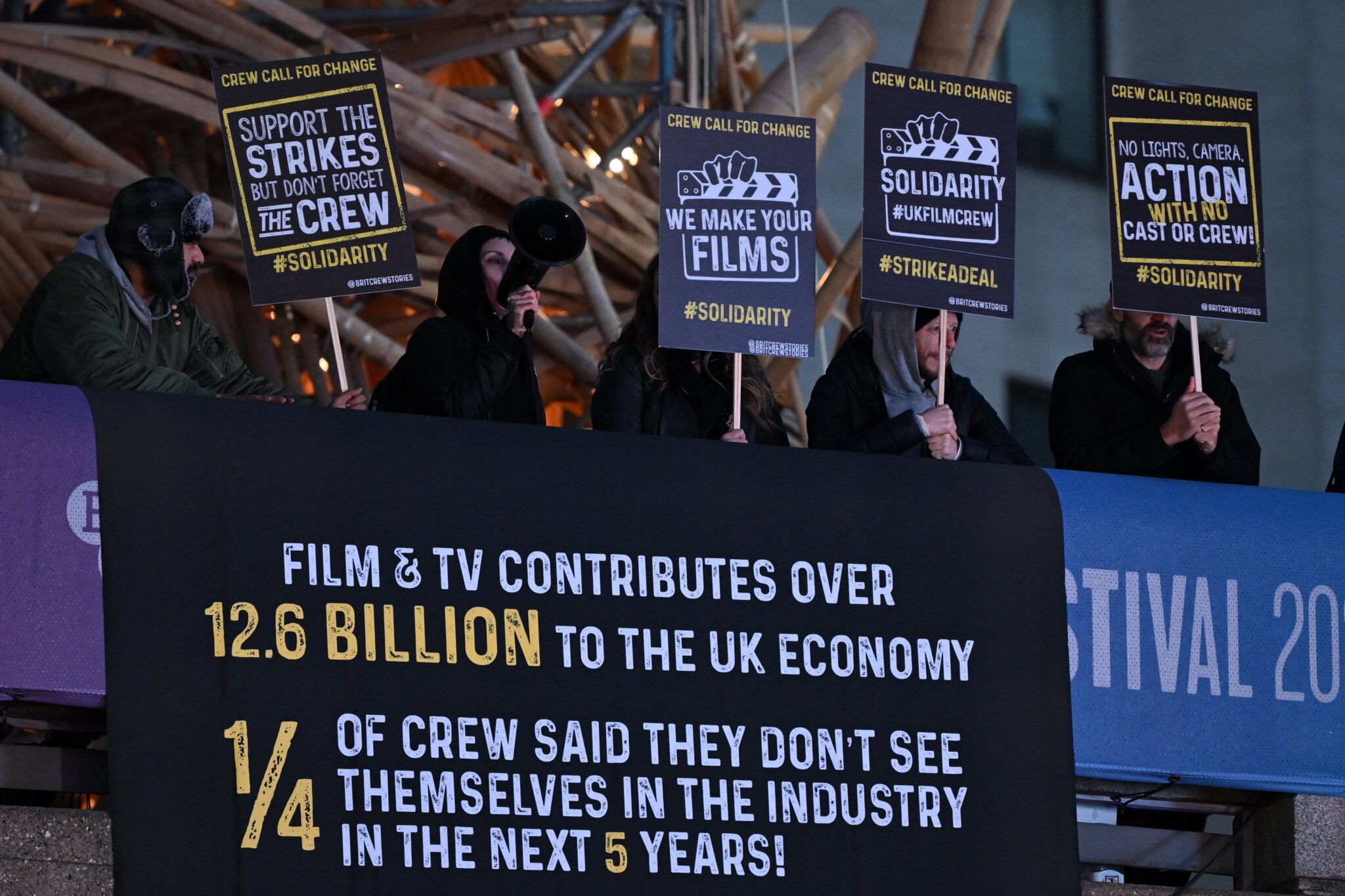
These figures are not directly comparable with China’s hundreds of thousands of short-form AI productions. That is precisely the point. The US, UK and Europe are still largely optimising a high-cost model built around crews, locations, tax incentives and large individual productions. China is simultaneously testing an almost opposite model: extremely cheap, rapid, high-volume production in which thousands of ideas can be launched and only a small fraction need become hits.
AI could therefore change what counts as a viable production. A creator who previously needed a crew, sets, locations and weeks of shooting may increasingly be able to test a concept with a laptop, cloud-computing credits and a small team. That lowers barriers to entry dramatically — but it can also flood the market.
But the boom already contains the seeds of overcapacity. Hundreds of thousands of productions are competing for attention while only a tiny fraction become major hits. Actors and voice performers have raised concerns about jobs and unauthorised use of their likenesses; audiences complain about plagiarism and repetitive material. China requires AI-generated content to be labelled, but copyright rules remain incomplete.
The strategic question is therefore no longer whether AI can make filmmaking cheaper. It clearly can.
The question is whether China can turn extremely cheap generation into globally competitive storytelling rather than an oversupply of disposable content. If it can, filmmaking may become another sector in which China combines low production costs, local subsidies, enormous domestic demand and rapid technological iteration to build scale before competitors elsewhere have even decided how to regulate it.