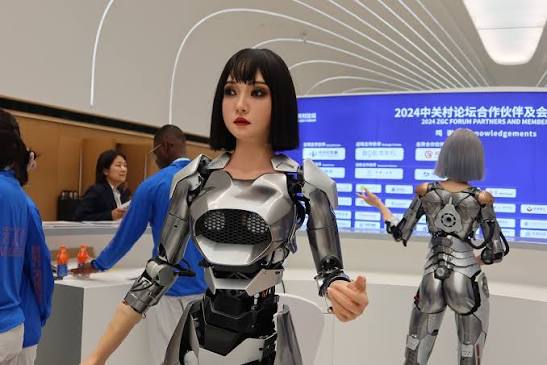
Beijing plays host to the second World Humanoid Robot Games from August 22–26, 2026, a five-day event that saw more than 2,056 robots from 666 teams across 16 countries compete in 51 disciplines — up from just 26 events in the previous year. The games, held at the National Speed Skating Oval (the “Ice Ribbon” built for the 2022 Winter Olympics), coincided with the World Robot Conference 2026, which drew over 300 exhibitors from 26 countries showcasing more than 3,000 products.
Athletics: Records That Stunned the World
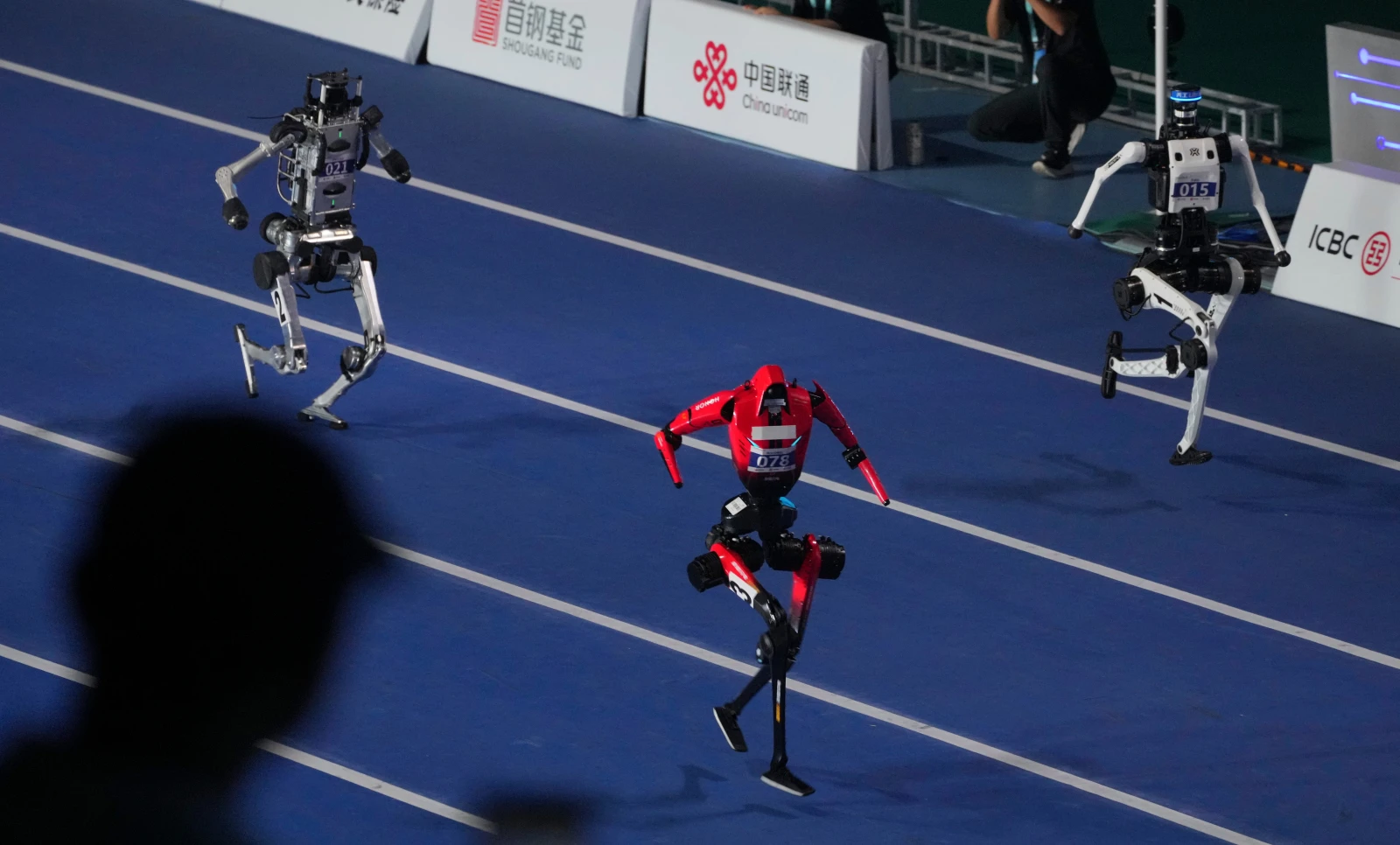
The preliminary heat saw the Tiangong Ultra and the Honor-developed “Shandian” robot run neck and neck for most of the race, with the former crossing the line just one body-length ahead. Shandian finished second with 9.47 seconds, while Unitree’s entry came third at 12.41 seconds.
“The headline achievement came in the 100-metre sprint, where a humanoid robot named Tiangong Ultra, developed by Beijing-based X-Humanoid and fielded by the Tianzhuo team, clocked 9.39 seconds — surpassing Usain Bolt’s human world record of 9.58 seconds by a remarkable 0.19 seconds.”
EuroAsia.News, reporting from Bejing
Last year’s best time in the same event was 21.50 seconds — meaning the winning time was cut by more than half in just 12 months.
In the standing jump event, another X-Humanoid robot achieved 2.88 meters, far surpassing the previous year’s best of 0.95 meters and also eclipsing the human world record of 2.45 meters set by Cuba’s Javier Sotomayor in 1993.
The opening ceremony itself featured a humanoid robot riding a mechanical horse and firing a bow and arrow to light the “Zhixin” — a chip-shaped intelligent symbol akin to an Olympic torch. Over 1,000 robots participated in the parade, many moving in fully autonomous synchronised formation without remote control.
New Categories: From Sports to Service
This year’s games expanded far beyond athletics. 21 of the 51 events were dedicated to real-world scenarios: household services, hospitality, gardening, firefighting, and emergency rescue. This included folding laundry, making breakfast, sorting parcels, and operating in simulated retail environments — tasks that directly mirror China’s push to commercialise humanoid robots in the workforce.
For example, at the concurrent World Robot Conference 2026, robots demonstrated cooking meals, serving as baristas, boxing, playing table tennis, and even performing with symphony orchestras. A dedicated “robot consumption street” allowed visitors to see machines preparing food and drinks in real-time.
Stricter Autonomy Rules
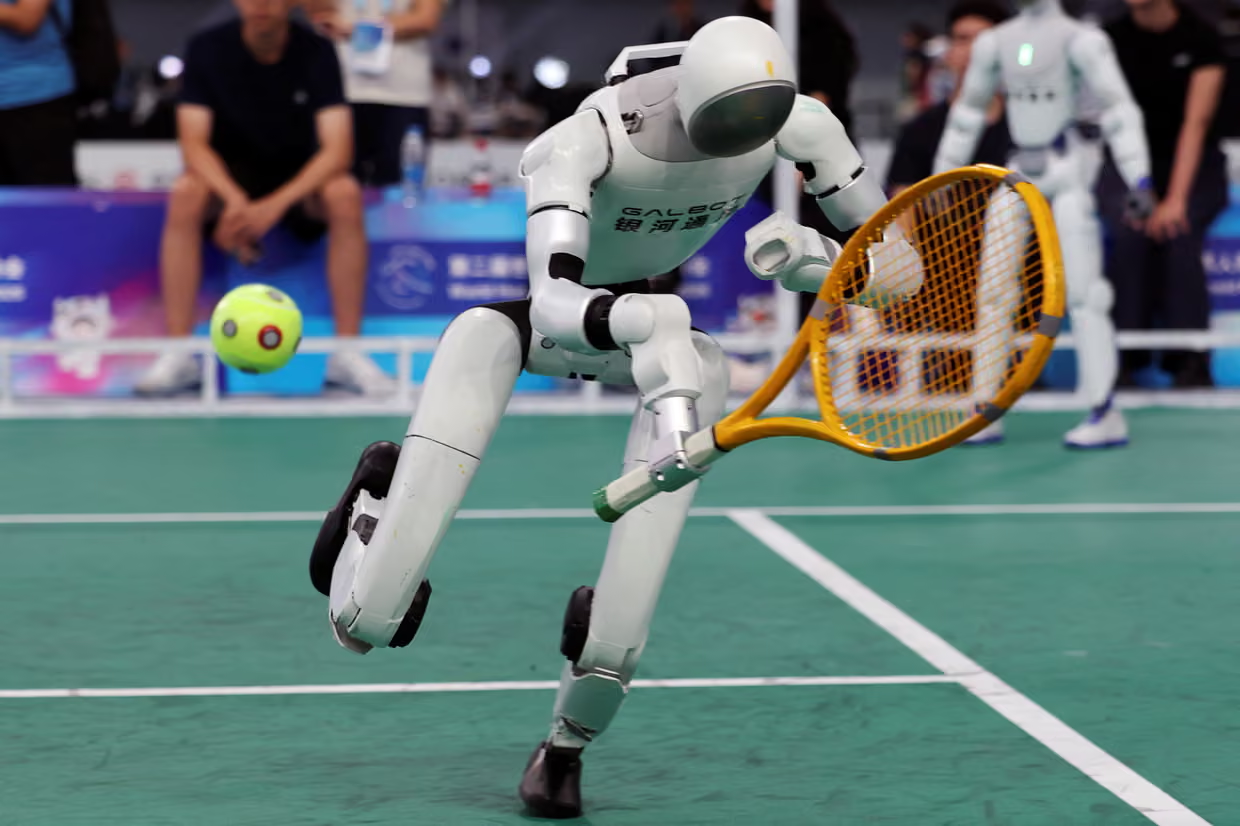
A key rule change for 2026: except for the 100m sprint and the 400m obstacle course, robots in all other events had to complete tasks fully autonomously — no remote control allowed. Events completed autonomously received a score multiplier of 1.0, while remotely controlled tasks scored only 0.5. This shift reflects the industry’s larger goal of moving robots from demonstrations to independent operation in unpredictable environments.
Scale and Participation
The games attracted 666 teams and 2,056 robots — a 138% increase in teams and a fourfold increase in robots compared to the inaugural event. International participation included teams from Booster Robotics, Galbot, and Noetix Robotics, alongside Chinese manufacturers such as X-Humanoid, Unitree, and Honor. The 1,301 competitive sessions were spread across 51 events, up from 487 sessions in 2025.
Infrastructure Adaptation
Event organiser Taishan Sports, which has supplied equipment for eight Olympic Games, had to adjust surfaces for robot competitors. Unlike human athletes, robots are much heavier and require different friction and hardness specifications. The company redesigned running tracks, artificial turf, jumping mats, and cushioning zones specifically for machine competitors — a first in its history.
The Bigger Picture
The games took place during the same week as Unitree Robotics’ highly anticipated IPO — highlighting the convergence of government-backed events and commercial momentum. The overarching theme, repeated across both the games and the conference, was clear: China’s humanoid robots have moved from flashy demonstrations to practical, real-world utility. With performance records now surpassing human limits in key athletic categories — and daily-task events rapidly expanding — the robotics industry is positioning itself not as a future curiosity, but as a present-day competitor to human labor across multiple sectors.