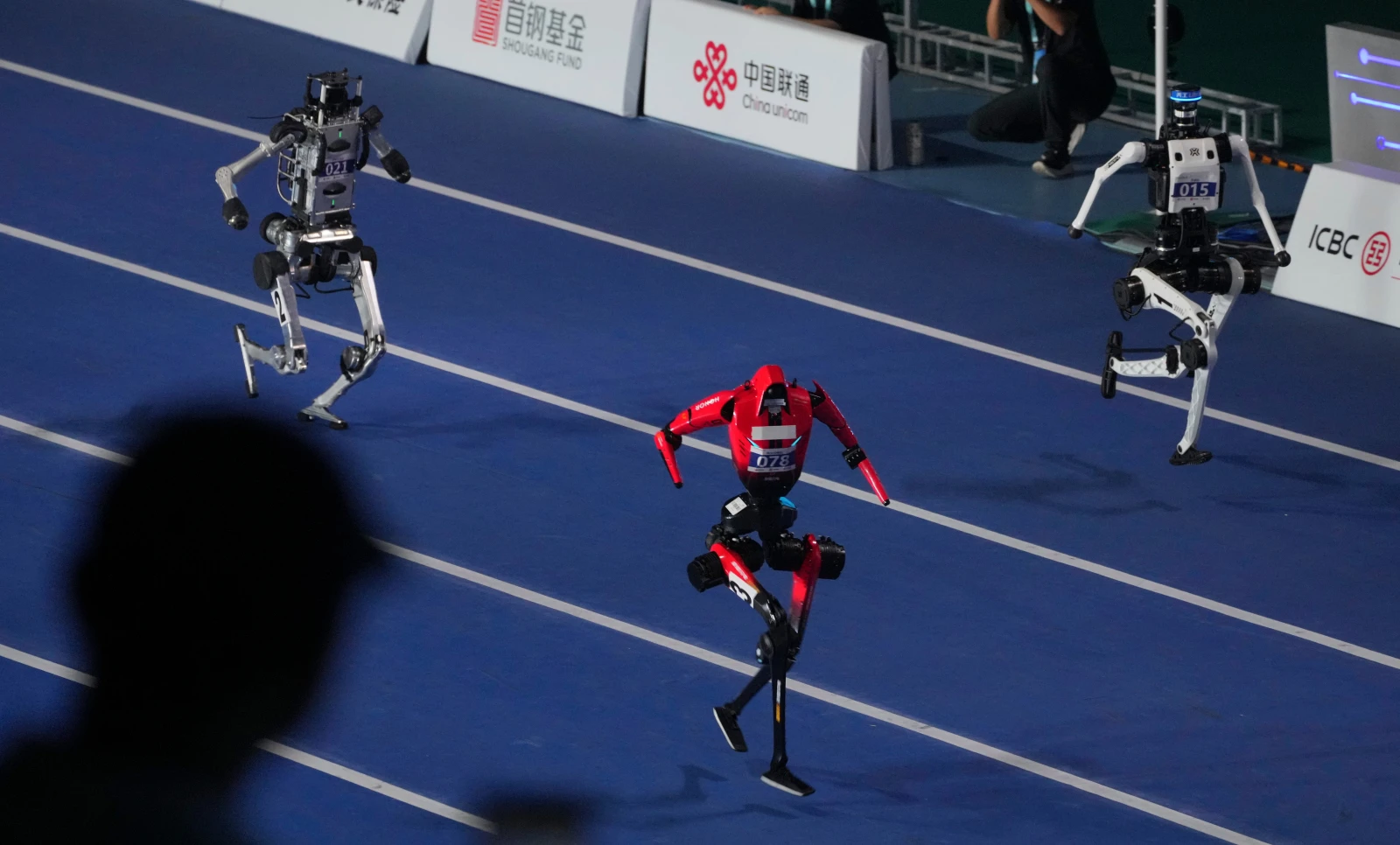
China's humanoid robot industry has crossed a critical threshold in 2026. The machines that once dazzled audiences with choreographed demonstrations are now being deployed in factories, hotels, restaurants, and retail outlets — not as novelties, but as workers. According to the 2026 Humanoid Robot Industry Development Report released at the World Robot Conference in Beijing, China shipped more than 40,000 humanoid robots in the first half of 2026, accounting for 97% of global shipments. Counterpoint Research confirms that the top five manufacturers worldwide are all Chinese firms, together representing 86% of global shipments.
The Numbers Behind the Boom
By mid-2026, China's humanoid robot market had already reached an estimated value of 150 billion RMB (approx. $22 billion USD), with projections of at least 60% growth in 2027. Leading manufacturers are delivering in volume: Zhiyuan Robotics had cumulatively produced 15,000 units by June 2026, while Unitree Robotics shipped over 7,000 units in the first half alone. UBTECH's U1 model had received more than 13,000 pre-orders by the end of June. A fully automated production line in Foshan, Guangdong—the first of its kind—can now produce one robot every 30 minutes with 92% automation across key processes.
“The scale of this expansion is extraordinary.”
EuroAsia.News
Industrial Applications: Factories and Warehouses
The most significant shift is in industrial settings. At the 2026 World Artificial Intelligence Conference (WAIC), Leju Robotics demonstrated humanoid robots performing fully autonomous pallet depalletising, plastic box stacking, and small-part feeding on a 1:1 replica production line—complete with self-correction when packages were misaligned. These are not staged tricks; they represent robots working alongside humans on real shop floors.
The deployment landscape spans manufacturing, 3C (computers, communications, and consumer electronics), aviation, logistics, and energy. In the southern manufacturing hub of Guangdong, 34 companies formed an "embodied intelligence" at the World Robot Conference, showcasing robots handling tasks from tray material handling and loading/unloading to mobile transport and dual-arm coordination. UBTECH has already integrated its robots into Airbus production lines, while Galaxy General has secured a 236 million RMB contract with battery giant CATL.
Service and Hospitality: The Visible Frontline
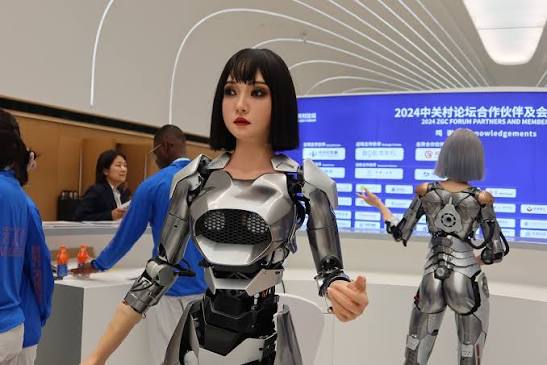
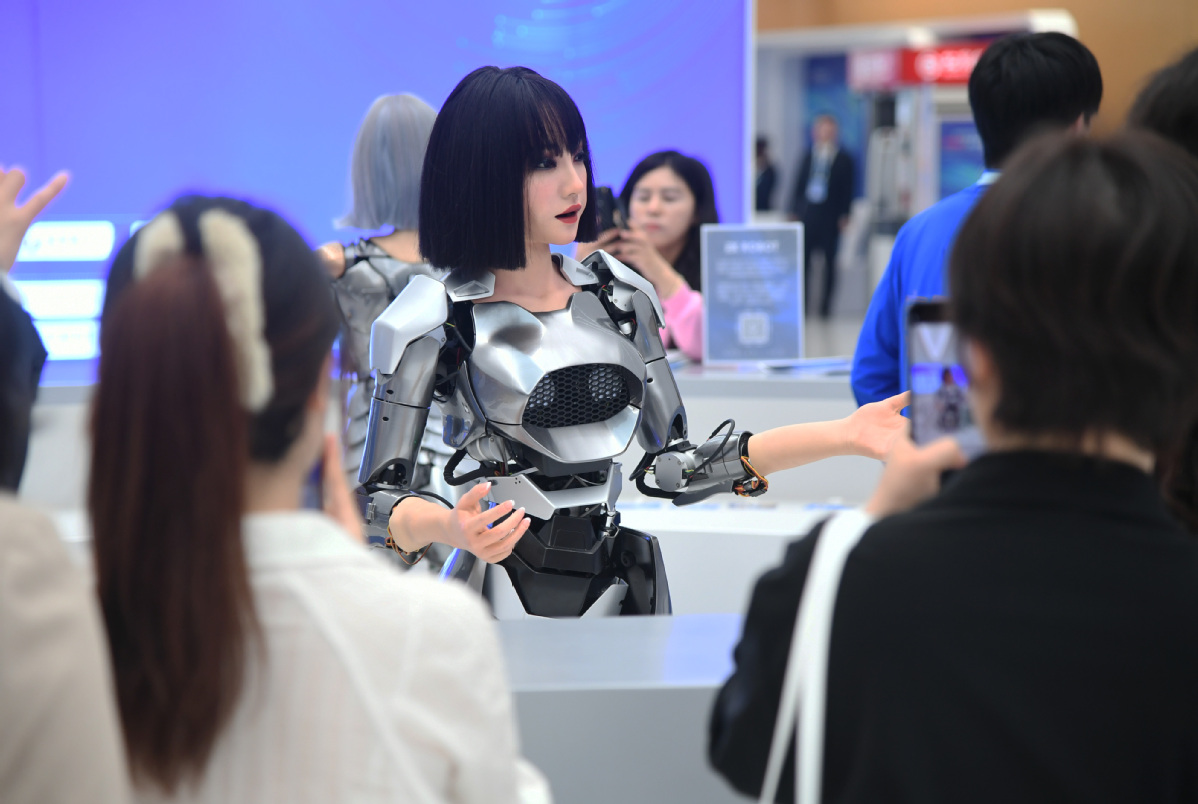
Beyond the factory floor, humanoid robots are becoming increasingly visible in customer-facing roles. Qinglang Intelligent Technology, which claims the world's top commercial service robot shipments, has deployed its XMAN-R1 models as "baristas," "laundry attendants," and "convenience store clerks". The company reported strong export growth and expanding order books for the third quarter.
In retail and hospitality, humanoid robots are taking on complex interactive tasks. At the WRC, ZhiPingFang demonstrated robots capable of preparing coffee, ice cream, and cocktails — autonomously reading customer orders, selecting cups, operating equipment, and completing service. These robots are already operating across more than 10 Chinese provinces on a regular basis. Meanwhile, household applications are advancing rapidly. YueJiang Robotics exhibited robots capable of folding T-shirts, trousers, and towels—tasks requiring sophisticated hand-eye coordination and fine manipulation.
Emerging Applications: Security, Inspections, and Beyond
The "smart bionic" family extends beyond humanoid forms. Shenshen Xinchuang's four-legged robotic dogs are being deployed for security patrols, emergency rescue, substation inspections, and underground utility pipe monitoring — replacing humans in hazardous environments. Pudu Robotics' industrial quadruped D5 is designed for firefighting and power grid inspections. The first seven months of 2026 saw exports of such robotic dogs exceed 3.2 million RMB, with orders steadily growing.
Challenges and the Road Ahead
Despite the impressive numbers, industry leaders remain realistic. Unitree Robotics' CEO Wang Xingxing noted that the industry may still need 2-10 years to achieve a true "ChatGPT moment" in robotics software—the breakthrough where robots can understand and execute arbitrary tasks in unfamiliar environments through simple voice or text commands. High costs and limited application scope continue to hinder mass deployment. Crucially, while deployment scenarios are diversifying, most applications remain at the stage of formal procurement, pre-orders, or pilot cooperation — not yet standardised, repeatable industrial-scale adoption. Profitability remains a pressing concern; even market leader Unitree saw declining net profits in 2026 despite surging revenues, underscoring that scale alone does not guarantee financial returns.
Nevertheless, the direction is clear. From entertainment and retail to manufacturing and logistics, China's humanoid robots have moved decisively from demonstration to deployment. The question is no longer whether they can work, but how quickly they can work profitably.