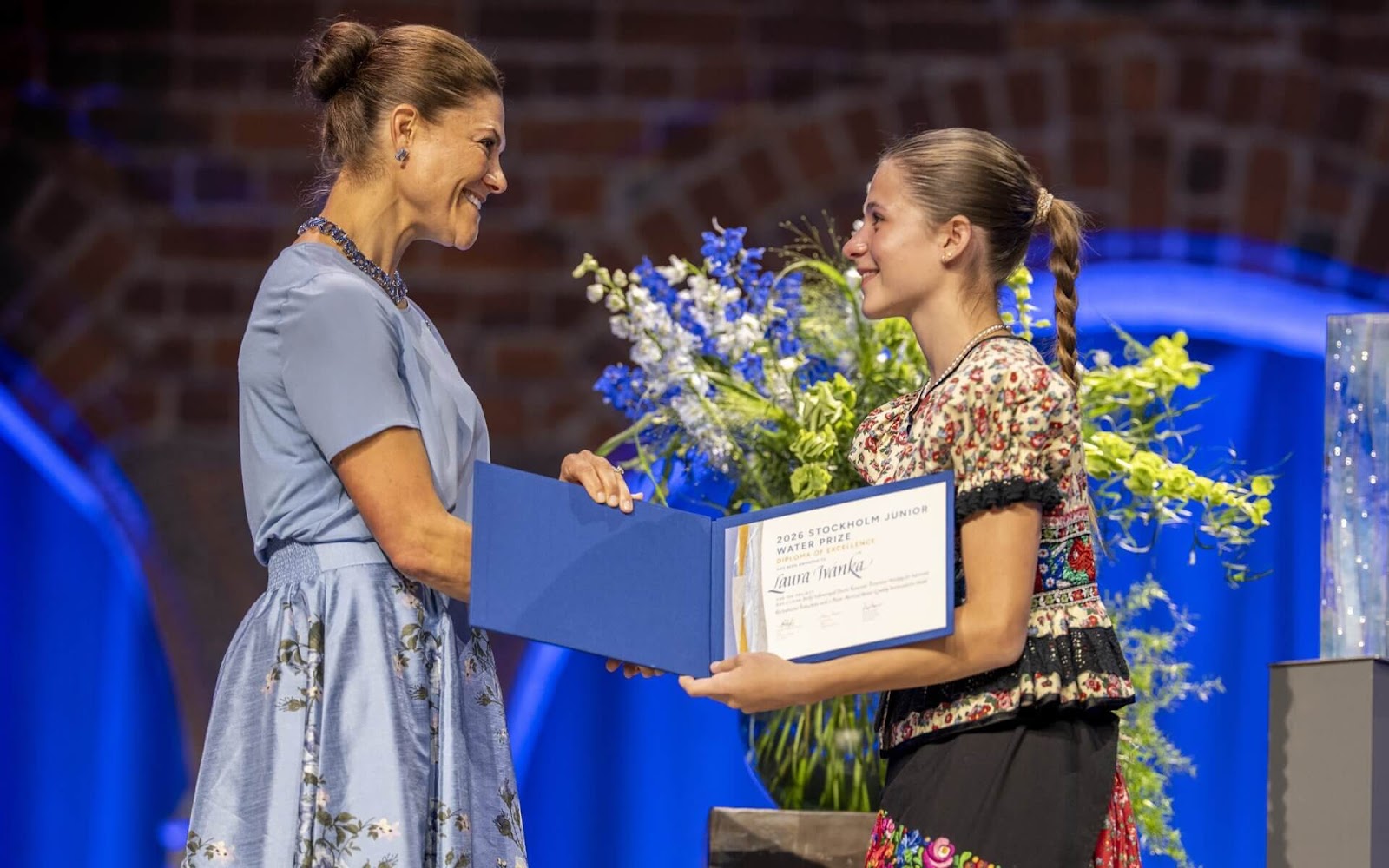
The award was presented by Crown Princess Victoria of Sweden at Stockholm City Hall on 25 August during World Water Week. More than 40 national winners competed. Ivánka is the first Hungarian to receive an award at the global final in the competition’s nearly three-decade history.
DIVE&CLEAN starts from a simple observation: coastal plastic sinks, settles on the seabed and gradually fragments into microplastics that can remain trapped in sediments for decades, damaging marine ecosystems and water quality. Removing it while still in larger pieces is far easier than trying to recover microscopic particles later.
Divers can pick up bottles, packaging and other plastic during a dive and deposit them in fixed seabed collection points. The units are lightweight, easy to transport and assemble, safe for marine life and can also serve as microplastic sampling stations.
“Ivánka’s solution is a low-cost, diver-assisted underwater collection system placed along popular recreational diving routes.”
EuroAsia.News Editorial
The jury highlighted the project’s practical development. Ivánka surveyed users and stakeholders, built and refined prototypes, conducted stability analysis and tested the system in Malta. She also examined whether the units could withstand currents, buoyancy and overturning forces, while pursuing patent protection.
Her research quantifies the value of acting early. According to the project model, removing submerged plastic within the first five years could prevent more than 96 percent of long-term microplastic accumulation under the fragmentation scenarios tested. If intervention is delayed until year 20, prevention falls to 76 percent.
The idea grew from Ivánka’s experience. She began scuba diving at eight and repeatedly encountered rubbish on the seabed during family trips to Malta. Many divers are willing to remove waste they see, but recreational dives are not normally cleanup operations and divers rarely carry dedicated collection equipment. DIVE&CLEAN makes waste removal part of existing diving activity rather than requiring separate expeditions.
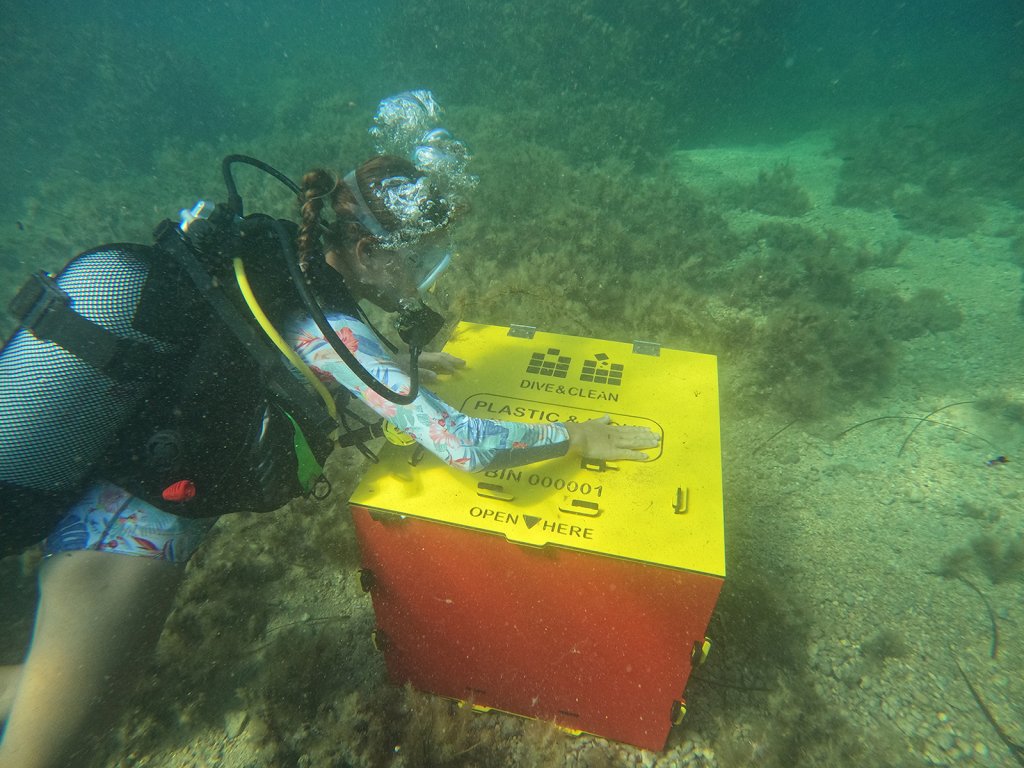
The project had already won Hungary’s national Stockholm Junior Water Prize and the 34th National Science and Innovation Olympiad.
The main 2026 Stockholm Junior Water Prize went to Canada’s Moroti Adegboyega for Ecoferroquatics, an AI-guided system using magnets and biodegradable ferrofluid to remove plastic from water. Hungary’s Diploma of Excellence nevertheless marks a major milestone, placing a Hungarian student among the few finalists singled out by the international jury.
Ivánka’s achievement shows that useful environmental innovation does not always require massive infrastructure. DIVE&CLEAN is deliberately simple: use people already underwater, give them a practical place to leave waste, and remove plastic before it becomes a far more difficult microplastic problem. At just 15, Laura Ivánka has taken the idea from observation to prototype, field testing and international recognition — and in Stockholm, made Hungarian scientific history.