
Honda Aircraft Company has officially unveiled the HondaJet Echelon, a clean-sheet light jet that aims to disrupt not only the light jet segment but also to challenge the lower end of the midsize market. Announced as the successor to the pioneering HondaJet Elite II, the Echelon represents a significant leap in range, efficiency, and cabin comfort. The name itself—meaning "a level of achievement"—signals Honda's intent to elevate what a light jet can be.
New Technologies and Design Innovations
Most notably, it features an over-the-wing engine mount (OTWEM) configuration, an evolution of Honda's signature design that places engines above the wings rather than on the rear fuselage. This layout reduces drag at high speeds, lowers cabin noise, and frees fuselage space for a larger cabin. The wings themselves are constructed using a new composite material process that allows for a natural laminar flow wing design, improving aerodynamic efficiency by reducing drag across a wider portion of the wing surface.
“The Echelon introduces several technological firsts for Honda Aircraft.”
EuroAsia.News
Powering the Echelon is a next-generation turbofan engine developed in partnership with GE Aerospace. While Honda has not released full specifications, initial data suggests a significant increase in thrust compared to the HF120 engines used in earlier HondaJets. The new engine incorporates advanced materials and a higher bypass ratio, contributing to both improved fuel efficiency and reduced emissions—key selling points in an industry under increasing pressure to decarbonize.
Inside the cockpit, the Echelon debuts an advanced fly-by-wire system, a rarity in light jets. This system, combined with autothrottle and emergency autoland capabilities, reduces pilot workload and enhances safety. The avionics suite, based on the Garmin G3000 platform, features touchscreen controls, synthetic vision, and advanced weather radar integration.
Cabin Comfort and Capacity
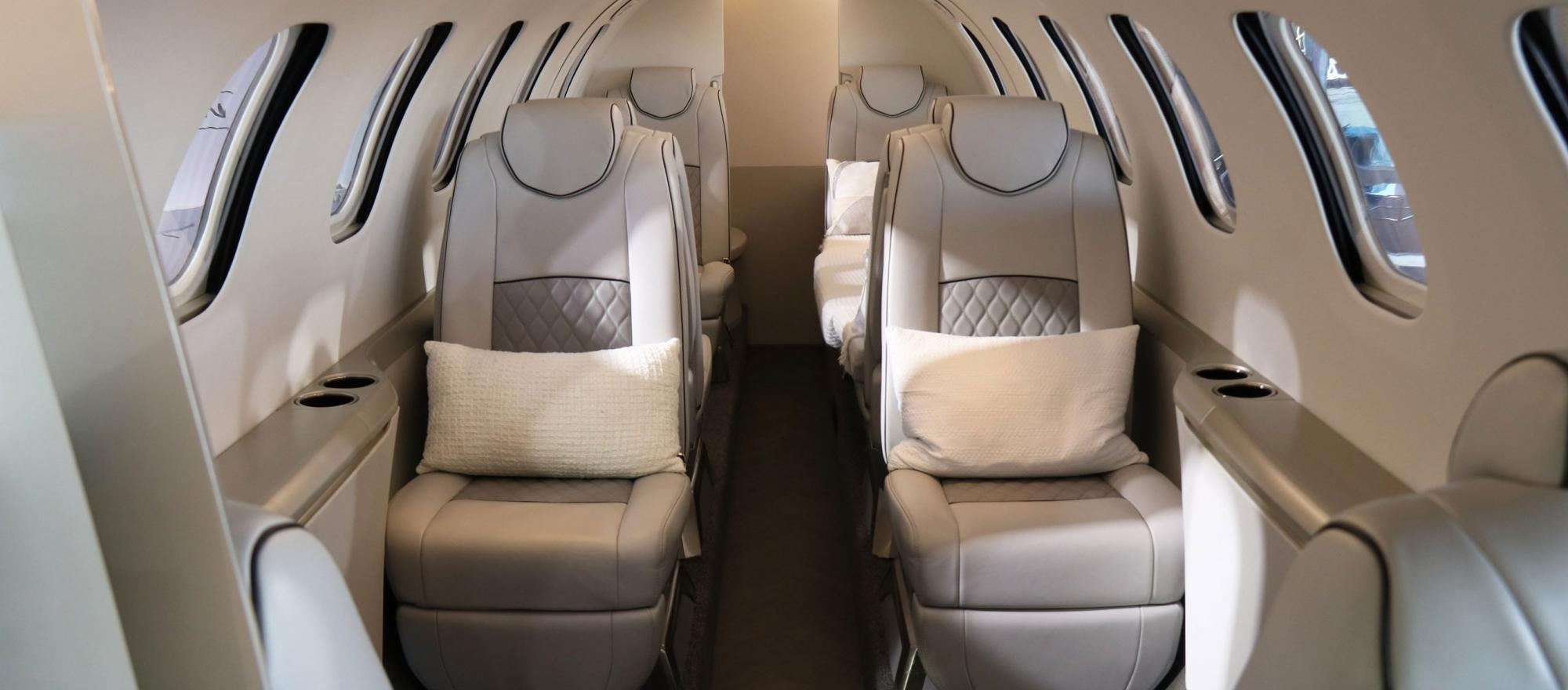
One of the most striking departures from previous HondaJets is the Echelon's cabin size. The aircraft is designed to accommodate up to 11 occupants, though typical configurations will seat 9 to 10 passengers. The cabin is significantly wider and taller than the HondaJet Elite II, offering stand-up headroom for most passengers—a feature previously unavailable in the light jet category.
The interior design emphasizes flexibility, with a modular seating system that can be reconfigured for executive transport, medical evacuation, or cargo missions. Honda has also focused on cabin connectivity, offering high-speed satellite internet and wireless control systems as standard features. Large windows, improved pressurization, and advanced noise insulation contribute to a cabin experience that Honda claims rivals midsize jets.
Performance and Range: Bridging Categories
The Echelon's most compelling headline figure is its range: approximately 2,625 nautical miles at Mach 0.72. This places it firmly beyond traditional light jets, which typically offer ranges between 1,500 and 2,000 nautical miles. The Echelon can fly nonstop from New York to Los Angeles, London to Cairo, or Singapore to Tokyo—routes that previously required a fuel stop or a larger, more expensive aircraft.
Maximum cruise speed is projected at Mach 0.78, comparable to many midsize jets. The aircraft's ceiling of 47,000 feet allows it to fly above most commercial traffic and weather, further improving efficiency and passenger comfort. Takeoff distance is expected to be under 4,000 feet, preserving access to smaller regional airports that larger jets cannot use.
Market Positioning and Competitive Landscape
Honda is positioning the Echelon as a "light jet with midsize capability." At an expected price point in the $10-12 million range, it undercuts midsize competitors like the Cessna Citation Latitude and Embraer Praetor 500 while offering comparable range and superior fuel efficiency. Against traditional light jets like the Pilatus PC-24 or Embraer Phenom 300E, the Echelon offers significantly more cabin space and range for a moderate price premium.
This positioning could reshape the market. Business aviation has long suffered from a gap between light jets—efficient but cramped—and midsize jets—comfortable but expensive to acquire and operate. The Echelon targets that gap directly, appealing to corporate flight departments and charter operators seeking transcontinental capability without the operating costs of a midsize aircraft.
Program Status and Future Outlook
Honda Aircraft is currently in the detailed design and testing phase, with first flight expected in 2026 and certification targeted for 2028. The company has not yet opened an official order book, but interest from existing HondaJet owners and fleet operators is reportedly strong.
The Echelon also represents a strategic bet on sustainable aviation. Honda has indicated the aircraft's systems will be compatible with sustainable aviation fuel (SAF) from day one, and the airframe's efficiency improvements align with industry goals to reduce carbon emissions per passenger mile.
For Honda, the Echelon is more than a new product—it is a statement that the company intends to be a long-term player in aviation. By combining innovative engine placement, advanced materials, and category-defying range, the Echelon challenges decades of assumptions about what a light jet can accomplish.