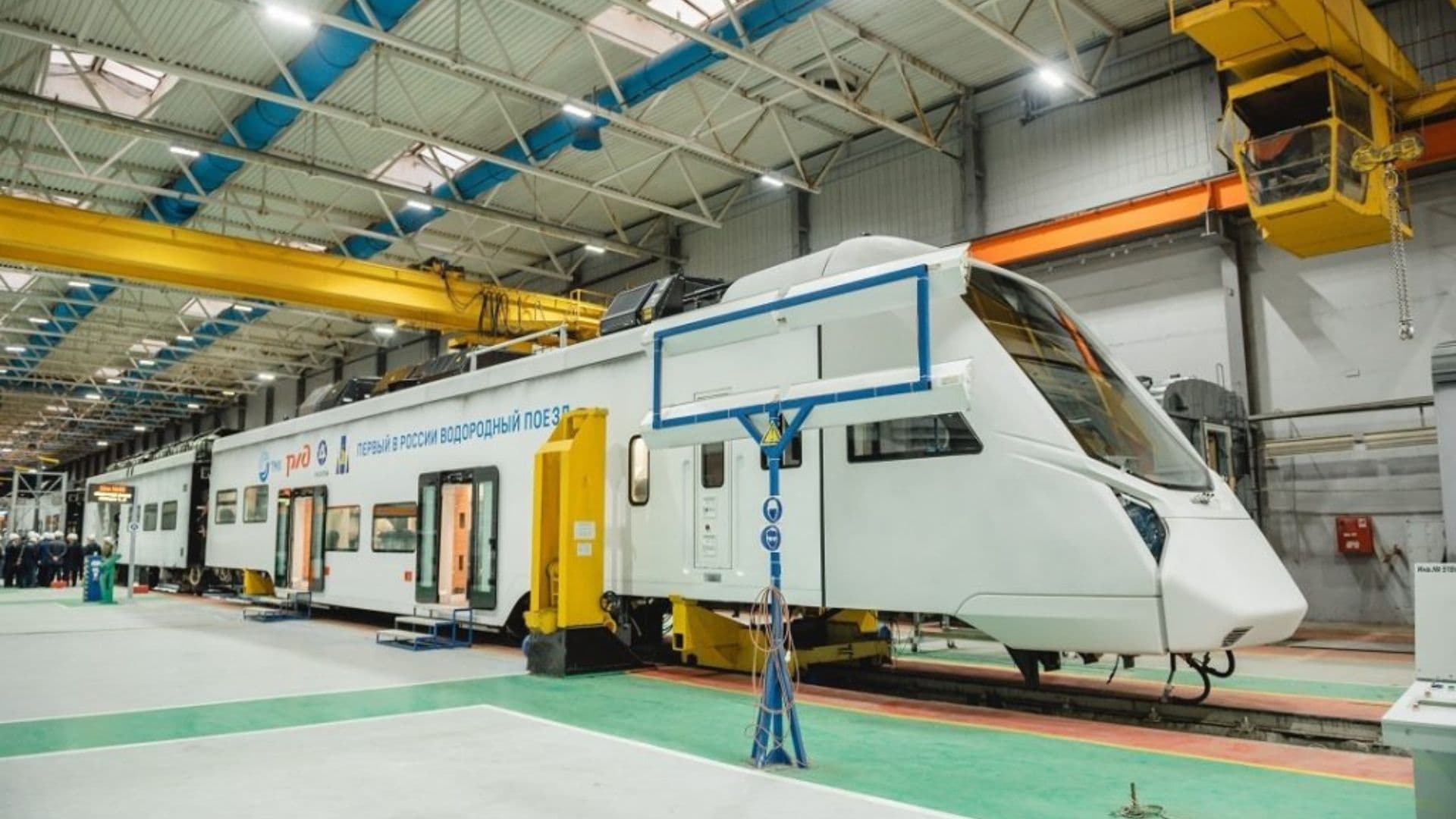
Russia has assembled its first domestically built hydrogen passenger train, designed to travel more than 700 kilometres — about 435 miles — before refuelling. Russia’s 700 km Hydrogen Train: A New Route Beyond Diesel — and Lessons from Europe
Russia has assembled its first domestically built hydrogen passenger train, designed to travel more than 700 kilometres, or 435 miles, before refuelling. Its destination is Sakhalin, the Pacific island north of Japan, where the project will test whether hydrogen can replace diesel without installing overhead power lines.
The achievement is significant for Russian manufacturing, but the train has yet to demonstrate its performance in regular service. Germany already has years of hydrogen passenger operations behind it, offering both a technical benchmark and a warning: impressive range does not guarantee reliable trains or affordable fuel.
Two configurations, different capabilities
Transmashholding’s model 62-4584 is being developed with Russian Railways, Rosatom and the Sakhalin regional government. Work is shared between the Demikhovo machine-building plant and Tver railcar works.
TMH specifies more than 700 km on hydrogen for a formation comprising two passenger cars and a separate power module. Adding an intermediate passenger coach reduces the stated range to more than 480 km. The published reference figures differ by 220 km, illustrating the trade-off between carrying capacity and distance between refuelling stops. Both remain design targets pending operational trials.
Railway Gazette reports an additional battery range of 40 km for the shorter formation and 80 km for the longer one. On those figures, combined range would exceed 740 km and 560 km respectively. Other reporting quotes different figures, so the configuration and test conditions matter when comparing headline claims.
Interfax describes four 110 kW fuel-cell units, giving 440 kW of generating capacity. That should not be confused with a verified rating for maximum traction power: batteries are another part of the electrical system. Hydrogen storage, fuel cells, lithium-ion batteries and power-conversion equipment are housed in the booster section.
More than a new engine
A fuel-cell train is electrically driven. Instead of obtaining all its electricity from overhead wires or charged batteries, it carries hydrogen that reacts with oxygen to generate electricity. Water is produced at the point of use.
The separate equipment section introduces safety requirements beyond those of a conventional passenger coach. TMH describes hydrogen-concentration and fire detectors, automatic shutdown, fuel isolation and ventilation. Passenger accommodation includes low-floor boarding areas, wide doors and through gangways.
Structural testing has also been extensive. In January 2026, TMH reported that four driving-car bodies and components for two booster sections had been sent to Demikhovo for assembly. Around 250 strain gauges were used during testing of a driving-car body—more than three times the usual measurement scope.
Tests simulated compression, passenger loading and lifting during maintenance. A positive structural assessment is an important milestone, although it does not establish the reliability of the complete hydrogen train.
Why Sakhalin?
The island provides a setting for testing a self-contained train and its fuel supply together. A hydrogen technology test site opened there in March 2024 as part of the Eastern Hydrogen Cluster, whose ambitions extend to energy, transport and potential exports.
Hydrogen also follows a major railway rebuilding programme. Sakhalin inherited a 1,067 mm gauge network from the Japanese period; conversion to Russia’s 1,520 mm standard began in 2003. Transport Ministry reporting described an 806 km main route and extensive reconstruction involving bridges, drainage and new track. The principal conversion was completed around 2019–2020, opening the network to modern Russian rolling stock. Changing the track gauge, however, did not electrify the railway.
The hydrogen cluster initially plans two trains and a refuelling station, with a longer-term ambition to expand the fleet to nine. A small pilot can help identify faults before a wider replacement of diesel vehicles, but it also makes spare trains and dependable maintenance particularly important.
When will passengers actually ride?
Published schedules do not yet provide a single, consistent launch date.
TMH’s October announcement places acceptance and certification trials in 2027. Running tests are expected around Moscow before continuing on Sakhalin around the middle of that year. Railway reporting indicates preliminary testing from November 2026, while Russian Railways representatives have discussed entry into operation in late 2027 or early 2028.
The Eastern Hydrogen Cluster’s own roadmap is more conservative: delivery of two trains and mobile refuelling equipment in the second quarter of 2027, supervised trials through the end of 2028, and full commercial operation from January 2029.
These dates may reflect different stages of commissioning, but they remain unreconciled. Describing the train as ready for an immediate passenger launch would therefore be premature.
Germany already carries passengers
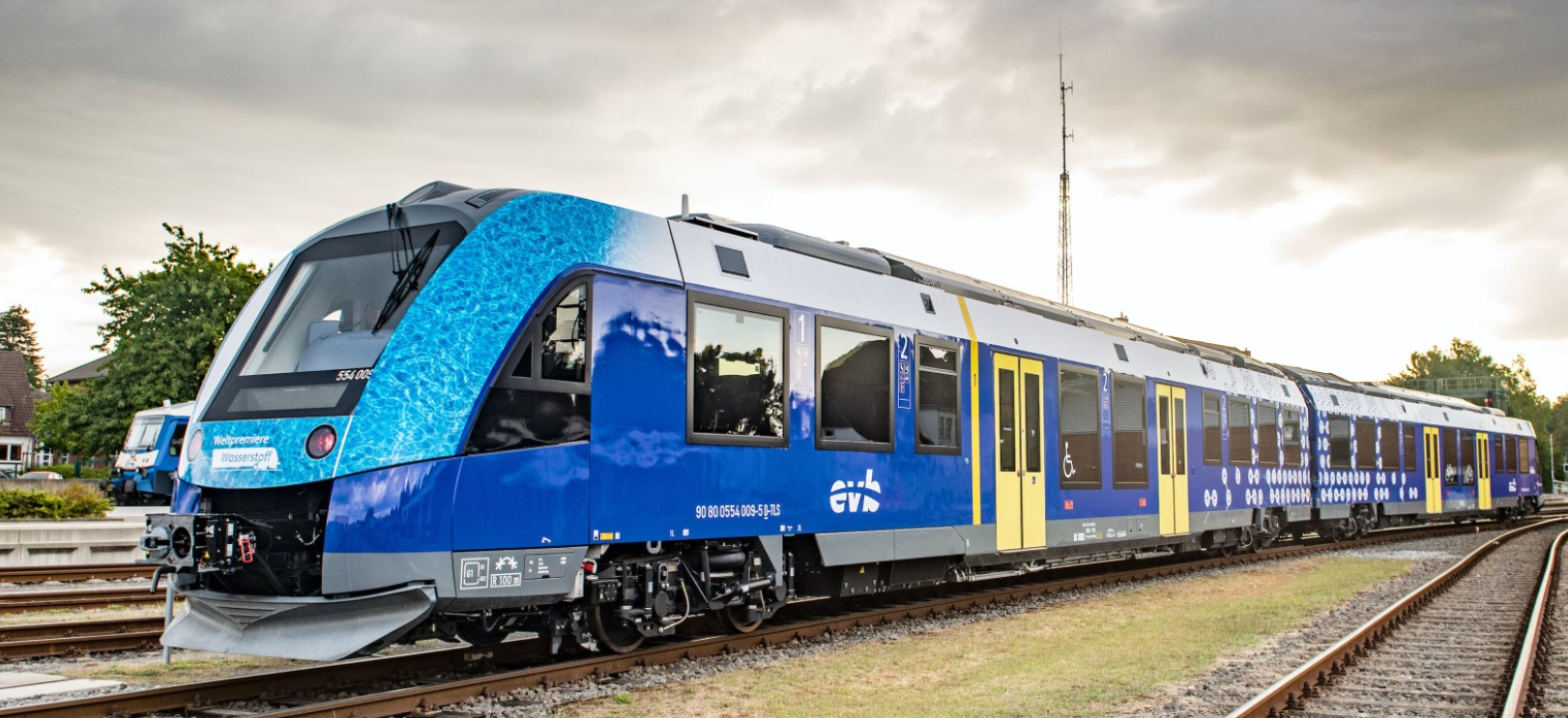
Europe’s experience goes well beyond a demonstration run. Two pre-series Alstom Coradia iLint trains began carrying passengers in Lower Saxony in September 2018. A 14-train fleet followed from August 2022 on the network linking Cuxhaven, Bremerhaven, Bremervörde and Buxtehude. Operator EVB continues to advertise scheduled hydrogen services, with diesel support.
Linde designed the Bremervörde refuelling installation with capacity to dispense around 1,600 kilograms of hydrogen a day. At inauguration, it described a 1,000 km range per refuelling for the German trains—approximately 300 km beyond Russia’s 700 km reference figure.
Alstom subsequently achieved 1,175 km in a special distance run in September 2022. Neither figure is a direct like-for-like comparison: passenger loads, stopping patterns, terrain and operating conditions can differ.
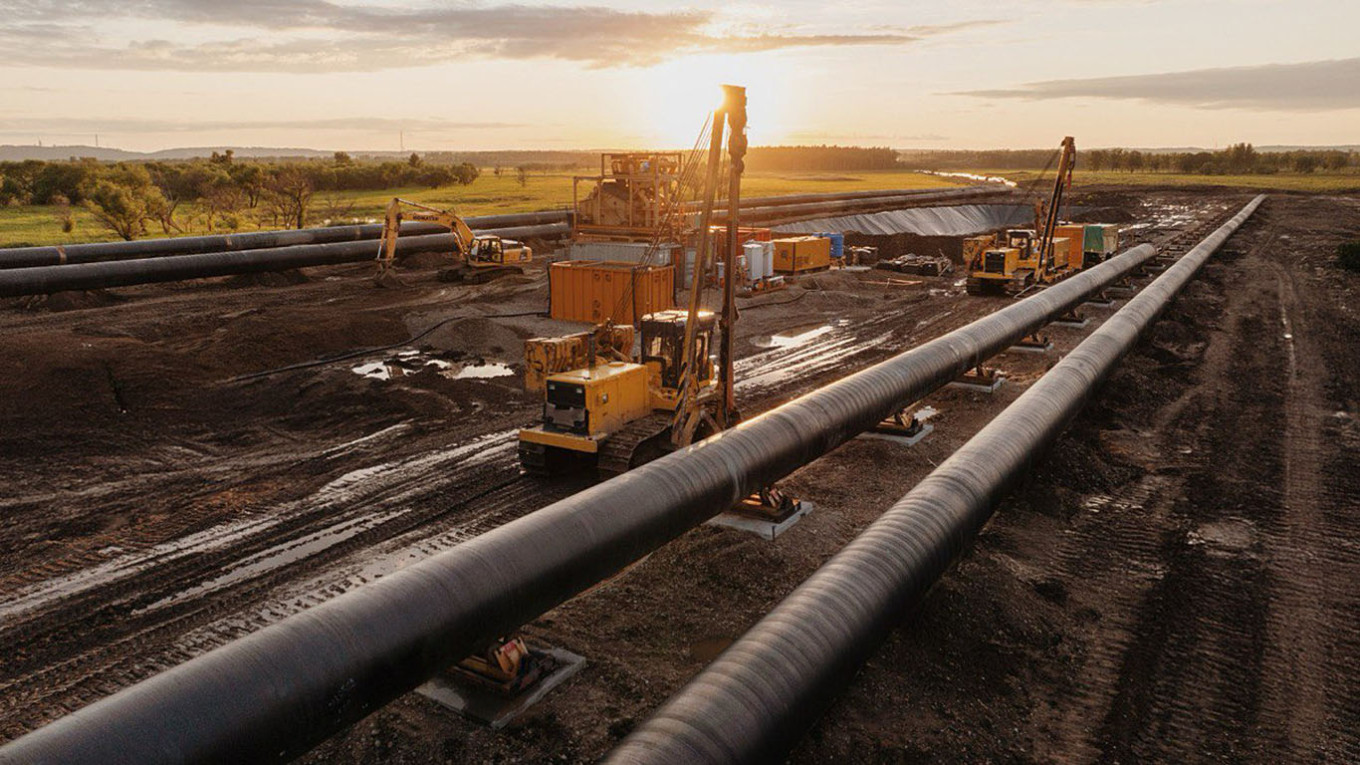
The infrastructure numbers show why the project involves much more than buying trains. Fuel production, transport, compression, storage and dispensing must all work reliably alongside the railway.
Europe’s warning: availability matters
Germany has also demonstrated the consequences when that chain breaks.
In August 2025, EVB reported that only four of its 14 hydrogen trains were operational because replacement fuel-cell modules had not arrived. That meant roughly 29% availability at that particular point, forcing greater reliance on diesel replacements. It is a historical snapshot, not a verified count of today’s working fleet.
The Frankfurt-area Taunus programme has faced difficulties too. Its 27-train fleet was intended to begin operating across four routes from December 2022.
Delivery problems were followed by technical failures; current reporting says hydrogen operation is concentrated on RB15 between Bad Homburg and Brandoberndorf. Replacement of fuel cells across the fleet is now expected to continue into the second half of 2028.
For Russia, the relevant benchmark is therefore not simply kilometres per tank. It is the proportion of trains available every morning, time spent in the workshop, spare-parts supply and the cost of keeping services running during failures.
Alstom’s wider delivery crisis
The European comparison also needs to distinguish hydrogen-specific problems from Alstom’s broader manufacturing difficulties.
On 2 November, Alstom cut its annual operating-margin forecast from 6.5% to about 1% and replaced its positive free-cash-flow outlook with an expected €1.5 billion outflow. The company identified Coradia Max production and certification problems as the main source of the setback.
First-half output fell 8%, from 2,017 railcars to 1,860. Delayed approvals and service launches postpone customer milestone payments while production costs continue.
Reuters reported that the problems centred on six Coradia Max contracts worth about €5 billion. Shares fell around 25% during trading that day. This is a separate programme from the hydrogen Coradia iLint: the stock-market crisis cannot be presented as evidence that hydrogen alone caused Alstom’s difficulties.
Batteries are a serious competitor
Hydrogen’s potential advantage is longer operation without overhead wires. Battery trains offer another solution where gaps in electrification can be bridged between charging points.
Lower Saxony’s transport authority LNVG, despite pioneering hydrogen services, says battery trains are economically preferable for its other routes. Existing electrification at line endpoints can support charging, supplemented where necessary by short additional wired sections.
A 2023 state plan envisaged introducing 102 battery trains progressively from 2029. That was a procurement strategy, rather than a count of vehicles already delivered.
Stadler’s battery-powered FLIRT Akku achieved 224 km without recharging during a record run. Its manufacturer also describes commercial designs with a specified battery range of at least 80 km, showing why records and timetable requirements must be kept separate. A train covering a short unwired section may not need hundreds of kilometres of onboard range.
The fuel decides the climate benefit
Water at the exhaust does not establish the emissions of the whole journey. Hydrogen made using fossil fuels carries upstream carbon emissions; electrolytic hydrogen depends on the electricity used to produce it.
The International Energy Agency reports that low-emissions hydrogen production reached almost one million tonnes in 2025, while global supply remained dominated by unabated fossil fuels. Its 2026 review expects low-emissions production to exceed 1% of the total for the first time during the year.
The announcements reviewed do not establish a firm purchase price per Russian train, guaranteed hydrogen consumption per kilometre or a delivered fuel price for Sakhalin’s service. Without those figures, a defensible cost comparison with diesel, batteries or overhead electrification is still impossible.
Russia has built a platform with the potential to serve long unelectrified routes. The next milestone is to prove that its trains, fuel supply and maintenance system can deliver a dependable timetable. Germany’s experience makes that test more demanding—and much more informative than a range record alone.