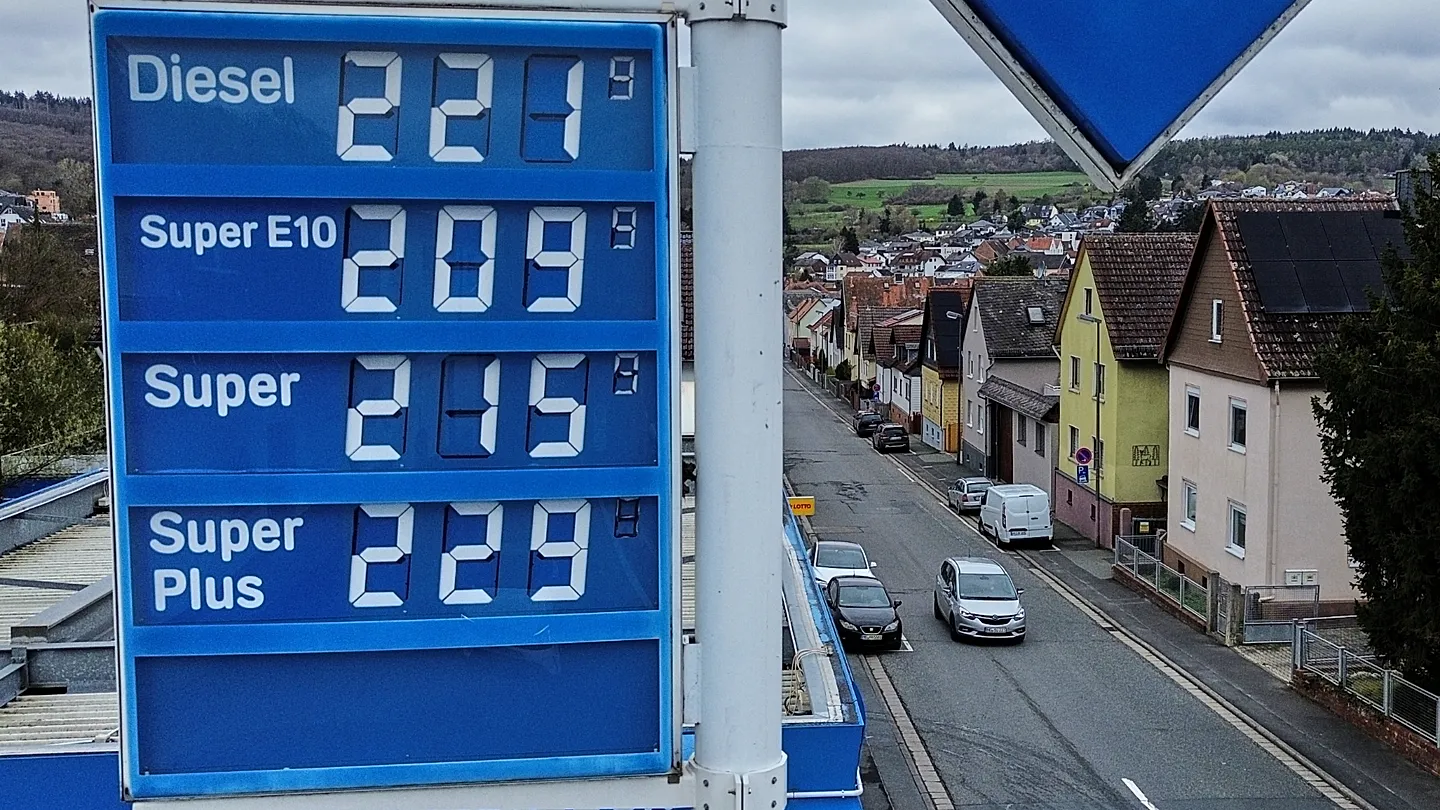
Four years later, an extraordinary dispute with Washington has exposed the uncomfortable consequence. Europe may have reduced its dependence on Moscow, but in important parts of the energy market it has become more dependent on somebody else.
The Trump administration told Germany and France to release emergency diesel reserves to help bring down global fuel prices — and warned that the United States could restrict diesel exports if Europe refused. U.S. Energy Secretary Chris Wright said Washington expected European governments to act as fuel prices surged ahead of the northern hemisphere winter and agricultural season.
diesel exports to Europe reached a record of as much as 410,000 barrels per day. The trade had expanded partly because Europe prohibited Russian petroleum products and later restricted refined products manufactured from Russian crude. Russia, meanwhile, redirected diesel toward countries including Brazil.
“The threat was remarkable because Europe increasingly depends on American diesel. In January 2026 alone, U.S.”
EuroAsia.News, reporting from Berlin
The old energy map had simply been redrawn.
Before sanctions, Russia was one of Europe's natural suppliers. Refineries were geographically close, pipelines and ports were established and Russian diesel travelled relatively short distances into the European market.
Today Europe buys more fuel across the Atlantic and from the Middle East and Asia.
That works when international markets are calm. In a crisis, geography becomes politics.
Russia — the world's second-largest diesel exporter — restricted exports this summer as Ukrainian attacks affected refineries and Moscow sought to protect its domestic market. Middle Eastern supply has simultaneously been disrupted by the Iran conflict and insecurity around the Strait of Hormuz. China has curtailed fuel exports.
European refinery capacity has also declined over the longer term.
Suddenly diesel has become one of the world's most strategically valuable commodities.
Europe does possess a substantial emergency cushion. EU rules require member states to hold emergency petroleum stocks equivalent to at least 90 days of net imports or 61 days of consumption.
But those reserves are heavily concentrated.
France holds approximately 8.2 million tonnes of diesel and gasoil emergency stocks and Germany 5.6 million tonnes. Together they account for roughly 35% of the EU total.
Washington reportedly wanted Europe to release around 120 million barrels over six months — more than 40% of EU emergency diesel and gasoil reserves.
That explains European hesitation.
Emergency reserves exist precisely because nobody knows what the next disruption will be. Emptying a large portion to reduce today's prices leaves less protection if Middle Eastern supply deteriorates further during winter.
Washington had another consideration: American politics.
High diesel prices feed directly into trucking, farming, construction and ultimately food prices. With U.S. midterm elections approaching, the Trump administration wants lower domestic fuel costs.
The dispute therefore created an extraordinary situation: Washington was effectively asking European governments to use strategic reserves partly to relieve pressure on American consumers — while threatening to restrict American exports if they refused.
Brussels reacted sharply. The European Commission said an American diesel export ban would benefit nobody and would raise questions about whether the United States remained a reliable energy supplier.
A compromise followed.
G7 governments agreed to release 100 million barrels of crude and diesel from emergency reserves and pledged not to impose energy export restrictions. Markets immediately responded with lower diesel futures.
But the episode leaves a much larger question.
Europe's energy strategy since 2022 is routinely described as diversification. And technically that is correct. Russian supply has been replaced by Norway, the United States, Qatar, North Africa and global LNG and petroleum markets.
Yet diversification is not the same as independence.
Our previous EuroAsia.News analysis asked whether replacing Russian pipelines with LNG tankers really constituted European energy independence. All what changed: The supplier changed. The strategic vulnerability did not disappear with it.
The diesel confrontation provides another answer.
Europe eliminated a proven supplier it considered a geopolitical vulnerability. Four years later, its most important security ally was able to contemplate using another energy supply as political leverage. While Russia, and before the Sovjetunion never threatened to reduce or even stop deliveries, didn't matter how cold the Cold War was.