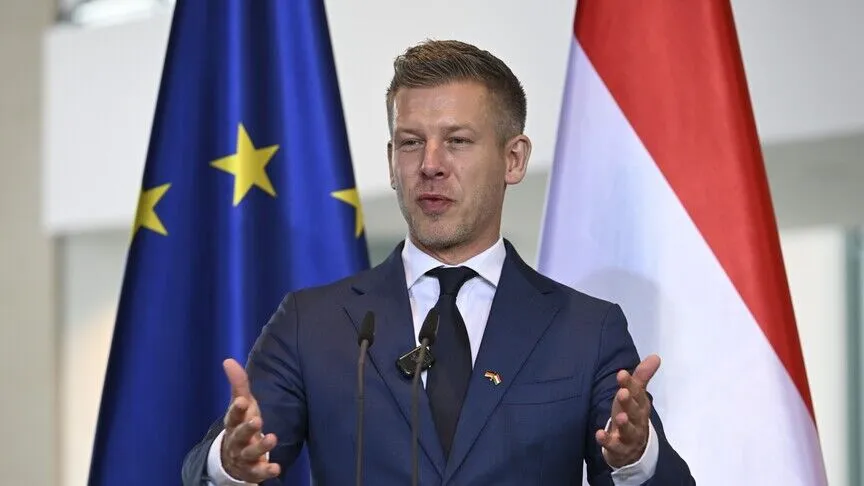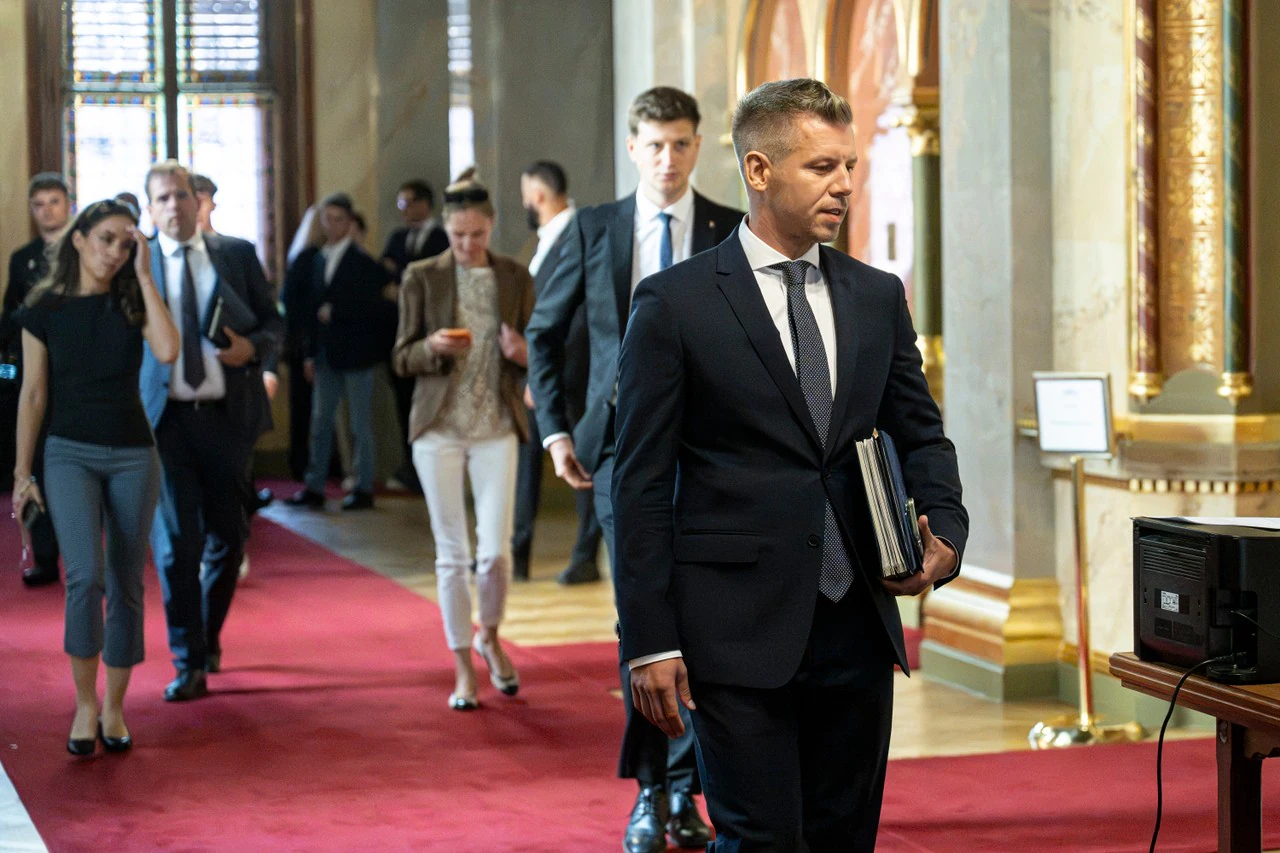
NRK correspondent Zofia Paszkiewicz travelled to Budapest in July after communicating with Magyar’s press team during the summer. The precise nature of the arrangement has since become important. It was not, as Paszkiewicz later clarified, a formally scheduled long, sit-down television interview. But NRK says Magyar’s office told its journalists that if they came to Parliament on July 27 or 28, the prime minister would probably be able to answer their questions before the parliamentary session.
They came. Magyar did not speak to them.
According to Paszkiewicz, the journalists were informed shortly before the session that the prime minister would not be available on either day. They asked for another appointment but received none. They subsequently attended one of Magyar’s press conferences, where, according to their account, they were again unable to question him. When they tried to arrange an interview with another minister or government spokesman, they were eventually told by Magyar on his Facebook to stop calling the government press office or they don't get an appointment at all.
Its journalists said they attempted to approach Magyar inside Parliament without success and were later asked to delete several seconds of footage recorded outside his office. The experience was particularly surprising because the same broadcaster had interviewed Magyar without difficulty during his 2024 European Parliament campaign.
“NRK's original account went further.”
EuroAsia.News, reporting from Budapest
But what transformed the episode from an access dispute into a political story was Magyar’s reaction.
He initially dismissed the Norwegian account as a “fairy tale” and denied that an agreed interview had been cancelled. After Paszkiewicz publicly offered to return to Budapest at any time convenient for him, Magyar did not take the opportunity to end the controversy by granting the interview.
Instead, he attacked the journalist.
“I have read your article full of lies,” Magyar replied publicly, adding that in light of it an interview was unlikely to happen anytime soon. He subsequently argued that when journalists openly lie about someone, they should first admit it and apologise.
Magyar is correct that NRK did not have a confirmed conventional sit-down interview. The Norwegian journalist herself has clarified this. But that hardly disposes of the broader issue. NRK had been communicating with his office, was encouraged to come to Parliament to ask questions, travelled to Budapest, received no access, could not obtain an alternative appointment and says it was then discouraged from contacting the government press operation further.
That distinction matters because calling the entire account a lie risks replacing an argument over details with an attack on the credibility of the journalist.
And the affair is becoming more significant because it no longer looks entirely isolated.
Magyar and Tisza came to power promising a different relationship between politics and the media after years of criticism of the Orbán government. Yet only months after the election, questions are increasingly being raised about journalists’ practical access to politicians. This week, Partizán — the independent outlet whose 2024 interview played an enormous role in Magyar’s political breakthrough — was itself denied access to Parliament.
Magyar says he had nothing to do with that decision and publicly stated that he disagreed with it.
But the political problem is broader than who issued one particular parliamentary accreditation decision.
A government cannot credibly promise a new culture of press freedom if ministers and MPs become difficult to question whenever scrutiny becomes uncomfortable. Nor is it enough to communicate through Facebook posts, controlled appearances and selected interviews. Journalism begins precisely where politicians lose control over the questions.
Most troubling is an emerging rhetorical pattern: criticism is increasingly answered not by addressing the substance but by questioning the honesty of those making it.
For an opposition politician, attacking journalists may be an effective campaign tactic. For a prime minister, it is different. The head of government possesses institutional power, controls an enormous communications apparatus and has a democratic obligation to tolerate persistent, inconvenient and sometimes irritating questions.
The Norwegian episode therefore matters far beyond one cancelled — or, more precisely, never finally confirmed — interview.
NRK has even left the door open. Paszkiewicz has publicly said that if there was a misunderstanding, the broadcaster would gladly return to Budapest and interview Magyar.
The easiest way for the Hungarian prime minister to demonstrate that the Norwegian journalists have misunderstood his relationship with the press would therefore be remarkably simple:
Give them the interview.
Calling them liars instead sends a very different message.