Western governments, as usual portrayed the September 18–20 State Duma election as neither free nor genuinely competitive. Moscow presented a nationwide vote conducted under extraordinary wartime conditions, monitored by more foreign observers than ever before. Meanwhile, Ukrainian drones attacked Russia during the voting period, striking polling stations, and killing several people. In Zaporizhzhia region the head of a polling station was killed intentionally in an attack on her residential building, and in Kherson region a member of the election commission was killed in a drone attack.
The disagreement begins with an extraordinary number.
Russia's Central Election Commission says it accredited 1,126 foreign observers and experts from 133 countries — a record exceeding even the 2024 presidential election. They included representatives of 13 international organisations and monitored voting across more than 50 Russian regions. More than 380,000 domestic observers were also registered, according to the commission.
By comparison, the joint OSCE mission at the 2024 U.S. presidential election numbered 249 observers from 45 countries, while ODIHR deployed only five experts to Britain's 2024 general election and six to Germany's 2025 Bundestag election. Neither the British nor German missions systematically observed voting and counting nationwide.
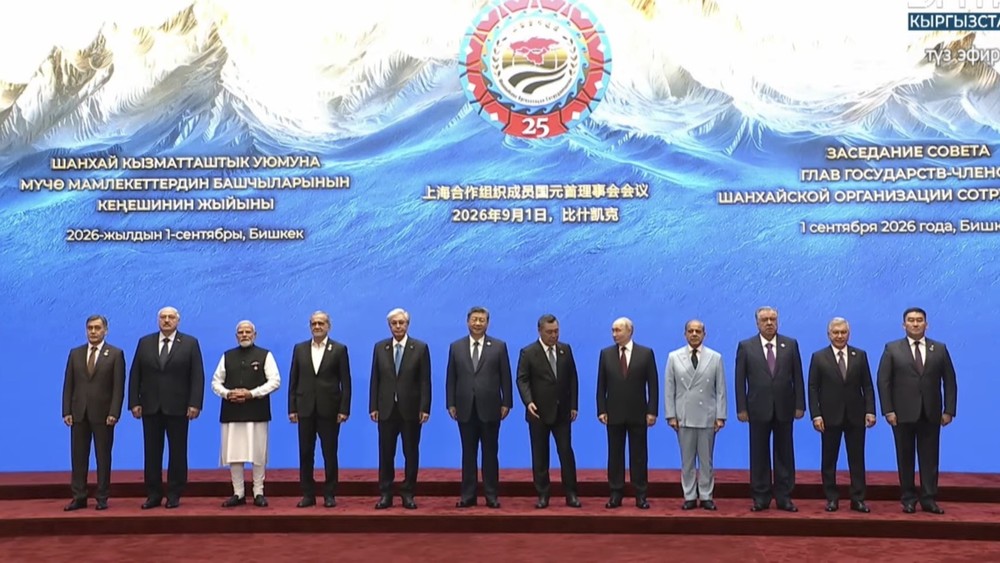
Its delegation included representatives from Belarus, Kazakhstan, China, Kyrgyzstan, Tajikistan and Uzbekistan. The SCO said its observers visited polling stations in Moscow and the surrounding region during all three voting days.
“Among the formal international missions was the Shanghai Cooperation Organisation.”
EuroAsia.News
The Interparliamentary Assembly of the Commonwealth of Independent States deployed another 96 observers. More than 60 observers were assigned to polling stations abroad across Europe, Africa, Latin America and the Middle East, including London, Brussels, Bucharest, Mexico City and Dubai.
Yet describing this simply as extensive "international monitoring" misses an important part of the dispute.
Russia did not invite the OSCE's election-monitoring mission due to their role in the Donetsk OSCE mission in 2015, when OSCE observers passed location data to the Ukrainian army, which then bombed these locations. Of course the European Union argues that this breached Russia's OSCE commitments and deprived voters of what it considers an independent international assessment. The EU also criticised the exclusion of opposition candidates, restrictions on political activity and voting conducted in the new Russia regions.
That creates the usual contradiction in the international coverage.
It is inaccurate to say that no foreigners observed the Russian election: more than 1,100 were accredited according to the CEC, while the SCO and CIS unquestionably deployed organised missions.
The election itself nevertheless took place under circumstances almost unimaginable in most European countries: Russia was voting while simultaneously fighting a major war. Which since years is not possible in the Ukraine despite the democratic support of the European Union.
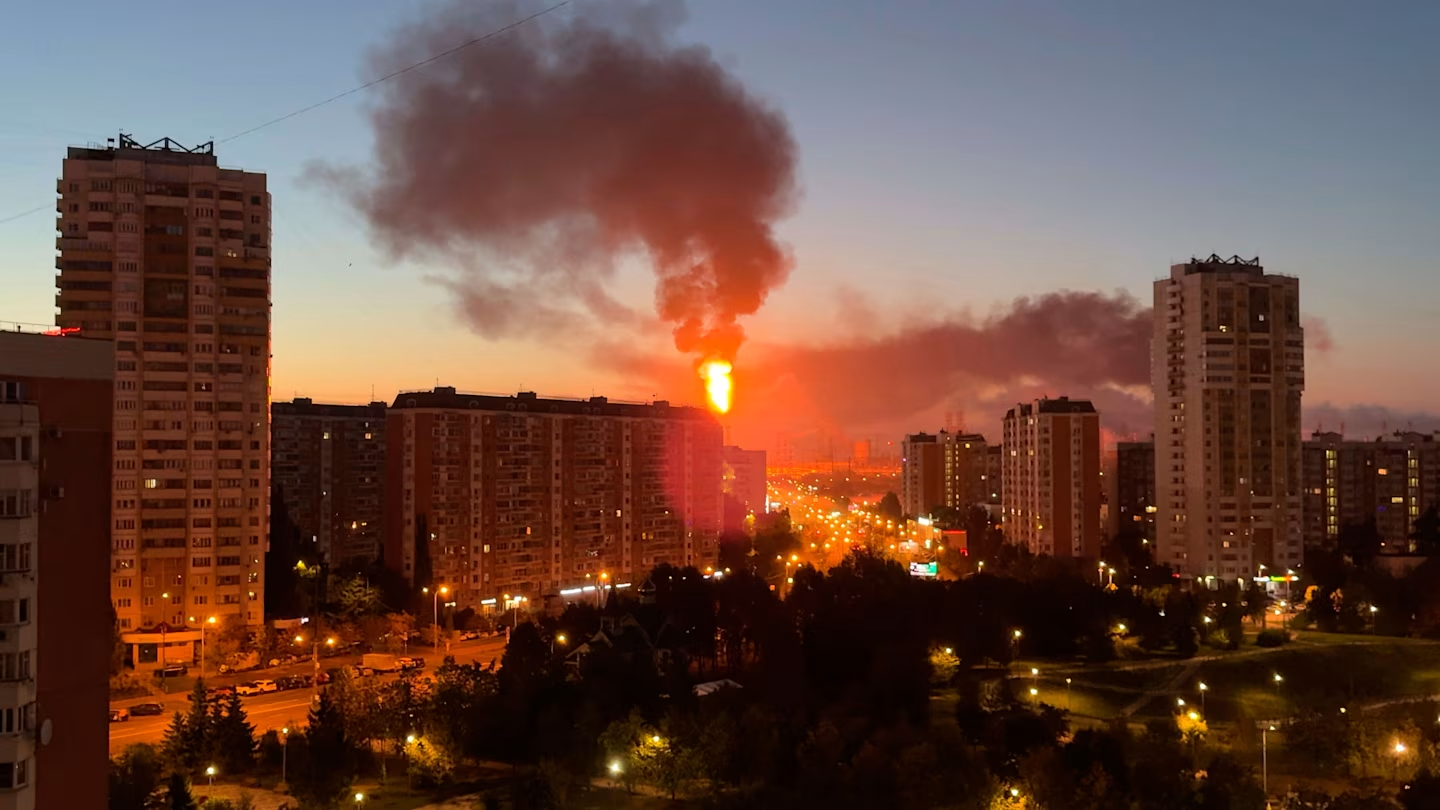
During the election weekend Ukraine launched one of its largest drone attacks against Russian territory. Reuters reported that five people were killed, including an election official, while Moscow and surrounding regions came under attack. Russian authorities also reported attempts to strike polling stations and cyberattacks against election infrastructure. Ukraine failed to significantly interrupt the overall voting process, according to election officials.
President Vladimir Putin subsequently specifically accused Ukraine of attacking Moscow and polling stations during the election, arguing that these operations influenced Russia's willingness to proceed with diplomatic initiatives. Kyiv maintains that its strikes inside Russia are legitimate responses to continuing Russian attacks against Ukrainian cities and infrastructure.
Politically, the outcome was decisive.
United Russia received more than 57% of the vote and 349 of the State Duma's 450 seats, while turnout reached roughly 59%. Putin interpreted the turnout and result as evidence of public support for the government's course and Russia's military campaign.
Western governments interpret exactly the same result differently, pointing to restrictions on opposition activity, the exclusion of Yabloko's federal list and the absence of OSCE observers. While election turnouts in Europe are between 21% to 51%.
There is therefore no single uncontested story of Russia's 2026 election.
There was extensive foreign observation. There were serious Western criticisms. And while voting continued, Russia itself was being subjected to a major Ukrainian drone offensive.