Washington welcomed China’s Xi Jinping, invited Vladimir Putin to the G20 in Miami and proposed new Russia–Ukraine talks. Germany, meanwhile, finally reopened direct contact with Moscow — only for the encounter to demonstrate how far European-Russian diplomacy has deteriorated.
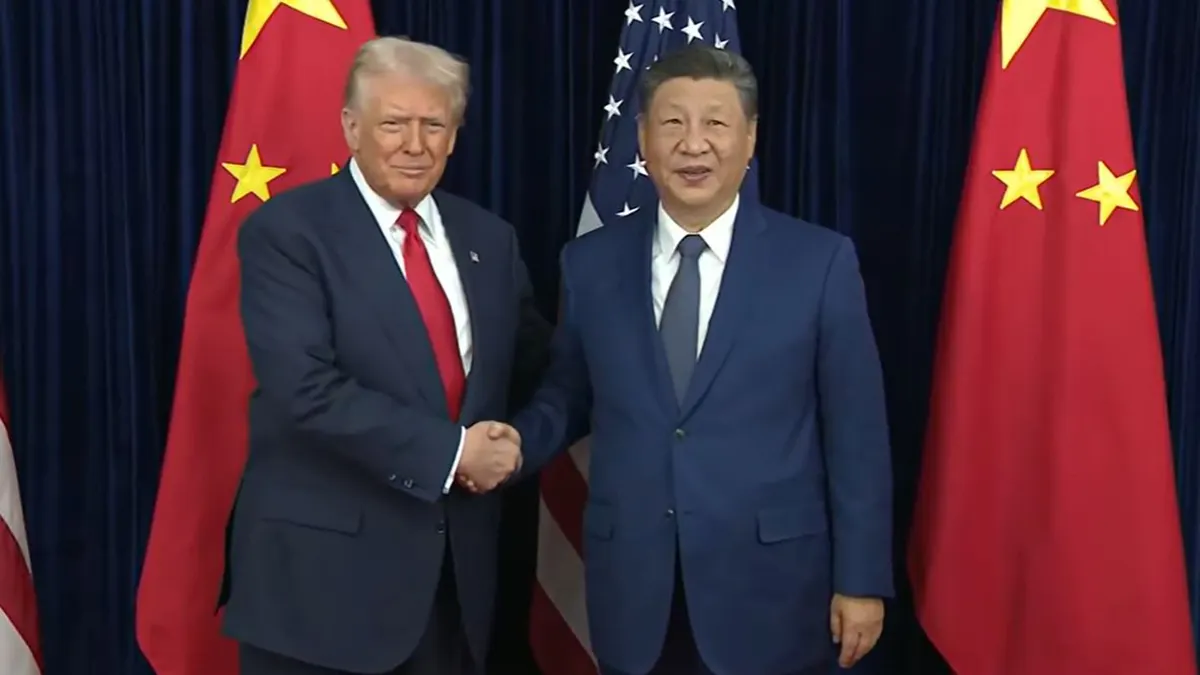
Xi Jinping’s three-day state visit to Washington was heavy on ceremony but produced some concrete movement. Donald Trump and Xi agreed to extend their trade truce by two months, while Washington and Beijing subsequently announced tariff reductions covering tens of billions of dollars of goods and agreed to establish an artificial-intelligence dialogue and a bilateral trade council. Major disputes over Taiwan, technology and geopolitics remain unresolved.
Neither side pretended that their strategic rivalry had disappeared. Xi described the desired relationship as one of “strategic stability”, while the summit demonstrated that the world’s two largest economies can simultaneously compete and negotiate. Trump and Xi even discussed their competing interpretations of Taiwan and the post-1945 international order without allowing those differences to prevent continued dialogue.
“That may be precisely the point.”
EuroAsia.News, reporting from New York
Almost simultaneously, Washington made another striking diplomatic move. Secretary of State Marco Rubio announced that the United States had invited Russian President Vladimir Putin to the G20 summit in Miami in December. The Kremlin said it appreciated the invitation and would consider it through diplomatic channels. If Putin attends, it could also create another opportunity for direct Trump-Putin discussions.
The invitation is politically significant. Putin has not attended a G20 summit in person since 2019. Poland’s Donald Tusk argued that inviting him could encourage further Russian aggression, while a bipartisan group of U.S. senators also questioned the decision. Moscow, however, points out that Russia remains a full G20 member and therefore regards participation differently from Washington’s presentation of it as a special invitation.
Then came perhaps the week’s strangest diplomatic encounter.
German Foreign Minister Johann Wadephul met Russia’s Sergei Lavrov on the sidelines of the UN General Assembly — the first bilateral meeting between the countries’ foreign ministers since before Russia’s 2022 invasion of Ukraine. Berlin said Wadephul demanded that Russia abandon what Germany calls its “dangerous path of escalation” against Germany, Europe and NATO. He also raised the Black Sea, grain exports and a possible ceasefire.
Lavrov’s description of the conversation was unusually dismissive. He said Wadephul had essentially repeated Germany’s existing public positions, telling him that Germany could simply have telephoned and told him to “read my statement”.
That exchange matters because the rhetoric surrounding German-Russian relations has become extraordinarily severe. Earlier this month, Lavrov accused Chancellor Friedrich Merz of effectively “declaring war” on Russia after Berlin blamed Moscow for an attempted drone attack at Leipzig/Halle Airport — an accusation Russia rejects. Germany, for its part, pretends that Russian hybrid operations have reached a new level and insists it must be prepared to defend itself.
The contrast is difficult to miss. Washington treats China as its principal strategic competitor but still stages a state visit for Xi. It is fighting profound battles with Beijing over trade, AI and Taiwan, yet maintains direct presidential diplomacy. The United States is simultaneously inviting Putin back into a major international forum.
And another channel may now open. President Volodymyr Zelenskiy said Washington has proposed a technical-level trilateral meeting between the United States, Russia and Ukraine in the United Arab Emirates. Trump and Zelenskiy also discussed an energy ceasefire in New York, while Ukraine has indicated willingness to consider a maritime truce in the Black Sea.
None of this means peace is close. The Trump-Xi summit left major disagreements unresolved, Moscow and Kyiv remain far apart, and the German-Russian meeting demonstrated how deeply relations have collapsed.
But the diplomatic map is changing. Washington appears increasingly willing to talk simultaneously to Beijing, Moscow and Kyiv even while confronting them on fundamental issues. Europe faces a different question: whether deterrence without sustained diplomacy can remain a strategy indefinitely.
In New York and Washington this week, the return of direct great-power diplomacy may ultimately have been the biggest story of all.