The disruption of that route is now forcing Tehran to look in the opposite direction — toward the Caspian Sea, Russia, Central Asia and China.
The numbers show how dramatic the challenge is. Before the current conflict, roughly 125 large commercial vessels passed through Hormuz each day. On September 21, Reuters counted just 17 commodity vessels over the weekend; by September 22, preliminary data showed only two commodity ships crossing in a day. Some vessels may be travelling without active transponders, but the collapse in visible traffic illustrates the scale of the disruption.
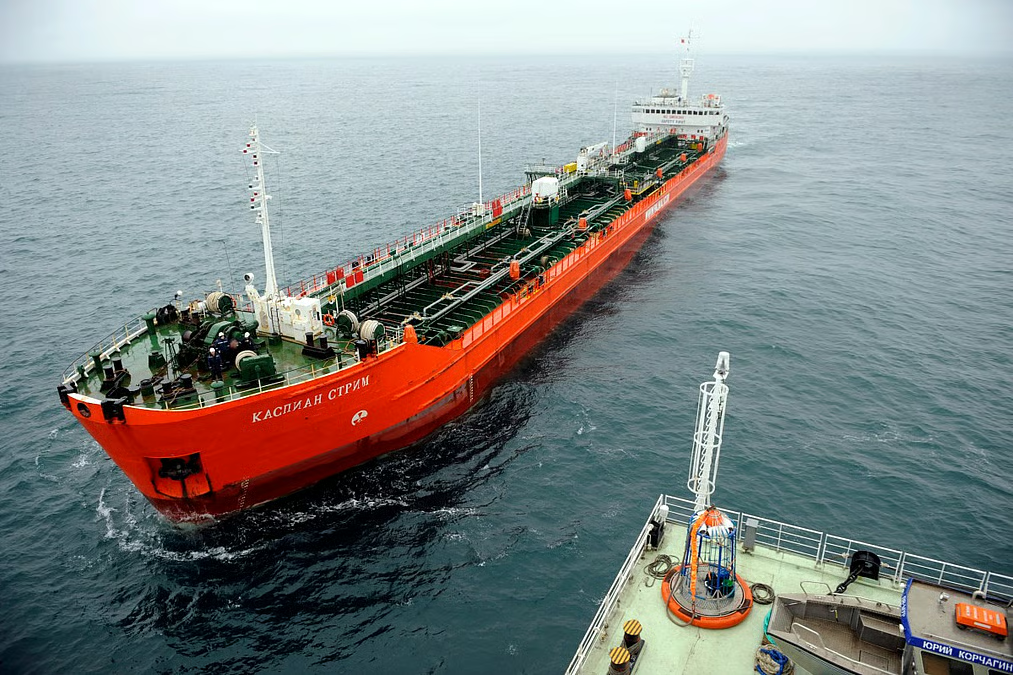
Nevertheless, the northern ports of Anzali, Amirabad and Nowshahr are taking a larger role. According to Iranian port officials, their share of essential-goods movements has risen from around 18 percent before the conflict to approximately 30 percent today. Container arrivals at Caspian ports were also reported to have increased 50 percent year-on-year during the five Iranian months ending August 22.
“Iran’s answer is increasingly visible on its northern frontier. The country has about 300 million tonnes of nominal annual port capacity, but only around 30 million tonnes — 10 percent — is located on the Caspian coast.”
EuroAsia.News
China is already building the eastern route
An equally important development is taking place further east.
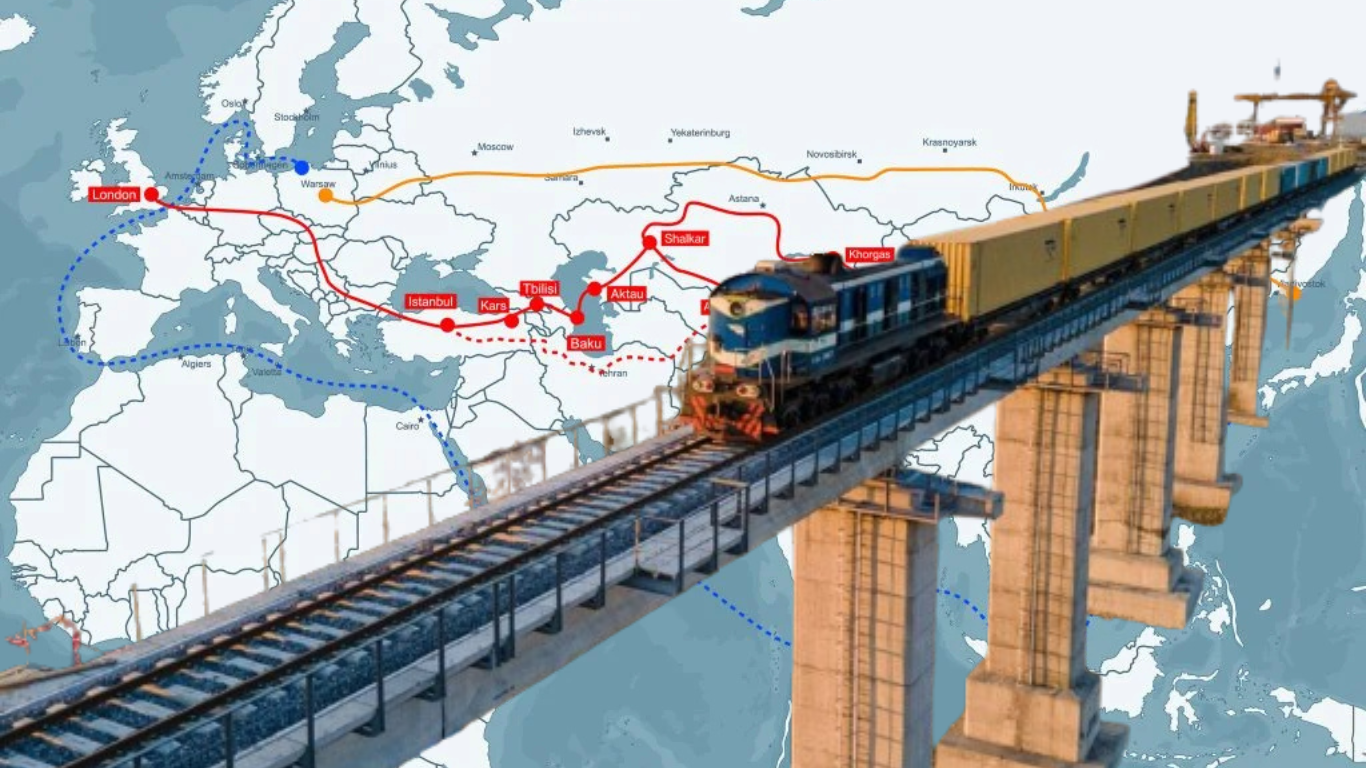
On September 7, a new block train entered Kazakhstan from China through the Khorgos-Altynkol crossing. It carries 55 containers of automotive components, consumer products and other cargo and continues through Kazakhstan → Uzbekistan → Turkmenistan → Iran, entering Iran at Sarakhs.
The journey exceeds 6,000 kilometres, with a planned transit time of just 14–16 days. Uzbekistan’s rail container operator says the service could become the basis for regular block trains between China and Iran.
That matters beyond one train. It gives Iran an eastbound commercial corridor that does not depend on Hormuz at all — while simultaneously turning Kazakhstan, Uzbekistan and Turkmenistan into increasingly important transit countries between China and the Middle East.
The emerging network therefore looks less like a temporary diversion and more like a Eurasian transport system:
China → Kazakhstan → Uzbekistan → Turkmenistan → Iran
while another axis develops through:
Iran → Azerbaijan → Russia
The latter is part of the International North-South Transport Corridor, intended ultimately to connect the Indian Ocean and Iran with Russia and markets farther north.
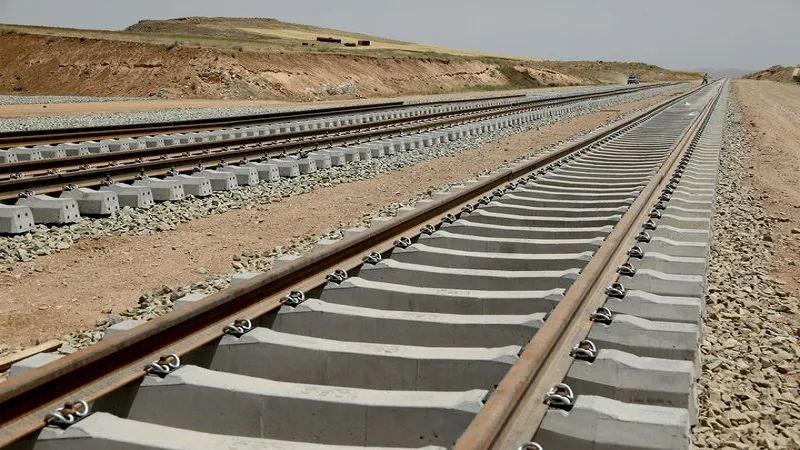
One important bottleneck remains the missing Rasht-Astara railway connection in northern Iran. Yet infrastructure around the corridor continues to advance. At the Iranian Astara freight terminal, design work was reported at 95 percent complete and construction and installation at 93 percent in June.
The Caspian cannot replace Hormuz — yet
There are severe physical limitations.
Iranian officials estimate that a single large ship operating from a southern port can carry as much cargo as 20 vessels on the Caspian. Falling Caspian water levels are making the problem worse by restricting vessel drafts. Northern railways, border terminals and customs facilities also cannot suddenly absorb the enormous volumes handled by Iran’s Gulf ports.
Oil presents an even greater problem. A very large crude carrier can move roughly two million barrels in one voyage. Replicating that capacity using trains, trucks or small Caspian tankers would require an entirely different logistical scale. Northern corridors can therefore diversify Iranian trade, but they cannot presently substitute for southern oil terminals.
That distinction may ultimately be what makes the present disruption historically important.
The objective is unlikely to become replacing Hormuz. Instead, Iran is being pushed toward something it previously lacked: multiple independent gateways into the Eurasian economy.
China gains another westbound land corridor. Central Asian states gain transit traffic and greater access to Iranian ports and markets. Russia and Azerbaijan gain importance along the western North-South route. Iran gains alternatives to a maritime chokepoint that has repeatedly become entangled with regional conflict.
Hormuz will remain enormously important. But every container successfully travelling more than 6,000 kilometres from China through Central Asia to Iran demonstrates that geography is no longer Iran’s only option.
What began as a search for emergency alternatives could accelerate something much larger: a trade map in which Iran increasingly becomes the southern junction between China, Central Asia, Russia, the Caucasus and the Indian Ocean — rather than simply the country sitting beside the Strait of Hormuz.