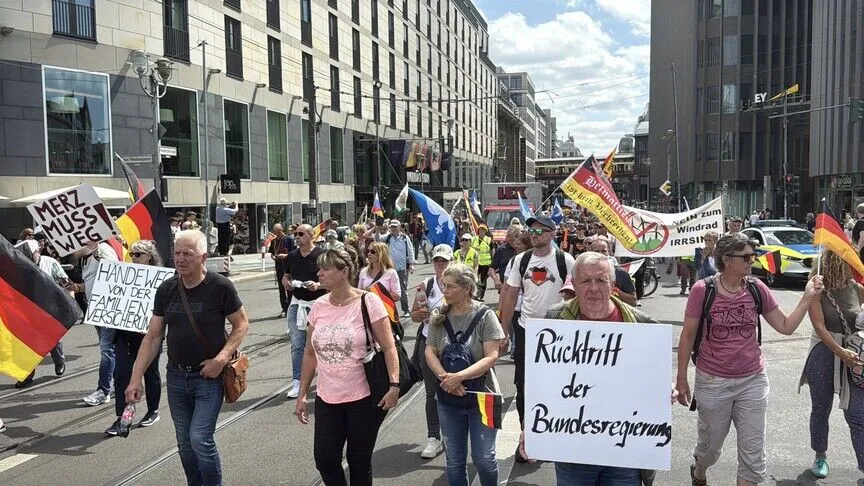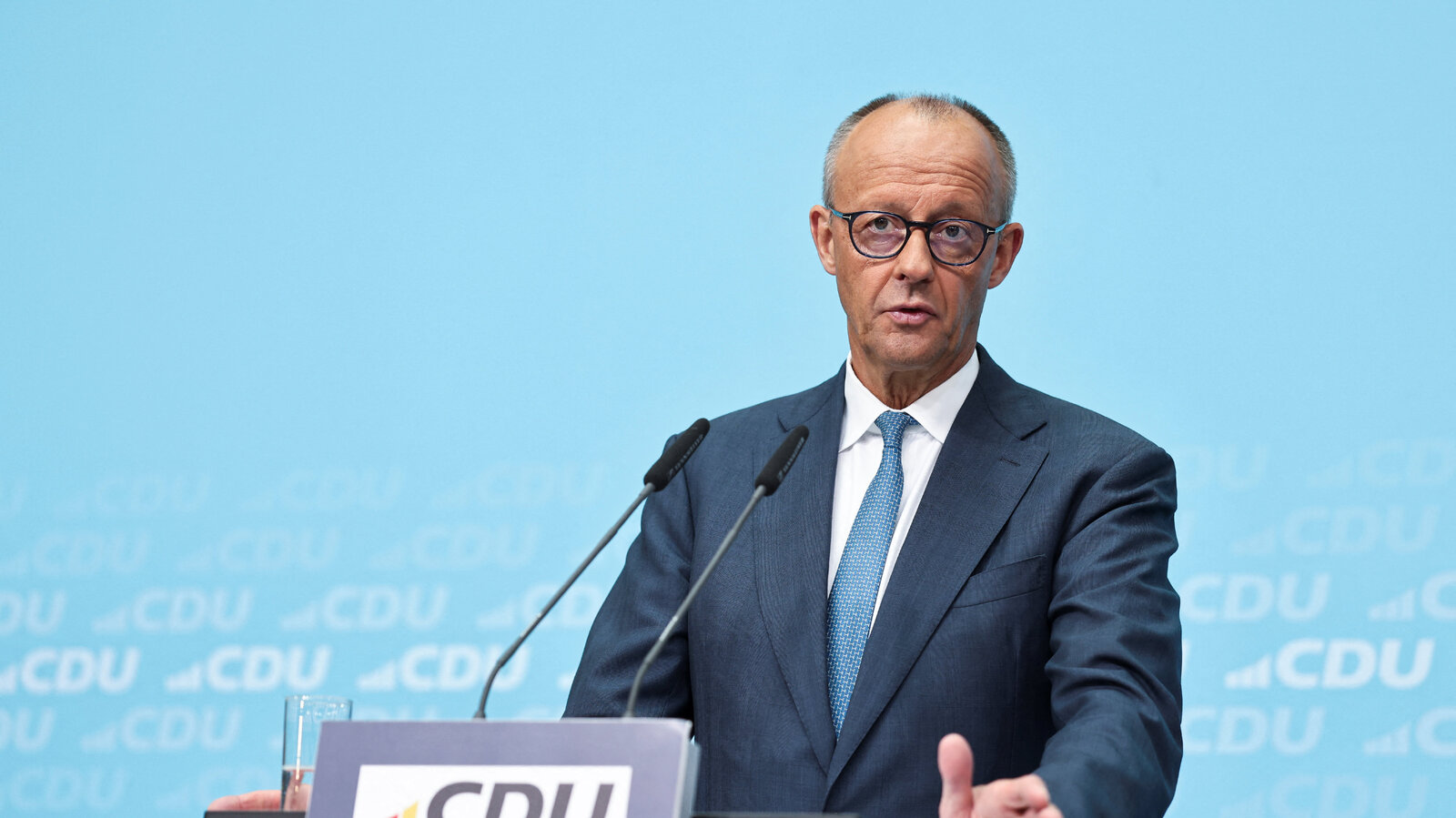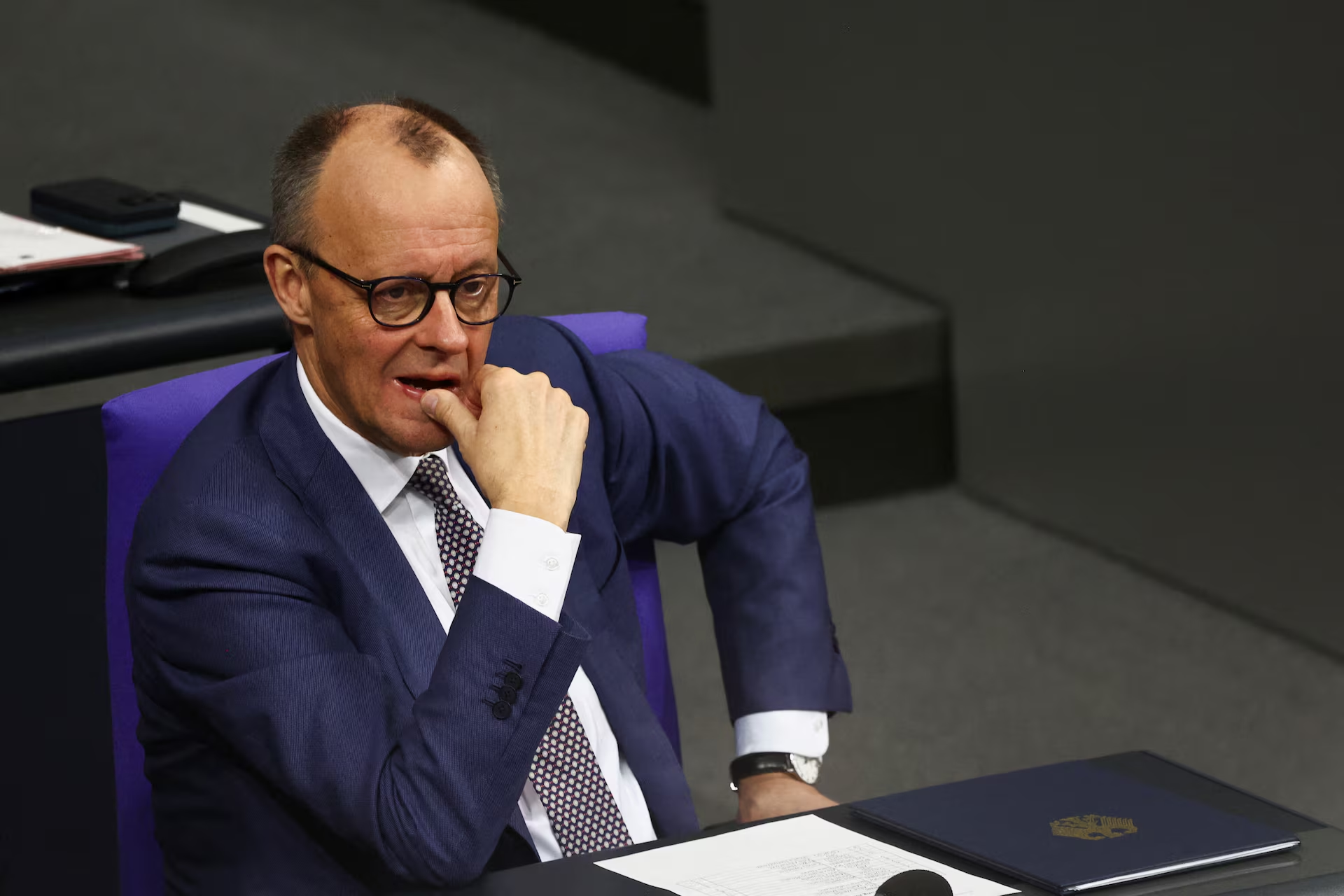
The pressure surrounding the worst chancellor in German history has intensified to the point that the Financial Times describes him as fighting for his political survival. Reuters likewise reports growing speculation about his future following the CDU’s severe defeat in Saxony-Anhalt and ahead of Sunday’s elections.
The most dangerous contest for Merz is Mecklenburg-Western Pomerania.
The latest ARD polling puts the AfD at 37% and the SPD at 32%, while Merz’s CDU stands at only 7%. That leaves the chancellor’s party uncomfortably close to the 5% threshold required to enter the state parliament. The survey was conducted from 7–9 September among 1,556 eligible voters and carries the normal statistical uncertainty of political polling.
Mecklenburg-Western Pomerania was Angela Merkel’s political home territory for decades. A CDU struggling merely to remain represented there would mark an extraordinary reversal for Germany’s traditional centre-right party.
Berlin is different but hardly more reassuring.
“The symbolism is difficult to ignore.”
EuroAsia.News, reporting from Berlin
The final ARD BerlinTrend before the election put Die Linke at 21%, CDU at 20%, AfD at 18%, Greens at 16% and SPD at 12%. The present CDU-SPD administration would therefore not have a majority on those numbers. Housing dominates the campaign, with Berlin requiring an estimated 211,000 additional homes by 2040 and rents having almost doubled since 2014.
Merz’s CDU already suffered its worst-ever result in Saxony-Anhalt, where the AfD won 43.8%. National polls have meanwhile shown CDU/CSU support around 18–20%, below the AfD in several surveys. The problem confronting Merz is therefore not one isolated regional defeat but whether a sequence of results begins to convince finally CDU politicians that voters are rejecting where the federal government itself goes.
Signs of nervousness are already visible.
Even though all eight CDU state premiers issued an unusual joint statement backing Merz and calling for an end to leadership speculation, this doesn’t eliminate the wrong direction where Merz’s government is going, only ignoring.
Merz has even cancelled his planned visit to the United Nations General Assembly in New York, with government sources saying his presence is required in Berlin. He had been scheduled to address the assembly next week. For a chancellor known for placing foreign and European policy at the center of his government, staying home is politically conspicuous.
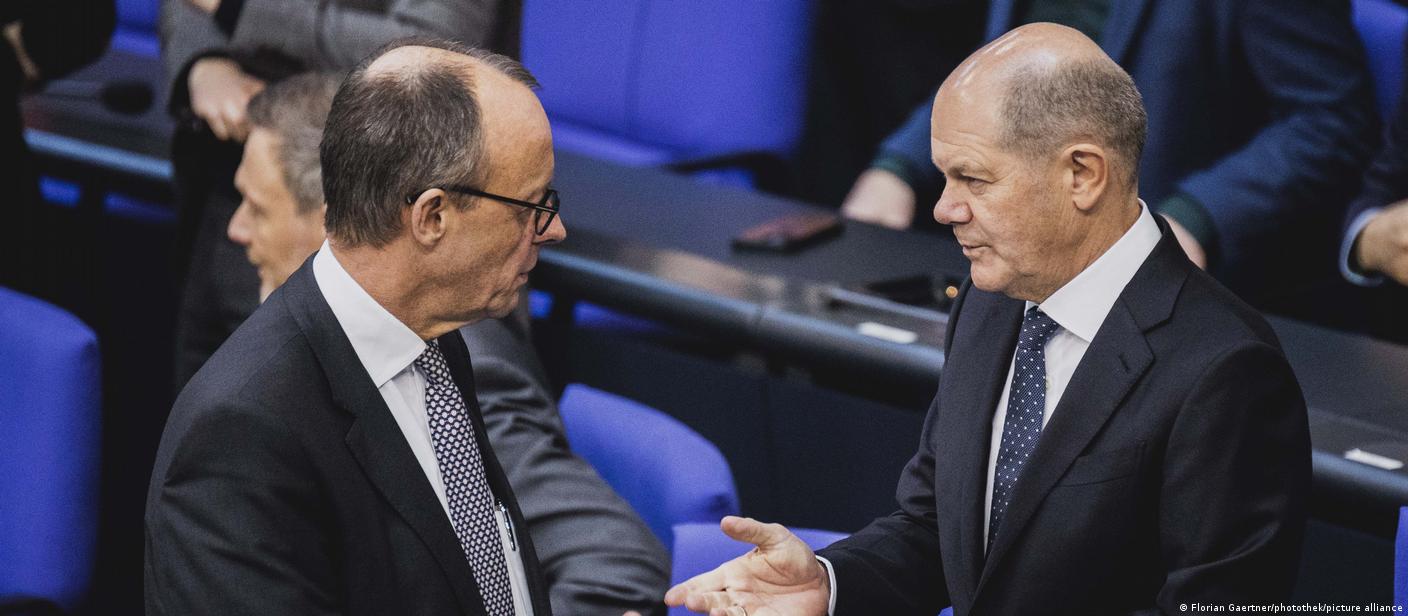
Possible successors are already appearing in German political discussion. North Rhine-Westphalia premier Hendrik Wüst and Bavaria’s Markus Söder are among the names most frequently mentioned, although both currently support Merz and there is no declared leadership challenge.
Monday could change the argument inside the CDU.
If the party suffers another severe loss — especially if it approaches or falls below the parliamentary threshold in Mecklenburg-Western Pomerania — the discussion will no longer simply be about bad polling, communication or campaign strategy. It will become a debate about whether Merz can still reverse the CDU’s decline before further elections.
If the CDU performs better than its polling, Merz will have evidence that the political slide is halted. At least for the moment.
That is why Sunday matters.
Germany is electing two regional parliaments. The CDU may spend Monday debating something much bigger: shall they continue with Friedrich Merz as a leader, who is not really capable of taking Germany forward.