More than 150 companies are now registered, major marina, financial, residential, hospital and education projects are under way or committed, and Sri Lanka is openly courting Gulf and Asian investors. For companies whose future lies in South Asia, Port City Colombo is beginning to offer a good proposition.
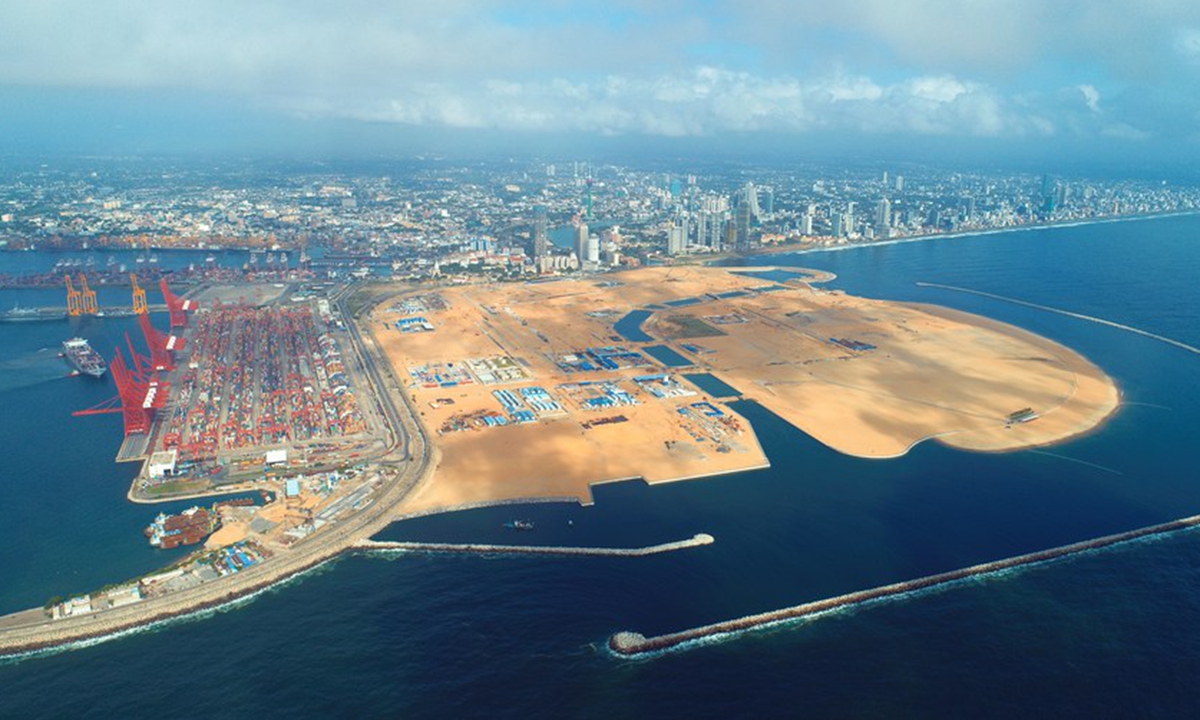
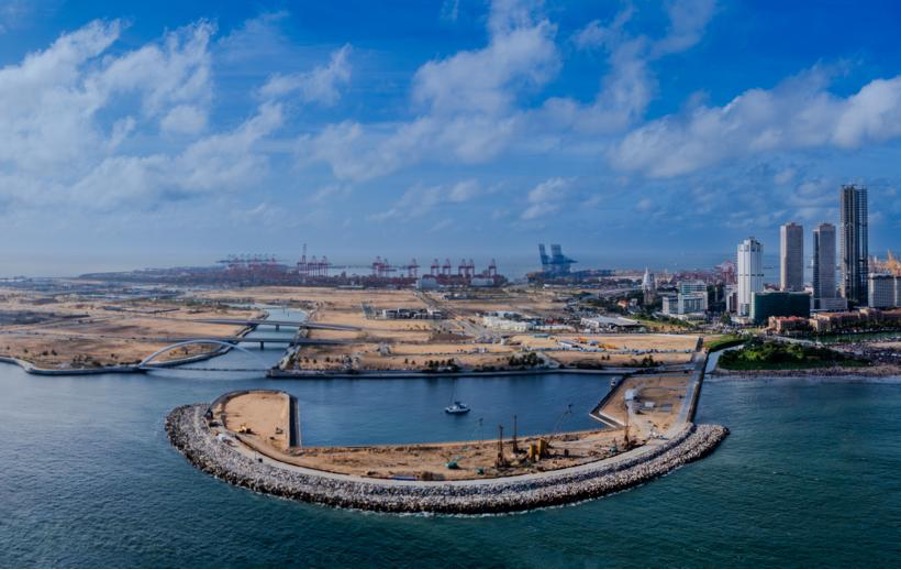
Port City Colombo covers 269 hectares of reclaimed land immediately beside Colombo’s established central business district. The project began with a $1.4 billion investment by China Harbour Engineering Company, while the authorities envisage roughly $20 billion of total investment when the city is fully developed. The 2021 Colombo Port City Economic Commission Act established it as an internationally oriented, service-based Special Economic Zone with a dedicated single-window regulator.
The biggest change in 2026 is that Port City is becoming operational. The Commission’s public register currently contains 168 Authorised Persons, while officials say more than 150 companies are registered and almost 10,000 direct jobs are associated with the zone. In July, Finance Deputy Minister Anil Jayantha told parliament that Port City had attracted $2.19 billion across 176 investments, of which $336.7 million had been finalised. An important distinction remains: registration does not necessarily mean that every company already occupies premises inside the reclaimed city, because authorised firms can temporarily operate from approved locations elsewhere in Colombo.
The company mix is already wider than real estate. Published Port City material lists names including KPMG, Acuity Knowledge Partners, GAC, Advantis and Ansell, alongside technology, BPO, logistics, trading and professional-services businesses. Three duty-free outlets are operating, several major Sri Lankan banks have committed to projects, and investments in the planned Asiri Port Hospital and Gateway International Campus have been described by the government as finalised.
Physical development is accelerating as well. The Business Centre started handing office space to tenants in May 2025. Browns Investments’ $120 million Luxury Marina is under construction, with berthing for around 200 yachts and completion targeted for 2027. Prime Melwa and Marina Hotel Holdings are developing marina-front projects, while Home Lands is developing beside Central Park. The flagship Colombo International Financial Centre is planned as a $500 million complex combining Grade-A offices, retail and more than 600 residences. CHEC has separately committed another $300 million to Phase II infrastructure.
The business model deliberately borrows some of the features that made Gulf free zones successful. Port City permits 100% foreign ownership and full repatriation of capital and profits, transactions and remuneration in 16 designated foreign currencies, preferential five-to-ten-year visas and flexible foreign employment. Qualifying strategic businesses can obtain substantial tax incentives, while an international commercial dispute-resolution mechanism forms part of the regulatory architecture.
There is also a historical advantage that is sometimes overlooked. Sri Lanka is not an English-law jurisdiction in exactly the same way as Dubai’s DIFC, but its commercial law is heavily influenced by English legal tradition. The country was British Ceylon until independence in 1948, and English remains deeply embedded in business, finance, professional services and higher education. English principles continue to influence Sri Lankan maritime and commercial law.
Could Colombo become a replacement for Dubai? Colombo’s potential advantage is different: geography. It sits beside India and directly on the Indian Ocean routes connecting the Gulf, South Asia and Southeast Asia. For companies primarily targeting India, Bangladesh, Sri Lanka and the wider Asian region, that can make Colombo a geographically more natural headquarters.
Climate may also become part of the lifestyle pitch. Colombo’s average monthly temperature remains remarkably stable at roughly 27–29°C throughout the year. Dubai’s average daytime highs, by contrast, reach around 41–42°C in July and August. Colombo therefore avoids the Gulf’s extreme 6-8 months heat.
Sri Lanka is already marketing Port City directly in the Gulf. In June, its diplomatic missions and the Port City authorities held an investment promotion event in Dubai, targeting investors, financial institutions, property developers and international companies. That is revealing: Colombo is not merely looking to China or India for capital; it also wants businesses and investors currently based in the UAE to consider a second Asian operating base.
The decisive test will come over the next few years. Registrations now have to become regional headquarters; investment commitments have to become towers, offices and hotels; and tax incentives have to produce internationally traded businesses rather than simply real-estate demand.
If that happens, Colombo Port City may eventually offer something Dubai cannot easily reproduce: an international business enclave located not outside Asia’s next great growth market, but directly inside it.