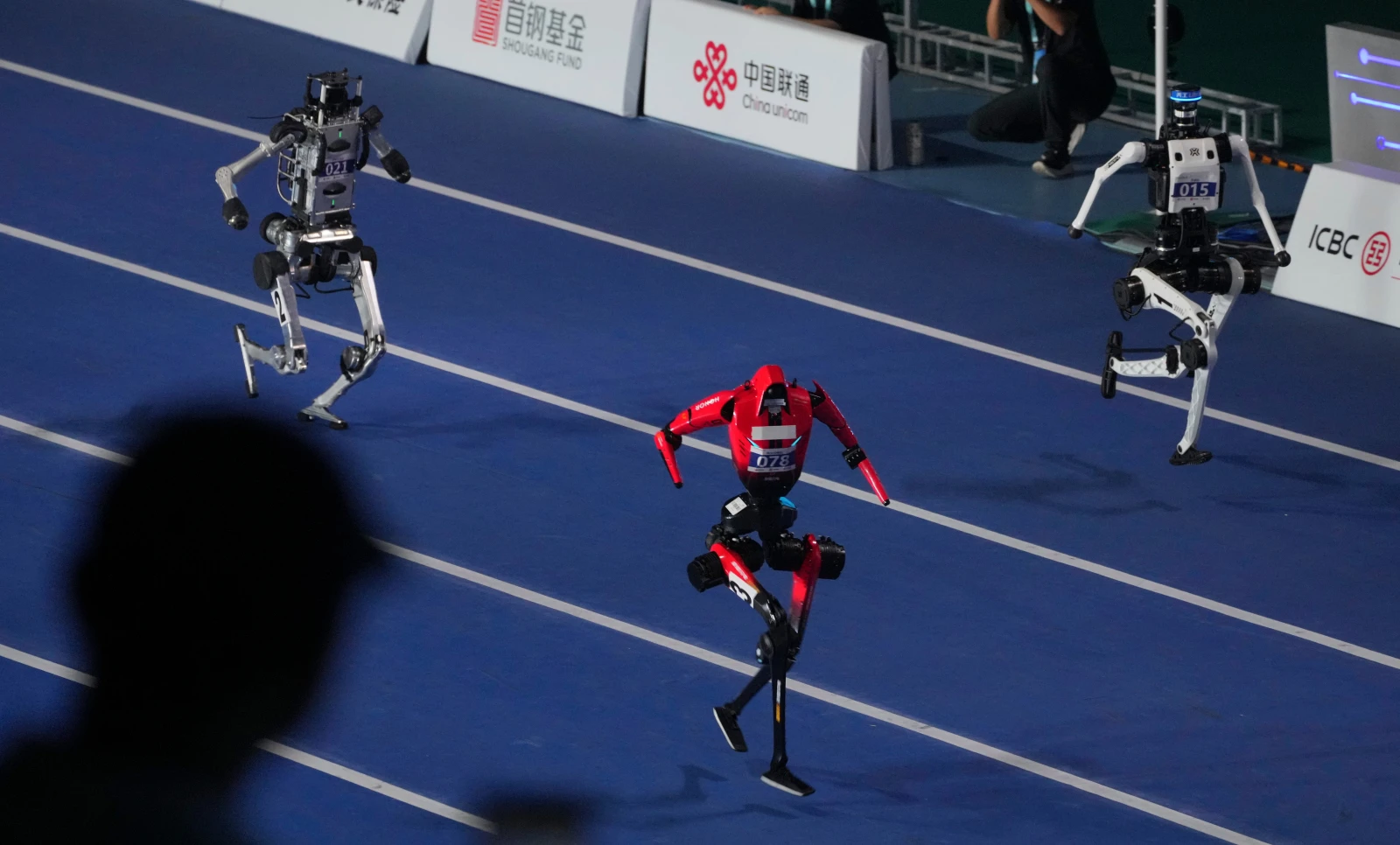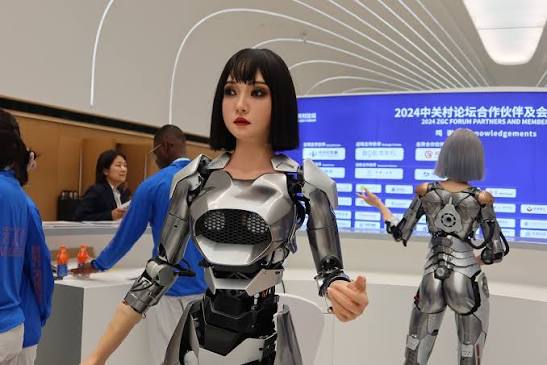
China’s humanoid robot industry is rapidly moving beyond spectacular demonstrations toward something much more important: real industrial employment. At the 2026 World Robot Conference in Beijing, more than 300 companies are presenting over 2,000 robotic exhibits, but the central question is no longer whether robots can dance, run or perform martial arts. It is whether they can work productively inside factories, warehouses and logistics centres.
China has already become the world’s largest market and manufacturing base for industrial robots, and its next ambition is embodied AI — machines that combine artificial intelligence with a physical body capable of interacting with the real world. Chinese policymakers are targeting more than 10,000 humanoid robots in commercial use by the end of 2026, covering over 100 application scenarios including manufacturing, logistics and services.
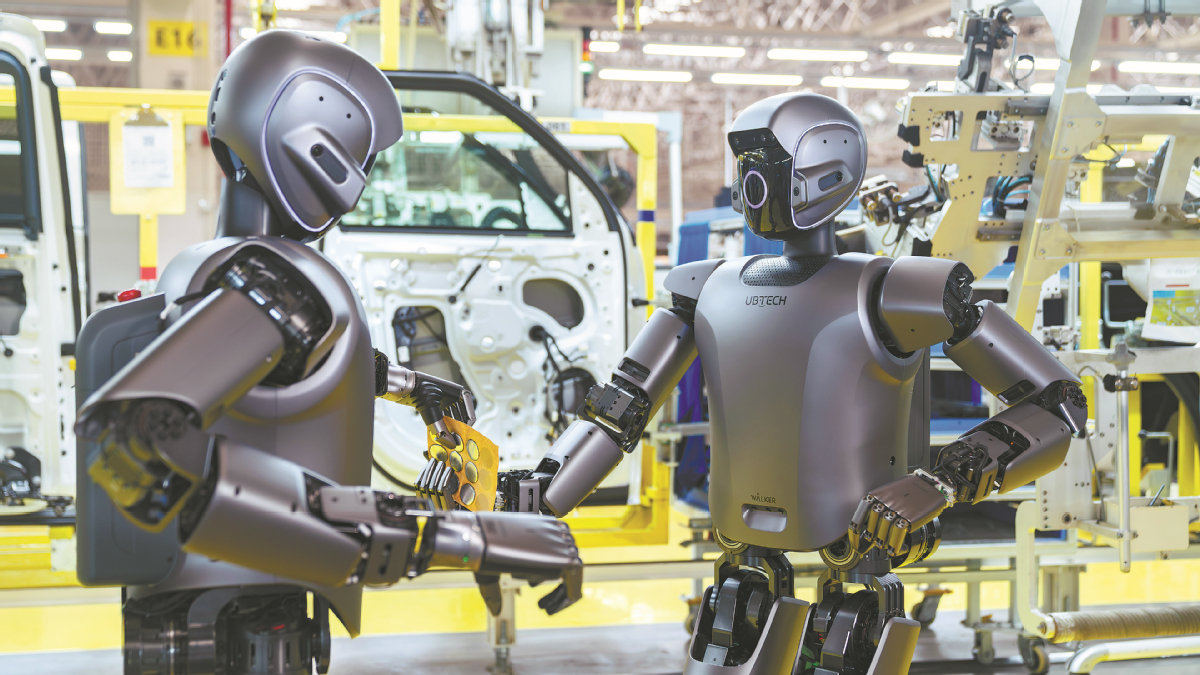
Humanoid robots can potentially move components, perform repetitive assembly operations, inspect products and work in areas originally designed for humans without requiring an entire factory to be rebuilt around traditional fixed industrial robots. AI-based vision systems increasingly allow machines to recognise differently positioned components rather than simply repeating a programmed movement.
“Automotive production is emerging as one of the first major testing grounds.”
EuroAsia.News, reporting from Bejing
Companies such as Unitree, UBTech, Leju and numerous younger Chinese manufacturers are competing to bring these systems into mass production. Unitree alone had delivered around 18,000 bipedal humanoid robots across its product range by July 2026, while preparing for a highly anticipated listing on Shanghai’s STAR Market. Its newest high-performance robot demonstrates speeds of up to 12.66 metres per second and a standing jump of approximately two metres — impressive engineering achievements, although industrial customers ultimately care more about reliability, operating cost and productive working hours.
China has another advantage: its enormous manufacturing ecosystem. Motors, batteries, sensors, cameras, gears, actuators, electronics and precision components can increasingly be sourced domestically and produced at scale. That allows Chinese manufacturers to reduce robot prices much faster than was possible during earlier generations of industrial robotics. China accounted for an estimated 85% of worldwide humanoid production in 2025, although commercial demand still trails manufacturing capacity.
Perhaps even more important is the connection between robots and real-world AI training data. A humanoid working in a factory continuously encounters objects, movements and unexpected situations. Information from thousands of machines can be used to improve future AI models, turning factories themselves into enormous training environments.
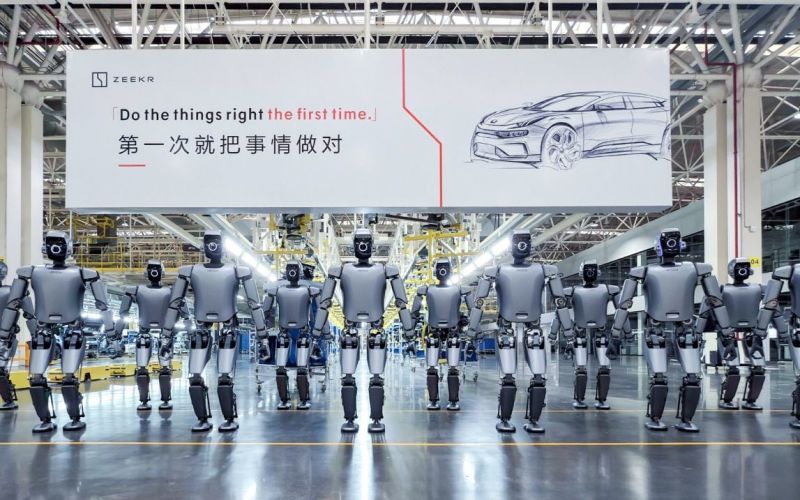
Serious obstacles remain. Humanoids are still expensive, battery life is limited, dexterity remains inferior to skilled human workers and apparently simple tasks can become difficult when objects are positioned unpredictably. Analysts therefore expect many early machines to be used for training, testing and narrowly defined industrial duties rather than immediately replacing complete human jobs.
Nevertheless, China is entering an important new stage. The real technological race is no longer about which robot performs the most impressive backflip. It is about which company can build a machine that arrives at a factory every day, performs useful work reliably and costs less to operate than the alternative.
If China succeeds, humanoid robots could follow the same trajectory as electric vehicles, batteries and solar panels: moving from expensive experimental technology to mass-produced industrial equipment manufactured at enormous scale.