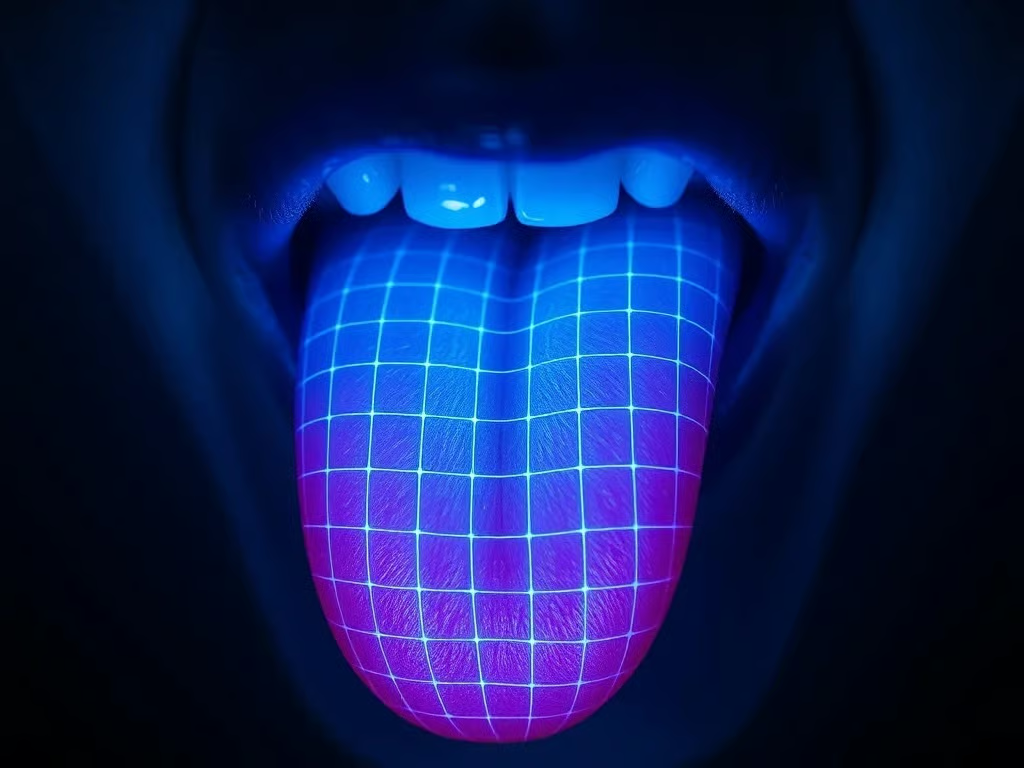
One of the oldest diagnostic methods in Chinese medicine is becoming one of its most modern. Across China, artificial-intelligence tongue diagnosis systems are moving from specialist clinics into hospitals, health kiosks and increasingly into smartphone applications that analyse a photograph of the tongue within seconds.
Tongue diagnosis has been part of Traditional Chinese Medicine, or TCM, for centuries. References appear in the Huangdi Neijing, the Yellow Emperor's Classic of Internal Medicine, while specialised tongue-diagnosis texts were developed during later imperial dynasties. The tongue became an important part of the TCM system of observation, alongside examination of the face, pulse, voice and reported symptoms. Practitioners traditionally study its colour, shape, moisture, coating, cracks, swelling and tooth marks, interpreting these characteristics within the wider TCM concept of bodily balance.
Two physicians can interpret the same tongue differently, while lighting conditions, experience and even recent food or drink can influence the observation. This is precisely the problem Chinese researchers are attempting to solve with digital imaging and artificial intelligence.
“The weakness of traditional tongue diagnosis has always been its subjectivity.”
EuroAsia.News
Modern systems first isolate the tongue from a photograph and then use machine-learning models to recognise characteristics such as coating thickness, colour, fissures and tooth marks. More advanced platforms combine the image with questionnaires, facial images or pulse information before generating a TCM constitution assessment. Research published over the past several years shows increasingly sophisticated use of convolutional neural networks and multimodal models to standardise what was previously dependent largely on individual practitioner judgement.
The technology is no longer confined to laboratories. At Anhui University of Chinese Medicine's Second Affiliated Hospital, patients have been able to photograph their tongue with a smartphone, answer several questions and receive an AI-generated assessment in around ten seconds. According to Xinhua, the system can distinguish more than 100 TCM constitution and health states. Other Chinese devices combine tongue, facial and pulse information and produce broader digital health reports.
Commercial systems are also emerging. Hefei-based Yunzheng Technology, linked with Anhui University of Chinese Medicine, operates an AI tongue-diagnosis platform that analyses tongue and facial photographs alongside digital questioning. The company says its technology is intended for hospitals, health-management services and TCM-assisted diagnosis rather than merely consumer entertainment.
The biggest transformation, however, is the arrival of the tongue-diagnosis app.
Chinese applications such as 看舌头 – “Look at the Tongue” already allow users to photograph their tongue and receive automated analysis based on characteristics including colour and morphology. The application states that it integrates TCM diagnostic concepts with AI-based health monitoring and is currently restricted to the Chinese market. Other Chinese platforms, including 爱看舌 and recently launched 素灵舌诊, offer similar AI-assisted analysis and constitution assessment.
International availability is beginning to expand as well. Applications such as TongueRead and MyZenCheck offer AI-assisted TCM-style tongue analysis through ordinary smartphone cameras. Their own descriptions make an important distinction: these applications are generally wellness or monitoring tools rather than certified medical diagnostic devices.
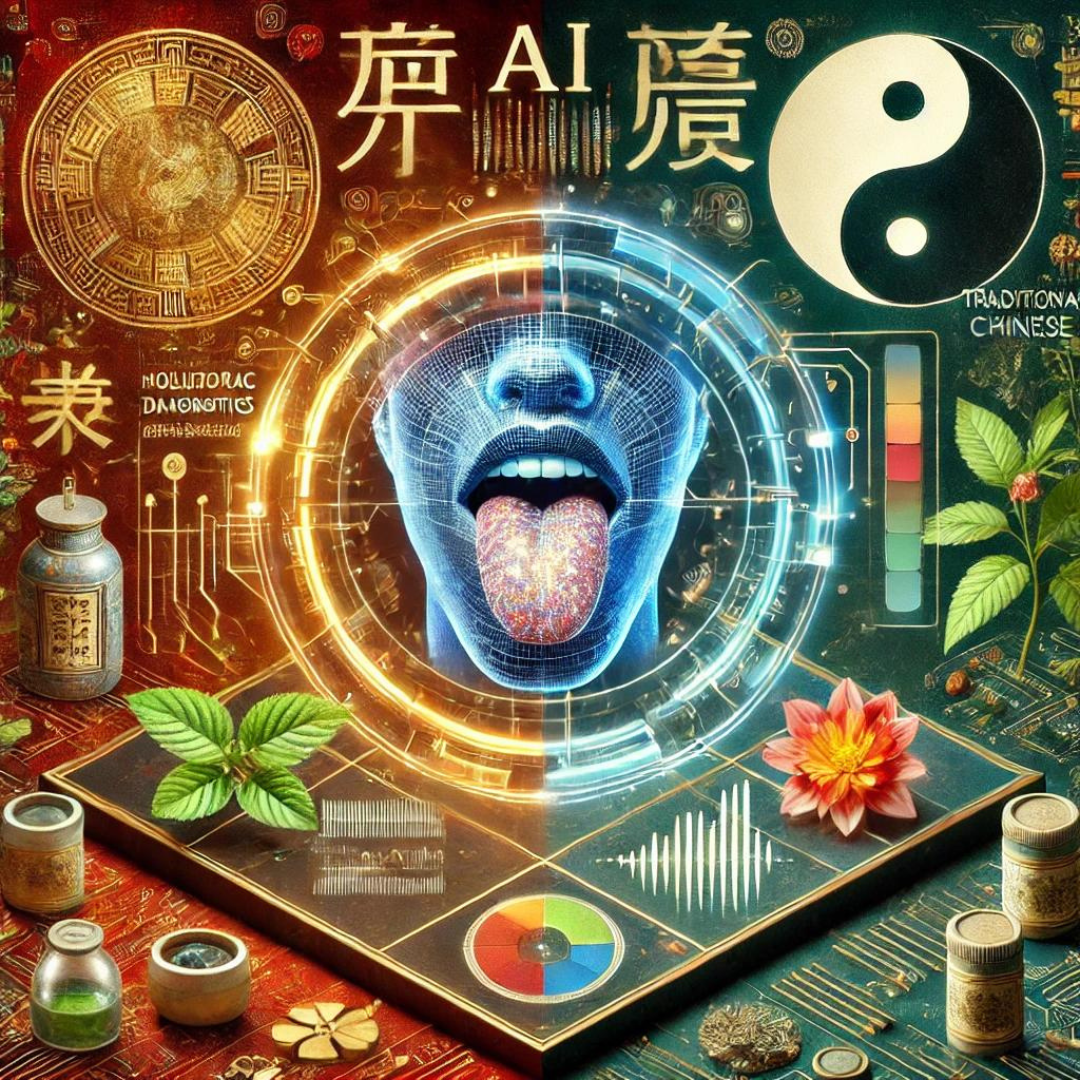
This distinction matters. Research into automated tongue analysis is advancing rapidly, but the scientific evidence does not yet justify treating a tongue photograph as a replacement for laboratory testing, medical imaging or a physician's examination. Lighting, camera quality, diet and variations between individuals remain significant challenges, while recent research continues to examine how reliably AI models can generalise across larger populations.
Its most realistic future may therefore be as a low-cost screening and monitoring technology. A smartphone can collect tongue images every day, allowing algorithms to track changes over weeks or months rather than relying on a single consultation. Researchers are already investigating this approach for applications such as home monitoring of chronic conditions.
China's experiment is therefore significant beyond TCM itself. It demonstrates how AI may transform ancient observational medicine into quantifiable digital data. Instead of replacing the traditional doctor, the more immediate objective is to make diagnosis more standardised, reproducible and accessible.
A practice once conducted by a physician looking across a desk may increasingly begin with something far simpler: open an app, point the camera at your tongue, and receive an analysis seconds later.