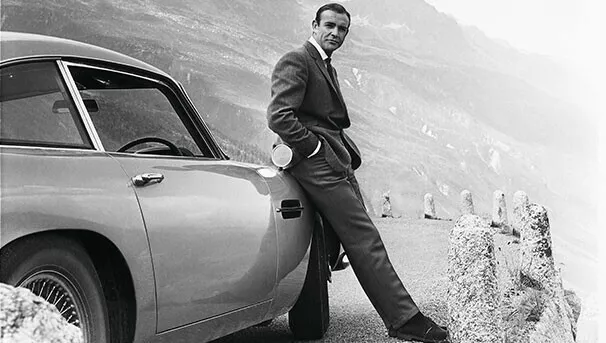
Five years ago, in September 2021, Aston Martin Lagonda shares traded around 1,915p–2,000p. Today they are close to 34p. That represents a fall of more than 98%. The decline cannot be dismissed as an adjustment following the disastrous 2018 flotation: the comparison begins after Aston Martin's 2020 share consolidation and therefore reflects the destruction of shareholder value during the Lawrence Stroll era itself.
The 2018 IPO valued Aston Martin at roughly £4 billion. Its present equity value is around £350 million. Meanwhile, the company owes far more than its stock-market value.
“Another £550 million — but this time expensive money.”
EuroAsia.News, reporting from London
In July, Aston Martin secured £550 million of new debt financing led by funds managed by HPS Investment Partners, now owned by BlackRock. It consists of a £450 million senior secured term loan and £100 million delayed-draw facility, carrying interest of SONIA plus 6.75% and maturing in July 2031. Aston also has permission to incur another £100 million of junior debt.
This is not cheap rescue capital.
At the end of June, Aston Martin reported net debt of £1.545 billion, compared with £1.378 billion a year earlier. The company now expects roughly £160 million of net finance costs in 2026. That interest bill alone is approaching half the company's current stock-market value.
And the new money has created another problem. Existing bondholders have challenged the structure after valuable assets, reportedly including almost 200 Aston Martin trademarks, were transferred into a new subsidiary used to support the HPS financing. Aston's existing 2029 bonds subsequently fell sharply. Some creditors argue that collateral backing their debt has effectively been weakened and have begun legal action seeking information about the transaction.
At the end of 2025 Aston already had $1.05 billion of 10% senior secured notes and another £565 million at 10.375%, both due in 2029. The latest financing therefore buys time; it does not make Aston Martin lightly indebted. (FinancialFilings)
The cars are not necessarily the problem
The strange feature of Aston Martin's crisis is that the company is not disappearing commercially.
Wholesale volumes developed as follows:
2021: 6,178 cars
2022: 6,412
2023: 6,620
2024: 6,030
2025: 5,448
Revenue rose from £1.10 billion in 2021 to £1.38 billion in 2022 and a record £1.63 billion in 2023 before slipping to £1.58 billion in 2024 and collapsing to £1.26 billion in 2025.
The 2026 numbers actually show improvement. First-half wholesales rose 21% to 2,331, revenue increased 38% to £629 million and gross profit jumped 68%. Valhalla deliveries helped gross margin recover to almost 34%. Nevertheless Aston still lost £154 million before tax during those six months.
This exposes Aston Martin's fundamental problem. A manufacturer selling barely 5,000–6,000 cars annually must fund vehicle platforms, engines, electronics, safety certification, factories, global dealerships and increasingly expensive electrification programmes. Ferrari can sustain this model because its margins, volumes and cash generation are dramatically stronger. Aston has repeatedly attempted to become more Ferrari-like without achieving Ferrari economics.
Seven lives — and perhaps an eighth
Aston Martin has frequently been described as having gone bankrupt seven times. The exact legal form differed from crisis to crisis, but financial collapse is embedded in its history.
The original Bamford & Martin failed in 1924, encountered financial trouble again the following year, and was reorganised in 1926. Another crisis came in 1932, followed by rescue from Sir Arthur Sutherland. David Brown bought Aston Martin in 1947 and created the DB era, but mounting losses eventually forced him to sell in 1972. By December 1974 the company was in receivership and its factory closed. Peter Sprague, George Minden and other investors bought the remains from the receiver for £1.05 million and restarted production in 1975. More ownership changes followed in the early 1980s before Ford finally brought deep-pocketed industrial backing in 1987 and full control in 1993.
Ford sold Aston in 2007. Another consortium took control, Investindustrial entered in 2013, Mercedes followed as technology partner and shareholder, and the company finally returned to the stock market in 2018. Two years later, it required another rescue.
Lawrence Stroll and the unusual ownership structure
Canadian billionaire Lawrence Stroll arrived in 2020 with a consortium of investors and became Executive Chairman. His Yew Tree group now represents a notified voting interest of approximately 33%. Swiss billionaire Ernesto Bertarelli is a major participant in the consortium and separately reports almost 15%, but his shares are included within Stroll's overall notified interest and should not simply be added again.
Stroll's involvement goes far beyond an ordinary investment. He is also the controlling figure behind AMR GP, the Aston Martin Formula One team, where his son Lance drives. Earlier this year the listed car company sold perpetual Formula One naming rights to AMR GP for £50 million, following an independent valuation and shareholder approval. Aston had already sold its remaining economic interest in the racing team for roughly £108 million in 2025.
The other strategic shareholders are almost as interesting.
Geely, controlled by Chinese billionaire Li Shufu, owns around 14% on the latest company disclosure and has a board representative. Geely explicitly described its investment as an opportunity to create technology synergies and help Aston Martin in China.
Saudi Arabia's Public Investment Fund holds roughly 14% and has two board representatives. PIF also controls Lucid, Aston Martin's future electric powertrain technology partner. Aston still has significant payment and purchasing commitments to Lucid.
Mercedes-Benz, with about 7.5%, remains strategically important because Aston uses Mercedes-AMG engines and Mercedes electronic technology. It also has a representative on the board.
This means Aston Martin is effectively surrounded by organisations capable of buying it.
Who could own Aston Martin next?
The most obvious candidate is Geely.
Geely already wanted to buy 3 times. Geely also owns Volvo Cars, Lotus, Polestar and stakes in Mercedes-Benz and other manufacturers. It has platforms, batteries, electric architectures, software, purchasing scale and manufacturing resources that Aston Martin badly needs. Aston, in return, would give Geely one of Britain's most prestigious luxury names.
A Geely takeover would therefore have far greater industrial logic than another financial rescue.
Saudi PIF is the second credible possibility. It already owns a large Aston stake, controls Lucid and has demonstrated a willingness to spend heavily on international automotive and sporting assets. But there is currently no confirmed takeover proposal.
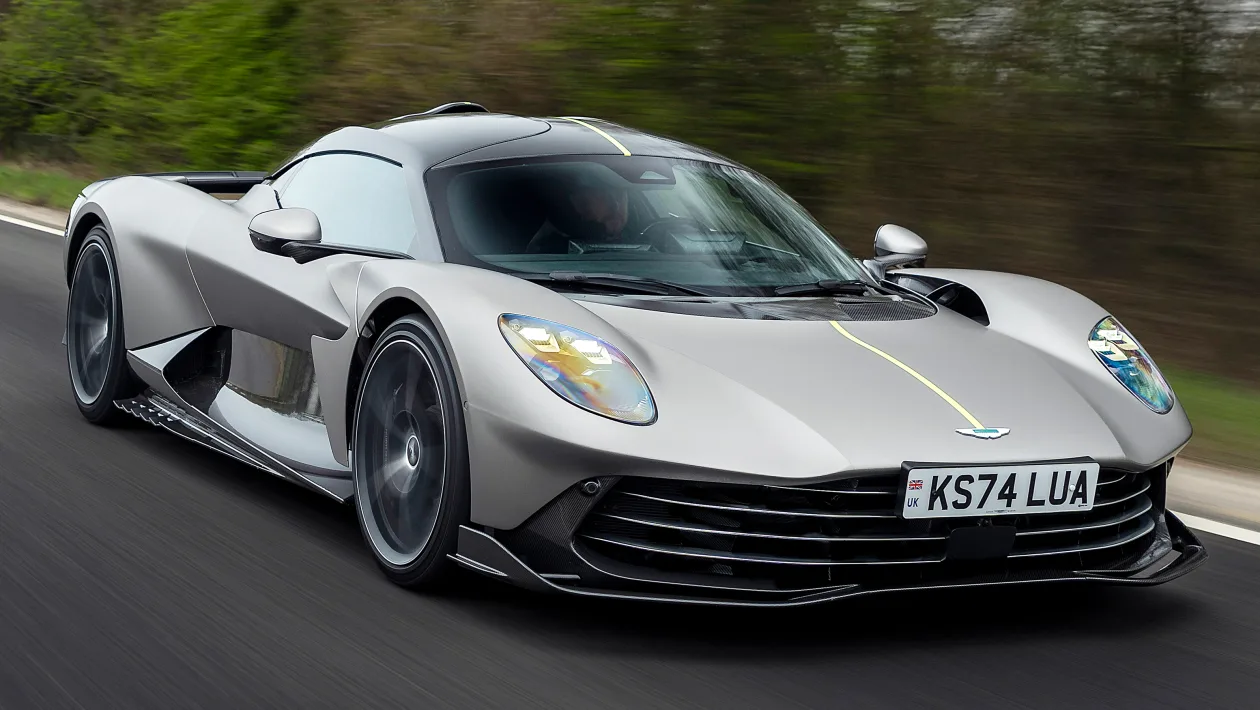
Mercedes could theoretically take control, but that appears less compelling. Mercedes already extracts value from Aston as technology supplier without carrying Aston's losses or debt.
There is also a fourth possibility: the creditors themselves. If Aston Martin again reaches a point where it cannot refinance its obligations, a restructuring could convert debt into equity or transfer control of valuable assets to lenders. HPS and other private-credit investors may therefore become increasingly important even without formally buying the company.
Aston Martin may survive even if today's shareholders do not
Aston Martin does not appear to face immediate insolvency. The July refinancing lifts pro-forma liquidity to about £340 million, while 2026 operating trends are improving. Valhalla and higher-margin Specials could materially improve the second half.
But the arithmetic remains uncomfortable: approximately £1.5 billion of net debt, high-double-digit borrowing costs, continuing cash consumption and an equity value of only around £350 million.
That combination makes another recapitalisation, strategic investment or eventual change of control increasingly plausible if the turnaround fails to generate cash quickly enough.
And this is perhaps the most Aston Martin conclusion imaginable. The company itself may not disappear at all.
The DB badge, the wings and the James Bond association could easily survive another financial collapse. What may not survive is the present ownership structure — or today's shareholders.