Now the factory that made it is coming to an end.
Bonyhád Enamelware Ltd. has entered liquidation, bringing production at Hungary’s last traditional enamel-cookware factory toward a definitive close. Around 150 employees are affected, with the liquidator responsible for settling unpaid wages, notice-period payments and severance claims. Some workers had already received only part of their salaries as the company’s liquidity crisis deepened.
The closure ends an industrial story that began in 1909, when Perczel Béla established the Magyar Zománczmű és Fémárugyár in Bonyhád. The operation initially produced items including toys and dominoes, but enamelling soon became its speciality. At the turn of the century, there were seven enamelworks operating in Hungary; the one in Bonyhád was named the Hungarian Enamel and Metalware Factory.
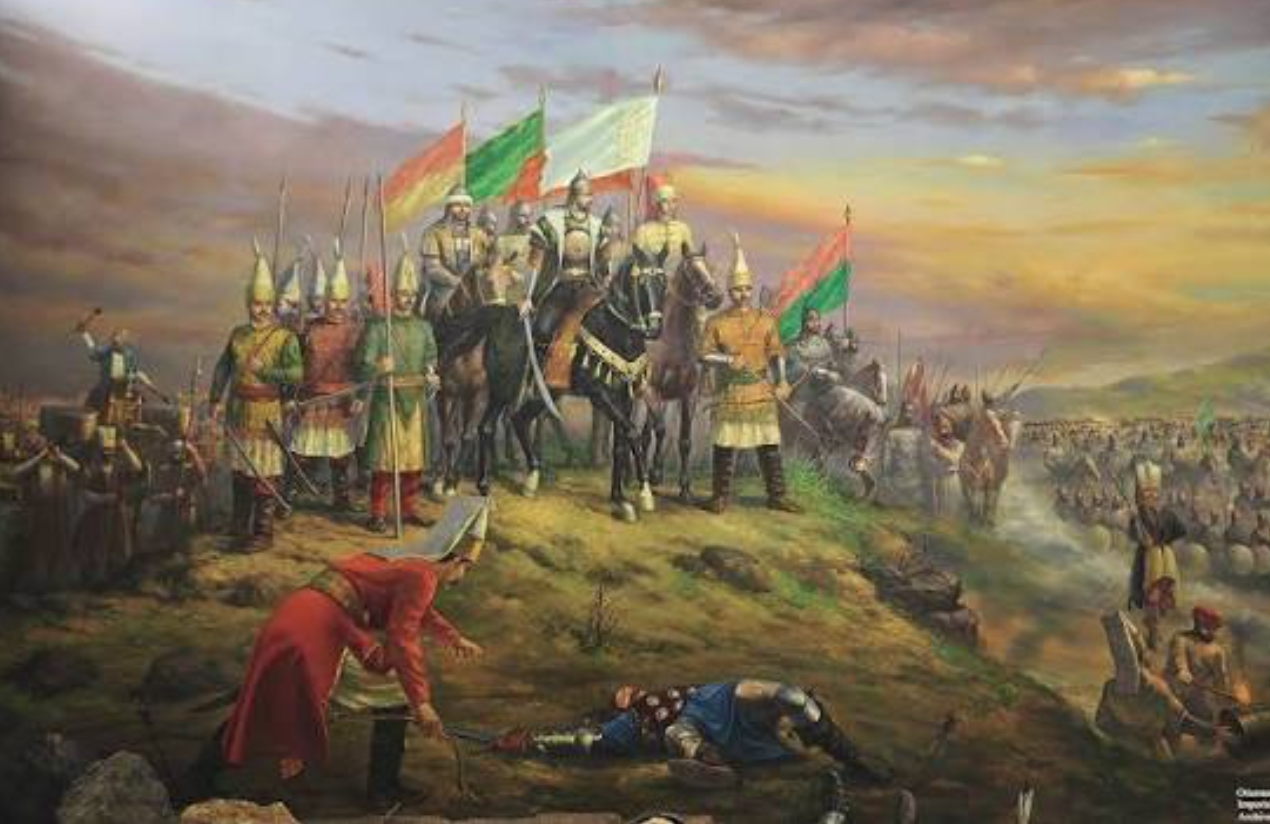
Their enamel signs achieved outstanding market success; Constantinople (modern-day Istanbul) ordered 100,000 street name and house number signs from them. It earned the company also international recognition and a gold medal at an exhibition in 1926; by 1934 it had even established a foreign subsidiary.
After nationalisation in 1948, the plant became part of the Lampart enamel industry. Following the 1956 revolution, Hungarian enamel-cookware production became increasingly concentrated in Bonyhád. The factory regained independence in 1981, later introduced Teflon-coated cookware under a DuPont licence and registered the EMA-LION trademark. In 1993 it returned to 100% Hungarian private ownership.
At its late-1990s peak the plant employed around 560 people. More than half of sales went abroad, and by the time of the transition from socialism its exports had multiplied fivefold. In 1999 its products received the Hungarian “Excellent Quality” mark and the Magyar Termék grand prize, followed by further awards for new product families.
Yet the factory's real importance was not measured in awards.
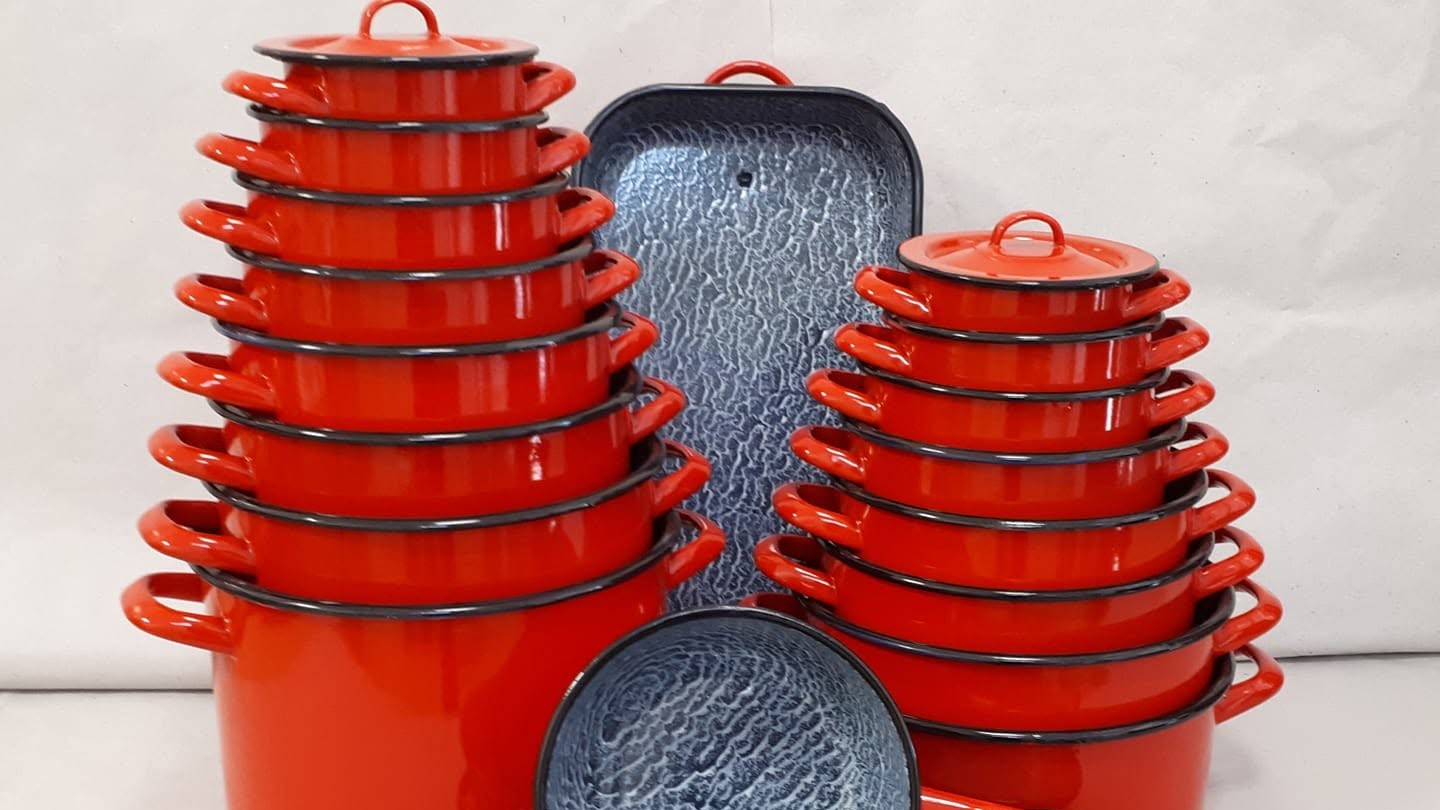
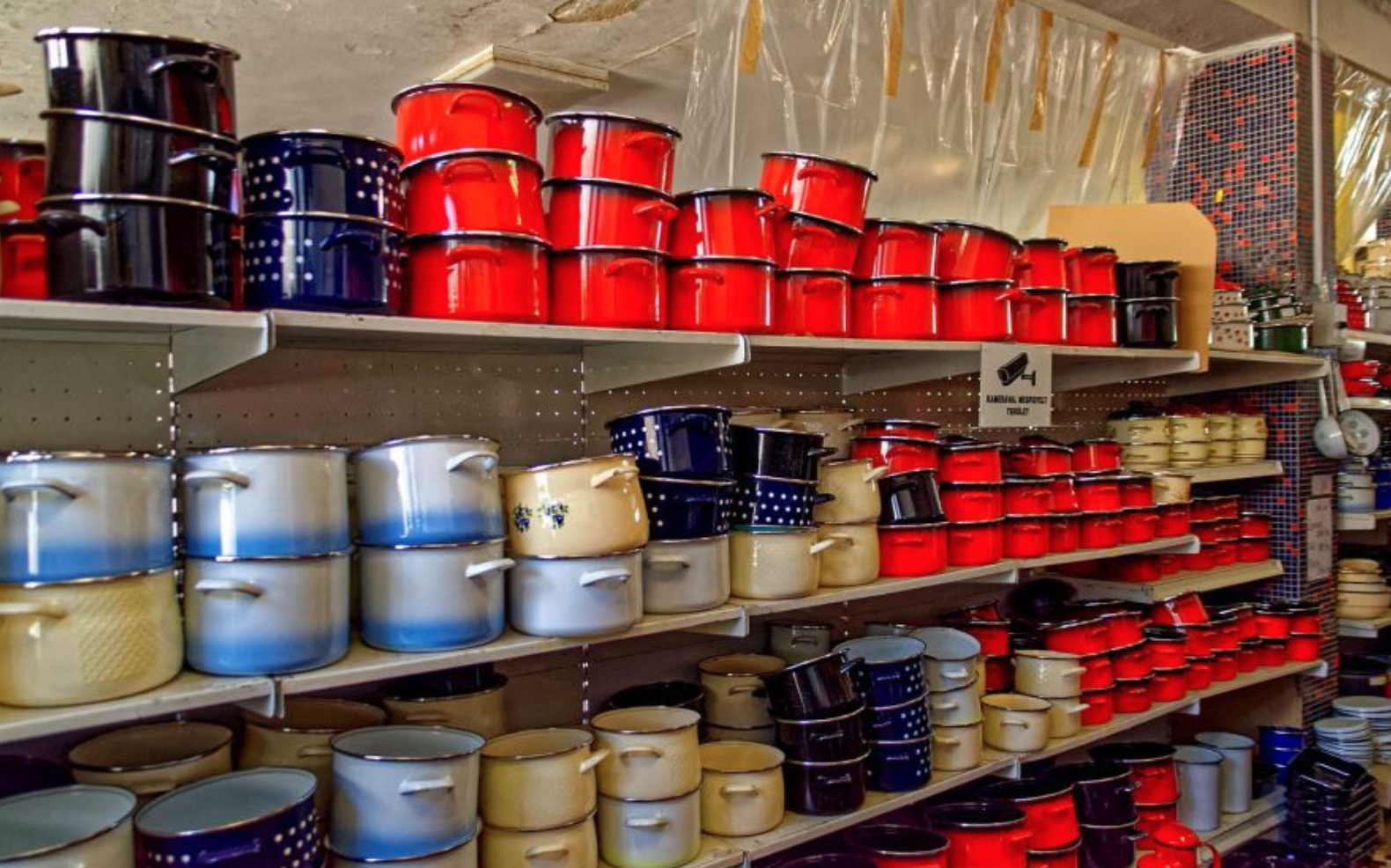
Bonyhád produced objects that became embedded in everyday Hungarian life: red and blue pots, dotted mugs, large preserving vessels, baking dishes and enamel signs. Street signs, house numbers, institutional plaques, tower-clock faces and even river water gauges were produced there. The cookware was made for durability rather than rapid replacement — one reason decades-old Bonyhád pots are still found in Hungarian kitchens today.
That durability, however, could not protect the manufacturer itself from a changing economy.
The company was still investing as recently as 2019, but the pandemic was followed by the European energy shock after 2022. Enamel production is particularly exposed to energy and raw-material costs: steel has to be formed, coated and repeatedly fired at high temperatures. Higher prices for metal, enamel materials, energy, labour, packaging and transport could not all be passed on to customers.
The financial deterioration became severe. Two consecutive years of heavy losses ultimately became impossible to finance.
Perhaps most painful is that the end was not considered inevitable. Discussions were held with state investment, export-credit and employment bodies, and according to local reporting a serious potential buyer had shown interest in preserving the plant and its jobs. Those efforts did not result in a rescue before liquidation began.
Bonyhád's enamelware is officially recognised in Hungary’s national value collection. That makes the closure more than another factory failure.
Machines can be sold. Buildings can be reused. A trademark could even be revived by a future investor.
But when the workers who know how to press the steel, prepare the enamel, fire the coating and judge the finished surface leave, 117 years of accumulated manufacturing knowledge begin to disappear with them.
Hungary is therefore losing not simply a factory, but one of the remaining links between its industrial history and the objects still sitting in millions of kitchens.
The Bonyhád red pot may survive for decades.
The factory that made it did not.