The war itself did not create Kyrgyz growth, but the sanctions, trade diversion, migration of capital and people, and reorganisation of Russia’s commercial links transformed the country’s position in Eurasia. A small, landlocked economy once known mainly for gold, agriculture and migrant remittances has become a fast-growing hub for trade, construction, banking, logistics and crypto.
The scale is striking. According to the IMF, real GDP expanded by 47% between 2021 and 2025, making Kyrgyzstan the third-fastest-growing economy in the world over that period. GDP grew 11.1% in 2025, following 11.5% in 2024, while GDP per capita roughly doubled to about $3,100. The IMF explicitly identifies expanded trade, remittance and capital inflows, and strong construction activity as key drivers since 2022.
Western sanctions against Russia forced supply chains to reorganise, and Kyrgyzstan—inside the Eurasian Economic Union and geographically close to China—was exceptionally well positioned to become an intermediary. Trade with EAEU countries increased from $3.43 billion in 2021 to $6.79 billion in 2025. Trade with Russia rose from about $2.30 billion to $4.11 billion, while Kyrgyz exports to Russia nearly doubled from $393 million to $739 million. Russia’s share of total Kyrgyz exports rose from 14.3% to 24.4%.
“The first engine is trade.”
EuroAsia.News
Some of this reflects genuine Kyrgyz production, some ordinary regional trade, and some re-export activity. The IMF expects the extraordinary re-export boost eventually to plateau, which is why growth is forecast to slow to around 6.1% in 2026. But the profits generated since 2022 have already moved into the domestic economy.
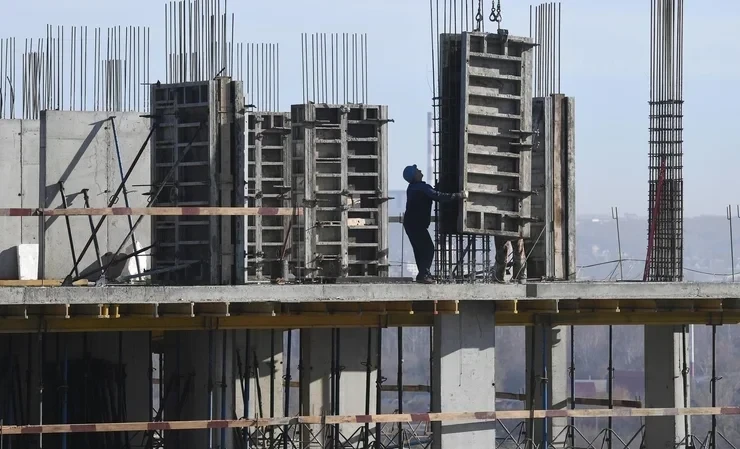
The most visible evidence is construction. Kyrgyz construction expanded 21.1% in 2025, with output reaching about 438.5 billion som — approximately €4.35 billion. Bishkek is changing rapidly, with apartment towers, commercial buildings, roads and infrastructure projects appearing across the capital. Real investment rose an estimated 15.9% in 2025. Construction has therefore become more than a consequence of growth; it is now one of the economy’s major growth engines.
The banking system is expanding almost as dramatically. By the end of July 2026, banking assets had risen 21.9% since the start of the year to 1.476 trillion som — about €14.64 billion. The loan portfolio increased 22.2% to 619.3 billion som — around €6.14 billion. Islamic-finance assets jumped 45.1% to 27.9 billion som — about €277 million, while banks earned net profits of roughly 20.4 billion som — approximately €202 million in the first seven months.
Then comes perhaps the most extraordinary transformation: crypto and digital finance.
In 2022, virtual-asset transactions amounted to only around 5 billion som — approximately €50 million. By 2024, turnover had exploded to 587.3 billion som — around €5.82 billion. And during 2025 the Financial Market Regulation Service recorded total virtual-asset-provider turnover of approximately 2.735 trillion som — about €27.1 billion, based on more than 2.1 million transactions.
Kyrgyzstan has consciously encouraged this development. Licensed crypto exchanges and exchange operators have multiplied, mining remains regulated, and the country has moved into stablecoins and digital-currency infrastructure. By late 2025 regulators reported around 200 licensed virtual-asset market participants, while virtual-asset companies and miners had already begun contributing meaningful tax revenue.
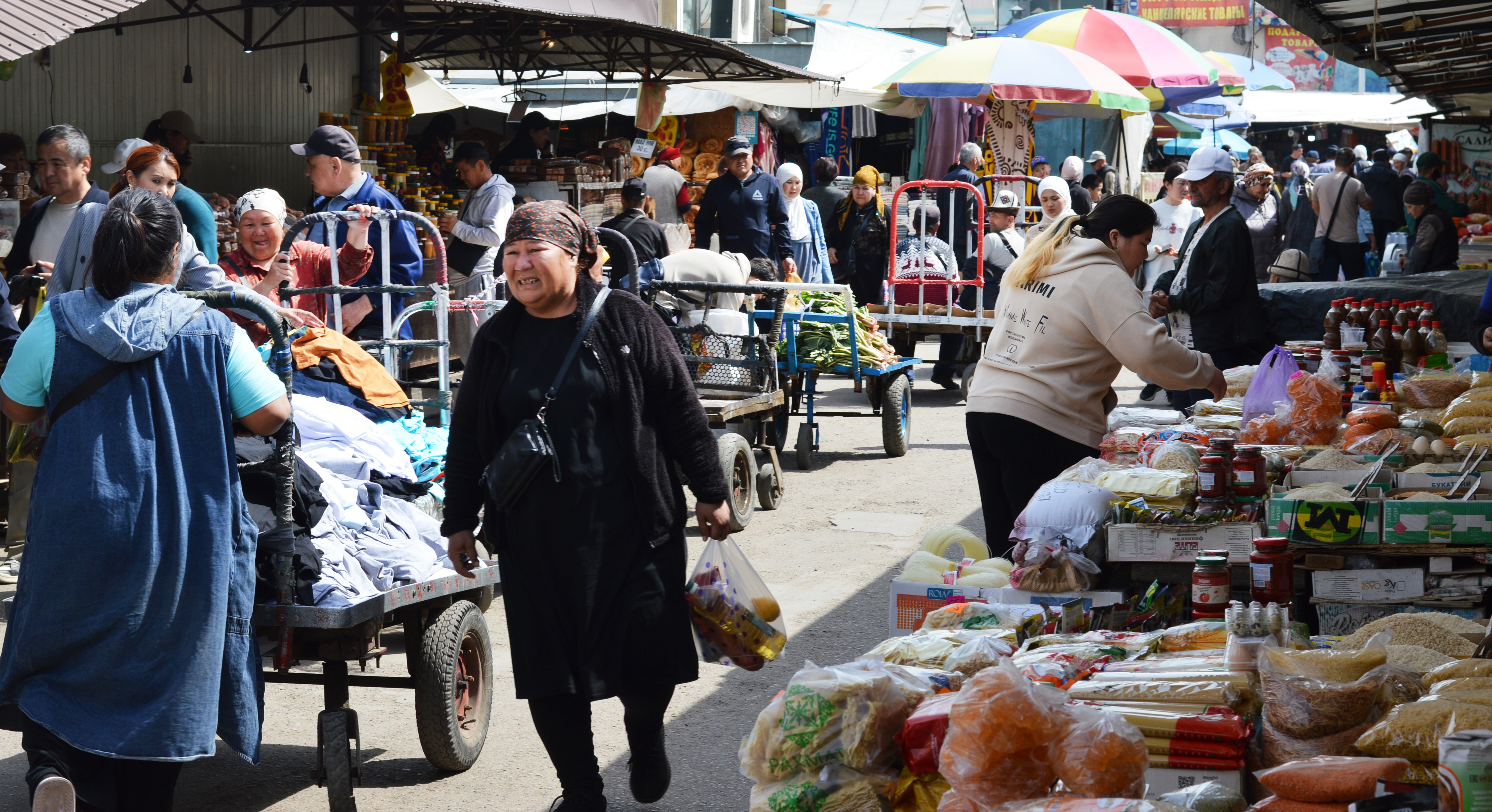
The Ukraine war therefore did something much larger than increase Kyrgyz exports to Russia. It redirected commercial routes across Eurasia. Chinese goods moved west through new channels, Russian demand shifted toward Central Asian intermediaries, money and businesses relocated, banks processed more transactions, property attracted investment and digital assets offered new payment routes where traditional finance had become more complicated.
Yet the real test begins now.
A boom based heavily on geopolitical arbitrage can disappear when sanctions regimes, trade routes or Russian demand change. The IMF already expects the exceptional trade effect to weaken. Inflation is elevated, credit is expanding rapidly, and an overheated property sector could eventually become a vulnerability.
But Kyrgyzstan now has something it did not have before 2022: capital, infrastructure investment, a larger financial sector, expanding trade networks and rapidly developing digital-finance expertise.
If these temporary wartime advantages are converted into hydropower, transport, housing, logistics, manufacturing and permanent financial infrastructure, Kyrgyzstan could emerge from the Ukraine crisis with a fundamentally larger economy.