Under the slogan “Ne féljetek! 2.0” — “Do Not Be Afraid! 2.0”, several hundred participants gathered in front of Parliament on 5 September for speeches, music and what organisers described as an open, interactive workshop about Hungary’s political future.
The gathering was organised around KözTér, together with CitizenGO and a broad group of journalists, activists and conservative public figures. Among those associated with the organisation were KözTér founder Kurucz Dániel, journalist Huth Gergely, filmmaker and writer Skrabski Fruzsina, Magyar Jelen editor-in-chief Horváth Tamás, journalist Kohán Mátyás and host Renge Zsolt.
“Organisers presented the event as formally independent of party politics, although its political direction was unmistakable: opposition to Péter Magyar’s Tisza government and a search for a new basis on which Hungary’s national-conservative forces could regroup.”
EuroAsia.News, reporting from Budapest
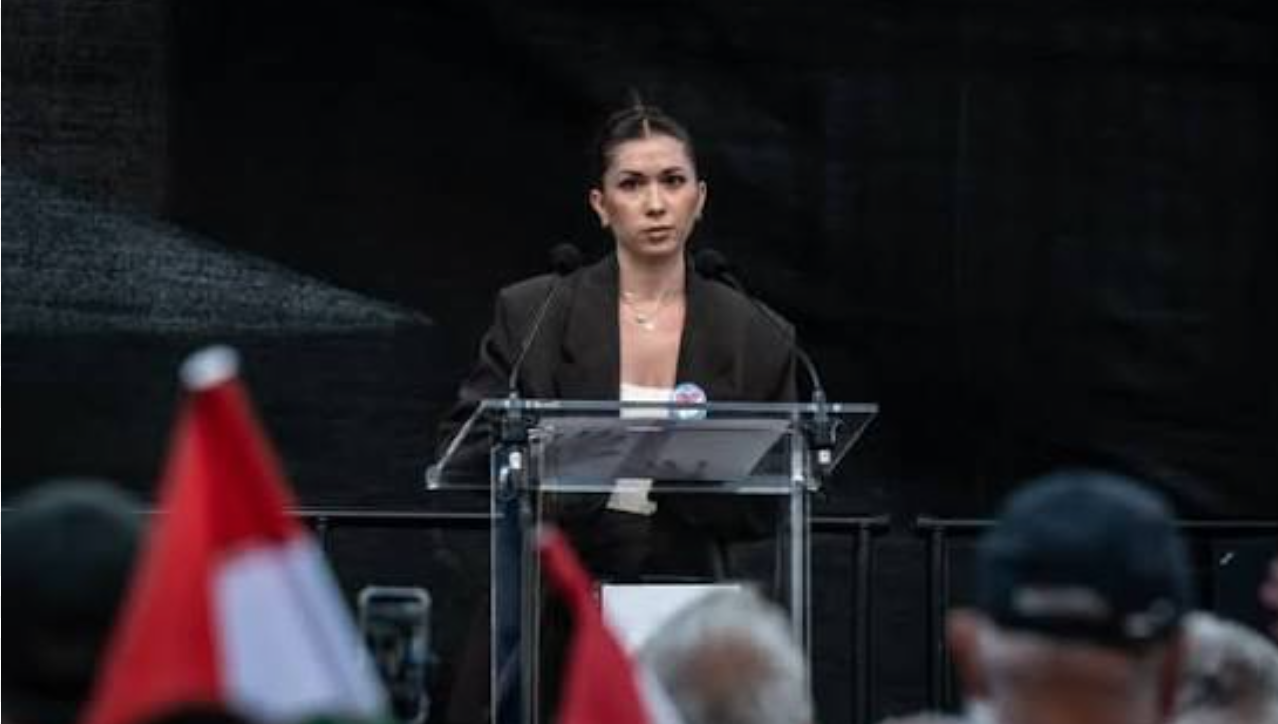
One of the most prominent early speakers was, Dezse-Zelenka Dóra journalist and political influencer. She accused Magyar of turning Hungarians against one another and argued that the response should not simply be greater anger. Her message centred on rebuilding connections between people, spreading what she called a more sober political voice and persuading one Hungarian at a time rather than accepting permanent division.
Huth Gergely delivered one of the evening’s harder-edged speeches. Referring to controversies surrounding the new government and the media, he predicted that the moment of political accountability would come sooner than many expected. Huth’s intervention reflected one of the recurring themes of the demonstration: many participants believe that the post-election transformation has gone beyond a normal change of government and is becoming a struggle over institutions, media influence and the future identity of the Hungarian right.
Another of the evening’s most warmly received speakers was Ábrahám Róbert. His emphasis, however, was less on retaliation than on the condition of the opposition itself. He argued that far more people could be mobilised if the different factions of the national right stopped fighting among themselves. According to Ábrahám, the coming period should be one of work, humility and reconciliation rather than celebration. He said Hungary would eventually have to be rebuilt and that the political and social wounds created during the present confrontation would have to be healed.
Skrabski Fruzsina spoke briefly about peace and political dialogue, while Horváth Tamás called for cooperation among those who can agree on the traditional conservative principles of “God, homeland and family”, even where substantial disagreements remain on other questions. Teleki Béla of CitizenGO also addressed the crowd, arguing that the movement needed to become part of a broader effort to unite the national camp.
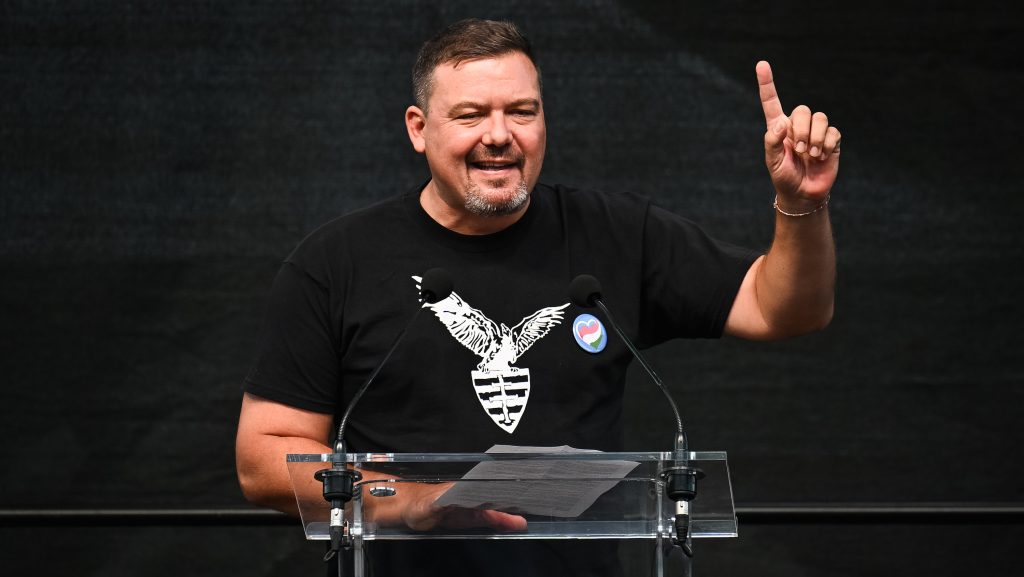
The diversity of the platform was significant. Szabó László, an Újbuda Fidesz municipal representative, acknowledged that some past political decisions had damaged the credibility of the right, while Mónus Benjámin, founder of Jövőépítő Fiatalok DPK, argued for a Hungary in which opposing sides can still listen to each other. Dezse Balázs attacked the government’s energy policies, while Tóth Elizabeth, founder of the Dobbanjon movement, urged conservative groups to put old grievances aside and search for common ground.
The final political message came from KözTér founder Kurucz Dániel, who openly set a long-term objective: rebuilding the right strongly enough to defeat Tisza decisively by 2030. His remarks underlined what made Saturday’s event politically more interesting than its crowd size alone might suggest.
The Kossuth Square gathering was not yet evidence of a unified opposition movement. The Hungarian right remains divided between established Fidesz structures, independent conservative activists, media personalities and newer civic organisations. But “Ne féljetek! 2.0” demonstrated that the process of political reorganisation has begun.
For the Tisza government, that may ultimately prove more important than whether Saturday’s crowd numbered hundreds or thousands. Governments rarely need to fear one demonstration. What matters is whether scattered opponents begin finding a common language, a common organisation — and eventually a common political direction.