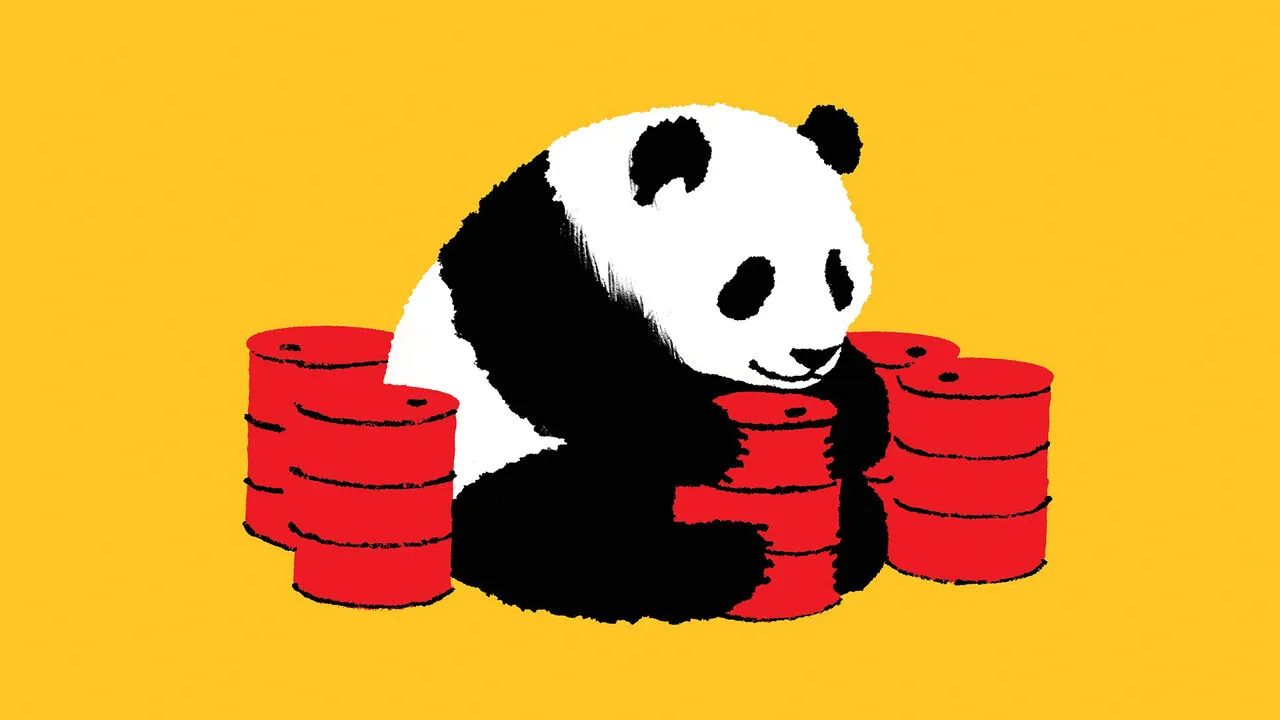
Rosneft chief Igor Sechin brought that argument into the open in Vladivostok, declaring that China increasingly has more influence over the global oil balance than OPEC itself. The statement is provocative, but developments in 2026 provide evidence for the underlying thesis.
China remains the world’s largest crude importer. According to the US Energy Information Administration, it imported a record 11.6 million barrels per day in 2025, taking advantage of relatively low prices to expand inventories. During the second quarter of 2026, however, imports collapsed to just 8.1 million barrels per day — 32% below the previous quarter — as the conflict around the Strait of Hormuz disrupted supplies and pushed prices higher. In May and June, Chinese imports dropped below 8 million barrels per day for the first time since 2016.
China did not simply consume less oil; it also drew down stocks accumulated when prices were cheaper. The EIA estimates that imports fell far more sharply than refinery processing, showing how Beijing could partly replace current purchases with inventories. In effect, China demonstrated something normally associated with producers: the ability to alter the balance between physical supply and demand by millions of barrels per day.
“That decline mattered globally.”
EuroAsia.News
This is why the comparison with OPEC has become relevant.
OPEC can increase or restrict production, but its cohesion has weakened. The United Arab Emirates left OPEC and OPEC+ earlier this year after years of disagreement over production quotas. Other members want higher baselines as they expand capacity. At the same time, actual OPEC+ production has often fallen short of quotas because war, sanctions and infrastructure problems have interrupted exports from several producers.
China, by contrast, does not need a formal cartel. Its influence comes from scale.
When Beijing buys aggressively, stockpiles crude and refiners increase throughput, exporters from Russia, Saudi Arabia, Iraq, Iran, the UAE, Brazil and Africa compete for Chinese demand. When China reduces purchases, the effect can immediately spread through tanker rates, refinery margins and benchmark prices.
There is another structural change. China’s electrification is beginning to affect petroleum consumption itself. Electric vehicles dominate an increasing share of new-car sales, while electric trucks and railways are reducing diesel demand. That means Beijing now possesses two separate levers over the oil market: its purchasing and stockpiling policy today, and the gradual reduction of petroleum demand tomorrow.
Russia understands the importance particularly well. China is Russia’s largest energy customer and its ability to redirect purchases influences the competition between Chinese and Indian refiners for Russian crude. In August, India’s Russian oil purchases fell sharply while Chinese demand increased, demonstrating how quickly Asian buying patterns can redirect Eurasian energy flows.
It would still be premature to declare OPEC irrelevant. Saudi Arabia remains one of the few producers capable of changing output substantially in a relatively short period, and OPEC+ still controls a huge portion of global production.
But oil power is becoming more complicated. Producers once dominated the market because scarcity gave them leverage. In an increasingly competitive market, the largest customer can acquire leverage of its own.
The future oil price may therefore be determined not only in Riyadh, Moscow or Abu Dhabi, but increasingly in Beijing — by decisions about strategic reserves, refinery quotas, electric vehicles and how many tankers China decides it needs this month.