The Digital Silk Way project is rapidly taking shape as one of the most ambitious digital infrastructure initiatives in Eurasia, with the potential to fundamentally reshape how data flows between Asia and Europe. At its heart lies the Trans-Caspian Fiber-Optic Cable, a 380-kilometre submarine cable linking Sumgayit in Azerbaijan to Aktau in Kazakhstan—the first fibre-optic connection ever laid beneath the Caspian Sea.
The Completed Milestone
The installation, carried out by a specialised cable-laying vessel weighing over 20,000 tons and staffed by around 70 specialists, involved deploying armoured fibre-optic cable along a carefully surveyed route designed to avoid anchorage areas and military exercise zones.
“In early August 2026, Azerbaijan and Kazakhstan announced the successful completion of the cable's submarine installation, marking the conclusion of the project's most technically challenging phase.”
EuroAsia.News
The cable was manufactured and tested in China before being shipped to Baku via Kazakhstan's Kuryk port. The offshore works began in July 2026 and were completed within weeks, with the cable reaching Kazakhstan's coastline in early August. Work is now underway to connect the cable to onshore infrastructure, with above-ground construction scheduled for completion in the autumn, followed by commissioning and system testing.
Technical Specifications and Capacity
The Trans-Caspian cable is engineered to deliver more than 400 terabits per second of international connectivity across 32 unrepeatered fibre pairs. The round-trip signal latency between the two shores is approximately 3.7 milliseconds, making the route highly competitive from a latency perspective.
The project is being implemented by CaspiLink B.V., a 50/50 joint venture between Kazakhstan's national telecom operator Kazakhtelecom and AzerTelecom International, part of Azerbaijan's NEQSOL Holding. The total investment is estimated at approximately $50.6 million, financed entirely from the operators' own resources without any state budget funding.
Strategic Significance and Geopolitical Implications
The Digital Silk Way is designed to fill what Ana Nakashidze, CEO of AzerTelecom, has described as the region's "missing middle route" . Currently, internet traffic from Central Asia and the South Caucasus relies heavily on two main routes: via Russian networks to the north and via subsea cable systems in the Red Sea and Mediterranean to the south. Both face vulnerabilities—northern routes are exposed to geopolitical risks and sanctions, while southern routes face operational risks including cable damage and network congestion
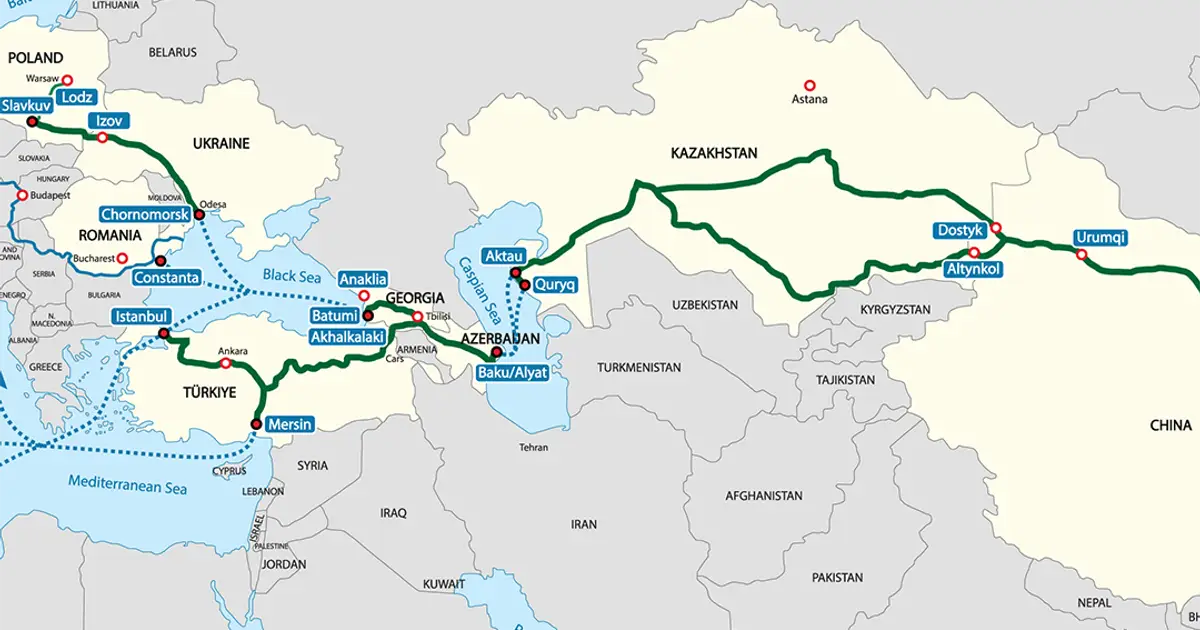
The Trans-Caspian cable creates an alternative route that bypasses Russia and Iran entirely, connecting Europe via Azerbaijan, Georgia, and Turkey, or linking eastwards through Kazakhstan to China. For Central Asian states, this offers an opportunity to reduce dependence on Russian transit infrastructure. For the South Caucasus, it strengthens the region's position as an emerging digital hub.
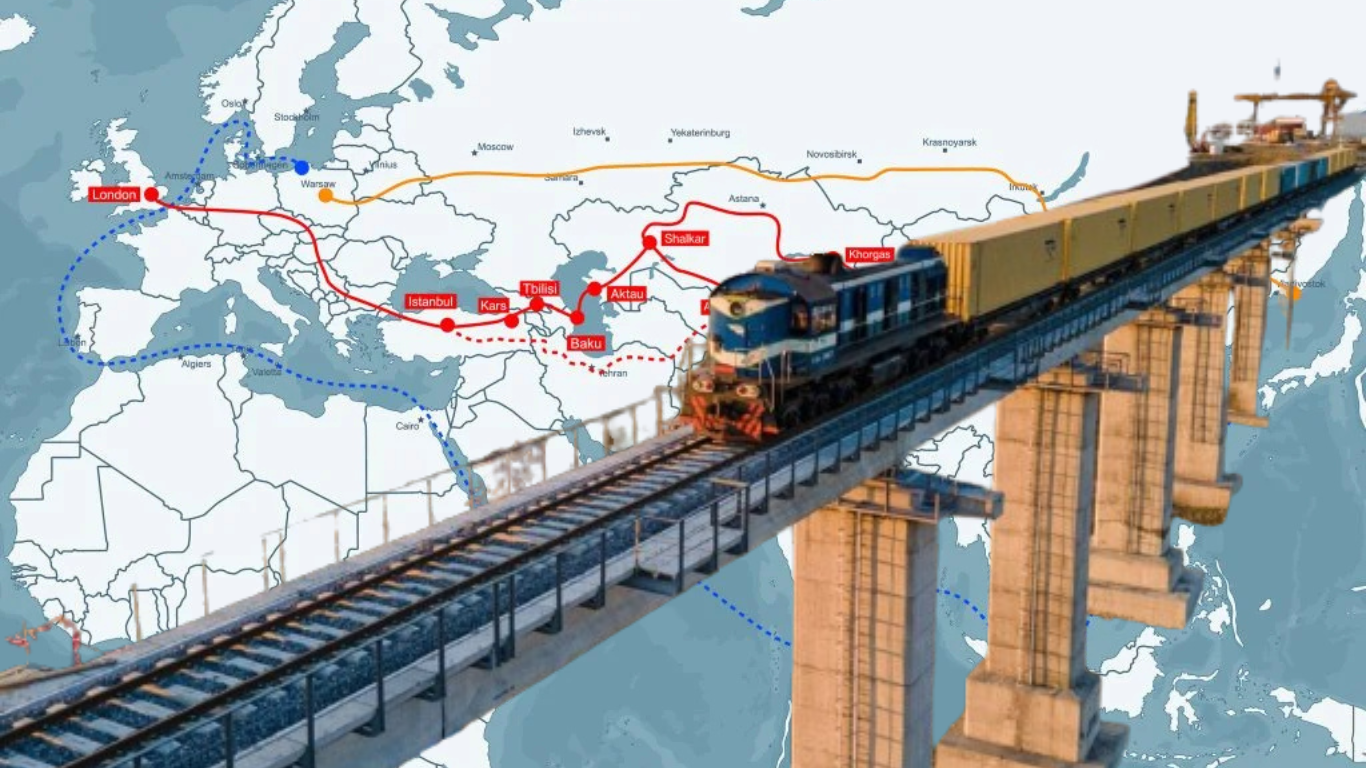
The project also strengthens the digital dimension of the Middle Corridor, the Trans-Caspian International Transport Route that has seen growing container traffic in recent years. As President Ilham Aliyev of Azerbaijan has confirmed, the cable is expected to become operational in the coming months, forming a key component of the broader Digital Silk Way initiative that passes through Azerbaijan, Georgia, Türkiye, Kazakhstan, and Bulgaria.

Synergy with Peace Efforts
In a significant parallel development, Azerbaijan and Armenia—former rivals in the South Caucasus—have signed an agreement on internet transit through each other's territories, a concrete step in their ongoing normalisation process. Telecom Armenia and AzerTelecom announced the agreement jointly, describing it as a fundamental step to "diversify connection routes in the region, increase the reliability of telecommunications networks, and develop cooperation in the telecommunications sector".
The agreement supports the broader Digital Silk Way vision by contributing to more secure, stable, and alternative connections in a region strategically critical for digital flows between Europe and Asia.
Future Outlook
Commercial operations of the Trans-Caspian cable are expected to begin by the end of 2026, with full utilisation rates likely to become clear during 2027. The project's long-term success will depend on sufficient terrestrial network capacity in Azerbaijan, Georgia, and Kazakhstan, as well as a well-developed network of data centres and commercial agreements between telecom operators.
Beyond the Caspian leg, the Digital Silk Way envisions a broader network of terrestrial and subsea infrastructure. Azerbaijan already boasts 1,350 kilometres plus 2,400 kilometres of protected terrestrial fibre along railways and highways, while Kazakhstan has nearly 6,000 kilometres of fibre across protected corridors . A future Trans-Black Sea Submarine Cable is planned, with initial phases connecting Bulgaria, Turkey, Georgia, and Ukraine between 2027 and 2030.
As Kirill Rubinski, a NEQSOL Holding board member, noted: "We see strong demand from international technology companies for new and resilient routes. The Trans-Caspian fiber optic project positions the region as a key hub in the global digital infrastructure network" . For a region long defined by its role in physical trade, the Digital Silk Way now promises to make it a digital crossroads as well.