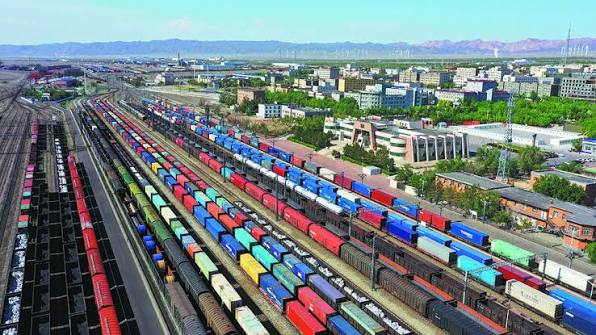
In August 2026, a fully-loaded freight train departed Zhengzhou, Henan Province, bound for Hamburg, Germany. What made this departure different from the thousands before it was a simple but transformative feature: a schedule. Under the new “scheduled” service model, the journey from central China to Germany now takes just 11 days — a reduction of more than 30% from the previous 15-day transit time .
This milestone marks a new chapter for the China-Europe Railway Express, a network that has evolved dramatically since its humble beginnings just 15 years ago.
“From Inaugural Voyage to Continental Network.”
EuroAsia.News
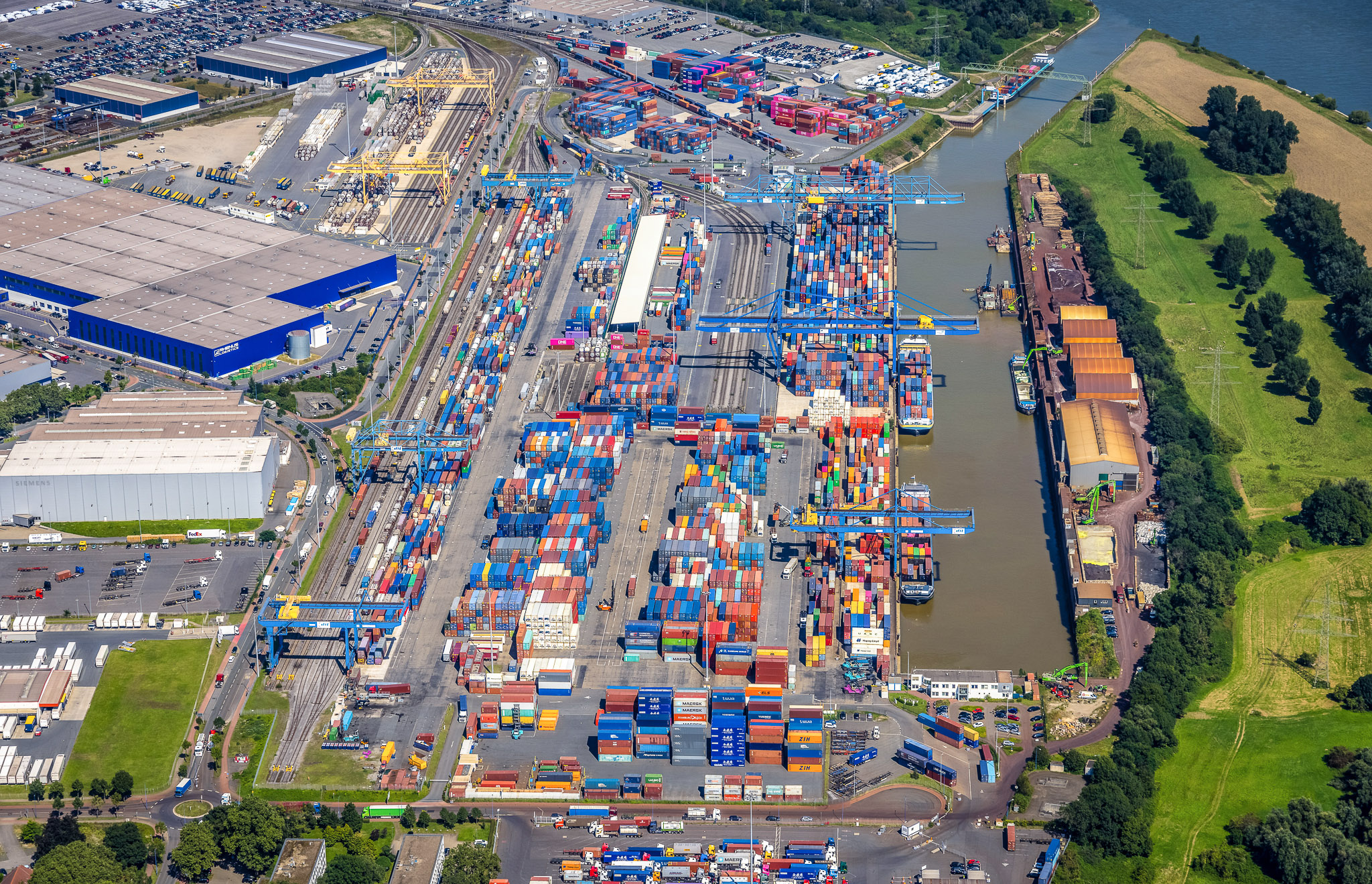
The story began in 2011, when a freight train carrying electronic products departed from Chongqing in southwest China, arriving in Duisburg, Germany, approximately 16 days later. That inaugural Yuxin’ou service was a logistical experiment—a modern reimagining of the ancient Silk Road caravans, soon dubbed the “steel camel caravans”.
The real transformation came in June 2016, when the service was unified under a single brand: China Railway Express (CR Express). Before this, different routes operated largely independently, with separate negotiations, freight-rate coordination, and customs clearance processes. The unified brand brought coordination, allowing operators to focus on improving safety, transit times, load factors, and service quality .
The impact has been staggering. Annual departures grew from just 1,702 trains in 2016 to 20,022 in 2025 — a 10.8-fold increase, with an average annual growth rate of 31.5%. By mid-2026, cumulative trips had surpassed 130,000, transporting goods valued at over $520 billion. The network now connects 129 cities in China with 236 cities across 26 European countries, essentially spanning the entire Eurasian continent .
Faster, Smarter, Fuller
Today’s China-Europe rail service is defined by efficiency gains that would have seemed impossible a decade ago. The Xi’an–Duisburg route, once a 15-day journey, now takes as little as 11 days with full-route scheduled trains .
The “scheduled” train model introduced in 2025–2026 represents a paradigm shift. Rather than facing unpredictable waits at borders for customs coordination and cargo reloading, these trains operate on a pre-agreed cross-border timetable with railway authorities across the entire route . The results speak for themselves: a 41% increase in the average cargo value per container, and a 24/7 multilingual coordination team working across time zones to address any delays .
Perhaps the most remarkable metric is the 100% loaded container rate — a figure the service has maintained for 46 consecutive months as of June 2026 . This means nearly every available container space is utilized, reflecting strong and consistent demand. The service has also achieved near-parity between outbound and return trips, indicating a balanced flow of trade .
Beyond Trade: A Catalyst for Change
The railway has become far more than a freight corridor. It has enabled inland Chinese cities to engage directly in international trade, provided businesses along the route with faster logistics solutions than sea freight (roughly half the time) and more affordable options than air transport (about two-thirds cheaper).
The evolution is also visible in the cargo itself. Over 50,000 varieties of products across 53 categories are now transported, with photovoltaic modules and high-tech goods increasingly replacing labor-intensive products — a clear reflection of China’s manufacturing upgrade . Specialized containers now carry automobiles, lithium batteries, and nonhazardous liquid cargo, expanding the range of transportable goods .
The service has also become a strategic pillar during crises. As Europe endured a record-breaking heat wave in mid-2026, Chinese manufacturers shifted air-conditioner shipments from sea freight (about 40 days) to rail (around 15 days), providing a critical faster lane for bilateral trade .
The Road Ahead
As China enters its 15th Five-Year Plan period (2026–2030), officials have pledged to expand scheduled services, strengthen coordinated pricing, develop new transportation equipment, and enhance cargo security through smarter tracking technologies . The single-month train count now equals the entire annual total for 2016 — a powerful demonstration of growth potential .
From its first tentative departure in 2011 to a network that moves billions of dollars in goods monthly, the China-Europe Railway Express has proven that rail can compete with, and in many ways surpass, traditional maritime routes. As the scheduled train era takes hold, the “steel camel caravans” are no longer just a romantic metaphor — they are the new backbone of Eurasian logistics.