At an international investment meeting in Tashkent on October 16, President Shavkat Mirziyoyev presented plans covering nuclear power, renewable electricity, natural gas exploration and modernisation of the national electricity grid.
$4.7 Billion in New Agreements
Six agreements will provide 3,000 megawatts of electricity generation capacity and 400 MW of energy storage.
International participants include Saudi Arabia's ACWA Power, France's EDF, Japan's Toyota Tsusho and Sojitz, the UAE's AMEA Power and Qatar's Nebras Power.
The latest agreements represent another substantial commitment to modernising an economy where electricity consumption is growing rapidly.
The government estimates that by 2030, electricity production must exceed 129 billion kilowatt-hours annually, compared with approximately 86.7 billion in 2025 — an increase of almost 49%.
To reach that target, Uzbekistan plans to add 22,000 MW of generating capacity and construct 5,000 kilometres of electricity transmission lines.
“Over the past decade, Uzbekistan has attracted $35 billion into its energy sector.”
EuroAsia.News Editorial
Three Nuclear Power Plants — Russia Already Building the First
The most significant announcement concerns nuclear energy.
Uzbekistan's first nuclear power plant is already under construction in the Jizzakh region, developed with Russia's state nuclear corporation Rosatom.
The project combines two large VVER-1000 reactors, each producing 1,000 MW, with two smaller RITM-200N reactors generating 55 MW each.
Total capacity will reach 2,110 MW, with expected annual output of 16–17 billion kilowatt-hours.
That would represent approximately 12–15% of Uzbekistan's projected electricity needs.
The project could cost as much as $9.5 billion, with completion currently expected during 2034–2035.
Mirziyoyev has now confirmed plans for a second and third nuclear power station. Their locations, financing, reactor technologies and construction schedules have not yet been announced.
For Russia, the existing project reinforces its position as a major supplier of nuclear technology in Central Asia.
Solar and Wind Target 54% Renewable Electricity
Uzbekistan is not concentrating exclusively on nuclear power.
By 2030, the government wants renewable energy, including hydropower, to account for 54% of national electricity generation, compared with the 31% figure reported by the presidency for today.
Six additional solar and wind projects totalling 2,200 MW will be offered through competitive tenders.
Energy storage capacity is expected to expand to 4.5 GW, enabling the electricity system to manage fluctuations in solar and wind production.
This combination of nuclear, renewables, storage and gas-fired generation would create a more diversified electricity system than the country's historically gas-dominated model.
Natural Gas: 128 New Exploration Blocks
Despite its renewable ambitions, Uzbekistan is also expanding investment in hydrocarbons.
British energy company BP and Azerbaijan's SOCAR are exploring six blocks in the Ustyurt region.
Another 128 blocks are being prepared for foreign investors.
Preliminary government estimates suggest these territories could contain 5.8 trillion cubic metres of natural gas and 560 million tonnes of liquid hydrocarbons. These figures are prospective resource estimates, not confirmed commercially recoverable reserves.
Uzbekistan also plans to modernise its Bukhara and Fergana oil refineries and develop a major petrochemical project in Bukhara.
The approach reflects the government's attempt to meet increasing energy demand while developing cleaner electricity generation.
Electricity Exports to Europe?
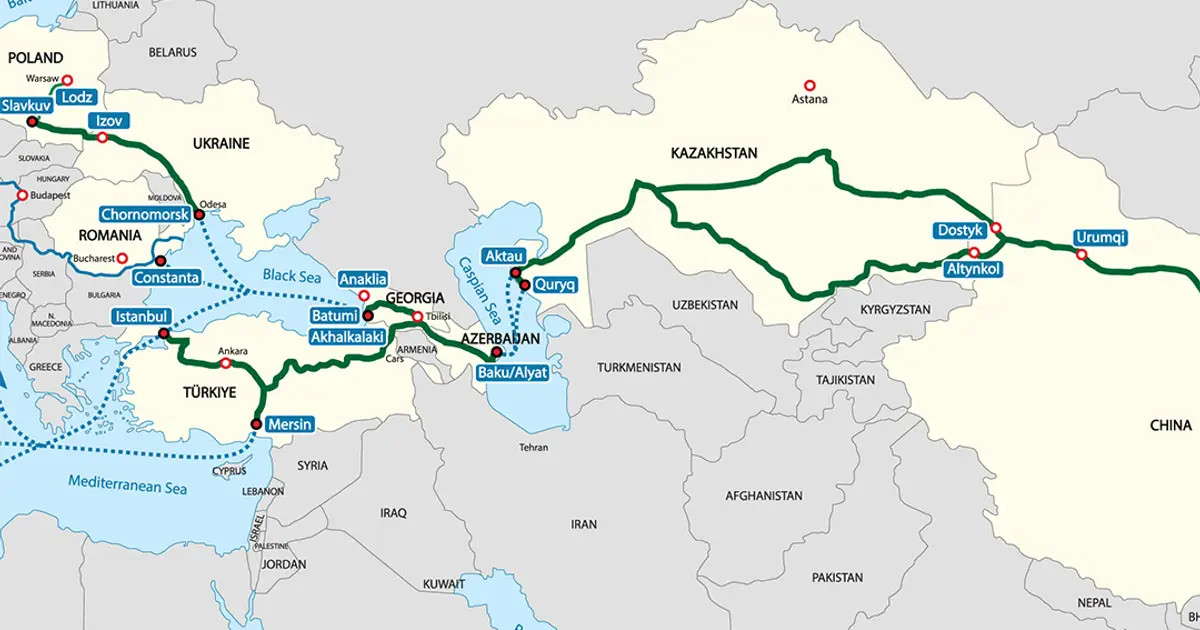
One particularly interesting proposal is the Caspian Green Energy Corridor.
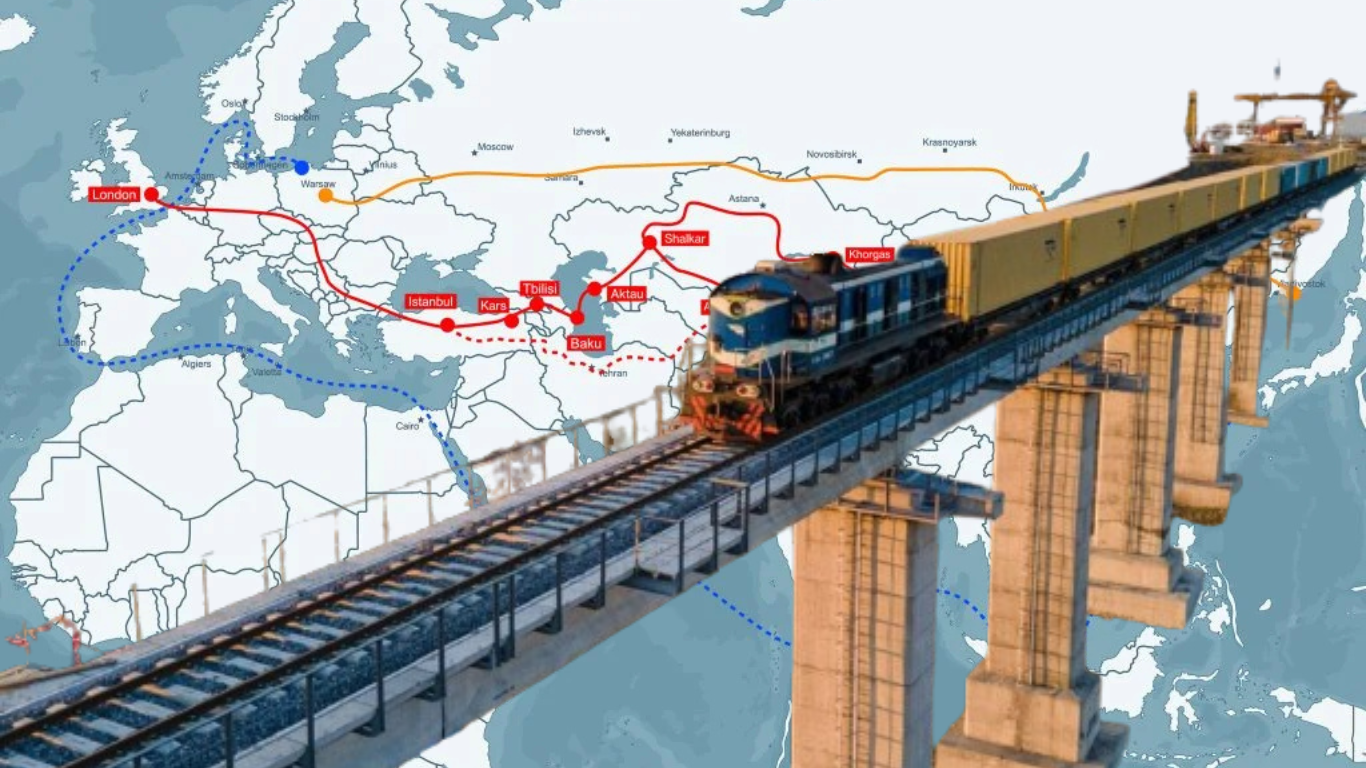
Uzbekistan aims to export renewable electricity through Kazakhstan and Azerbaijan, potentially connecting Central Asia with European markets via the South Caucasus and Black Sea.
The project remains at the feasibility stage, but its strategic significance is considerable.
For Europe, it offers the prospect of accessing electricity from new markets. For Central Asia, it could create an additional export industry beyond oil, gas and minerals.
The initiative also demonstrates how Azerbaijan and Kazakhstan are increasingly becoming essential links between Asian energy producers and European consumers.
The Hidden Problem: Electricity Losses
Building power stations alone will not resolve Uzbekistan's electricity shortages.
According to the World Bank, technical losses in the country's electricity distribution networks were approximately 13% in 2024.
More than half the distribution infrastructure had already operated for over 30 years.
The World Bank approved $100 million in financing in 2025 to help modernise the system, while the government's broader distribution investment programme requires approximately $3 billion.
Without improvements to transmission, distribution and efficiency, a substantial portion of additional electricity production could be wasted before reaching consumers.
Central Asia's Changing Energy Landscape
Uzbekistan's programme illustrates the growing economic importance of Central Asia.
Russian nuclear technology, European engineering, Gulf investment and Japanese industrial participation are converging in a country seeking faster industrial development.
The opportunities are substantial, but success will depend on financing, grid modernisation, construction schedules and regulatory reform.
If Uzbekistan achieves its targets, it could substantially reduce dependence on natural gas for electricity generation while supporting new industries and regional power trade.
The wider story is that Central Asia is no longer simply exporting energy resources. It is increasingly seeking to become a major producer and potential exporter of electricity itself.