The backbone is the China–Mongolia–Russia economic corridor. The Trans-Mongolian railway already connects China with Russia through Ulaanbaatar, but ageing infrastructure and limited border capacity have restricted transit traffic. Mongolia’s New Recovery Policy therefore calls for new railways, paved roads, dry ports and upgraded border terminals.
The most visible project is the Gashuunsukhait–Gantsmod cross-border railway to China. Construction began in 2025 on the 32.6-kilometre connection, designed for up to 40 million tonnes of cargo annually. It will directly connect the Tavan Tolgoi coal basin with China. Additional capacity is also planned at the heavily used Zamiin-Uud–Erenhot crossing.
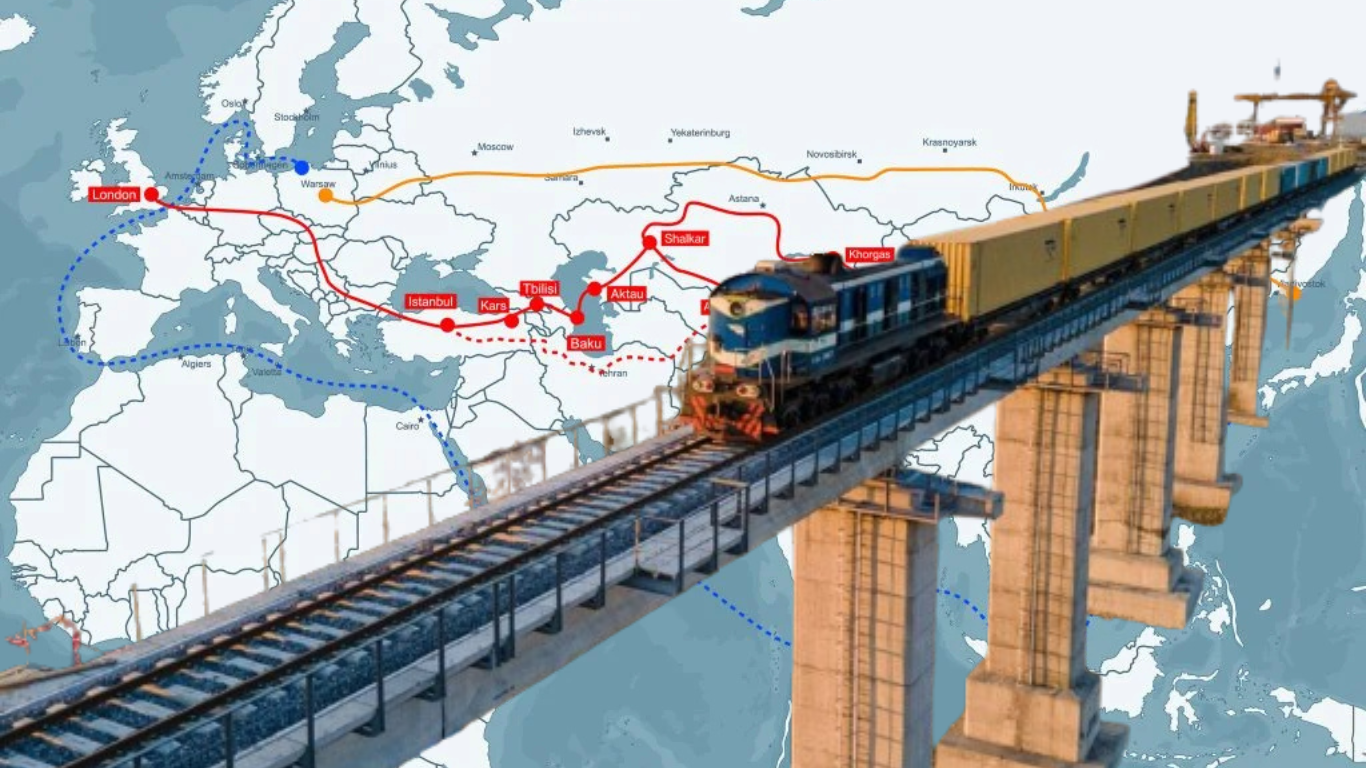
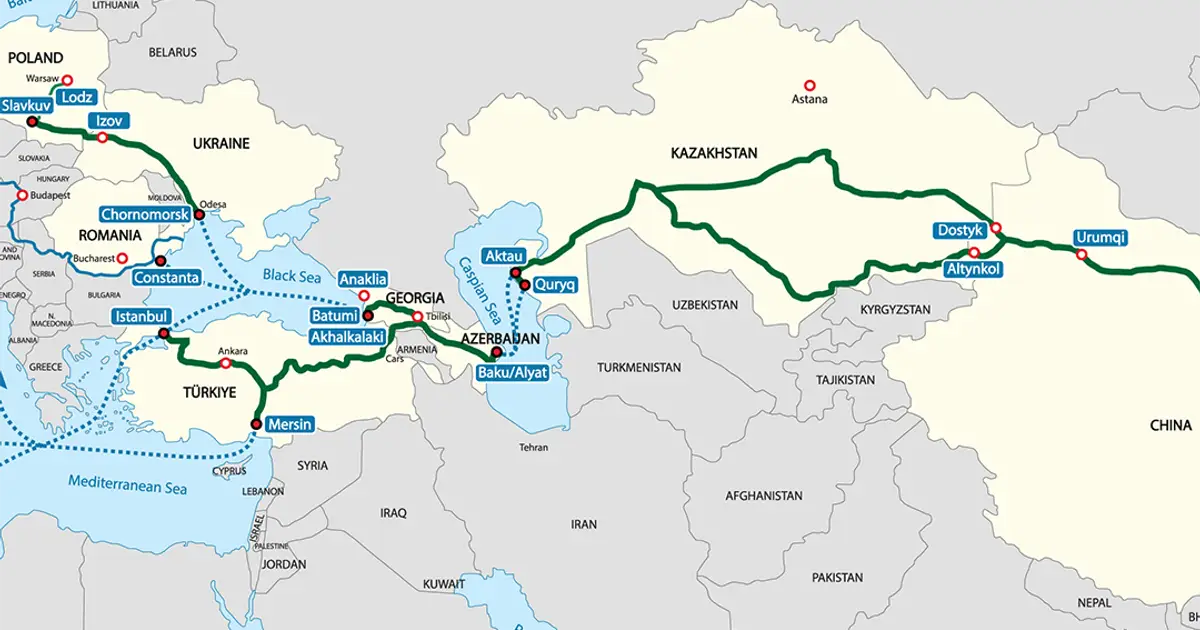
Mongolia does not share a border with Kazakhstan, but the two governments are developing a shorter transport and logistics route and aim to raise bilateral trade to $500 million. Kazakhstan can give Mongolia another gateway toward Central Asia, the Caspian and Europe, while Mongolia offers access toward China and Russia. In May 2026, railway representatives from China, Russia, Mongolia, Kazakhstan, Belarus, Poland and Germany met in Ulaanbaatar to improve China–Europe container services.
“The strategy extends westward.”
EuroAsia.News
India is becoming another important partner. New Delhi is financing Mongolia’s first oil refinery with a $1.7 billion credit line. Designed to process about 1.5 million tonnes of crude annually, it should reduce Mongolia’s dependence on imported fuel. India is also exploring Mongolian coking-coal imports and wider cooperation in mining and energy.
Mining remains the engine behind much of this infrastructure. Mongolia holds major deposits of coal, copper, gold and uranium. Oyu Tolgoi is expanding underground production and remains on track toward around 500,000 tonnes of annual copper output from 2028. The next challenge is not simply extraction, but moving resources efficiently and processing more of them inside Mongolia.
That explains the parallel push into copper processing, coal enrichment, steel, petrochemicals and industrial parks. The government wants Mongolia to export fewer raw commodities and more value-added products, connecting transport expansion directly with industrial development.
Agriculture is the second pillar. Mongolia’s grasslands support a pastoral economy based on cashmere, wool, hides, leather and meat. Agriculture rebounded strongly in 2025, while cashmere exports generated about $335 million. Government plans include meat-processing facilities, cold-chain logistics, warehouses and improved export routes, giving rural producers better access to China, Russia and Central Asian markets.
Energy could add another strategic layer. The proposed Russia–China “Power of Baikal” gas pipeline is planned to cross Mongolia and carry up to 50 billion cubic metres of gas annually if Moscow and Beijing finalize commercial terms. If built, Mongolia would become an important energy-transit state as well as a freight corridor.
Mongolia still faces enormous distances, a harsh climate, a small domestic market and dependence on commodity prices. Yet railways, highways, dry ports, mines, refineries, processing plants and agricultural logistics are increasingly being planned as one interconnected economic system.
If these projects succeed, Mongolia may no longer be seen mainly as a remote landlocked mineral exporter. It could become one of Eurasia’s strategically important junctions, connecting Northeast Asia with Russia, Central Asia and Europe while building a more diversified economy at home.