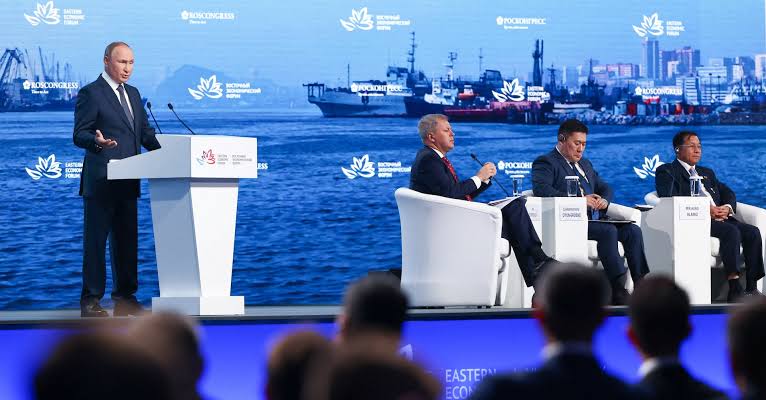
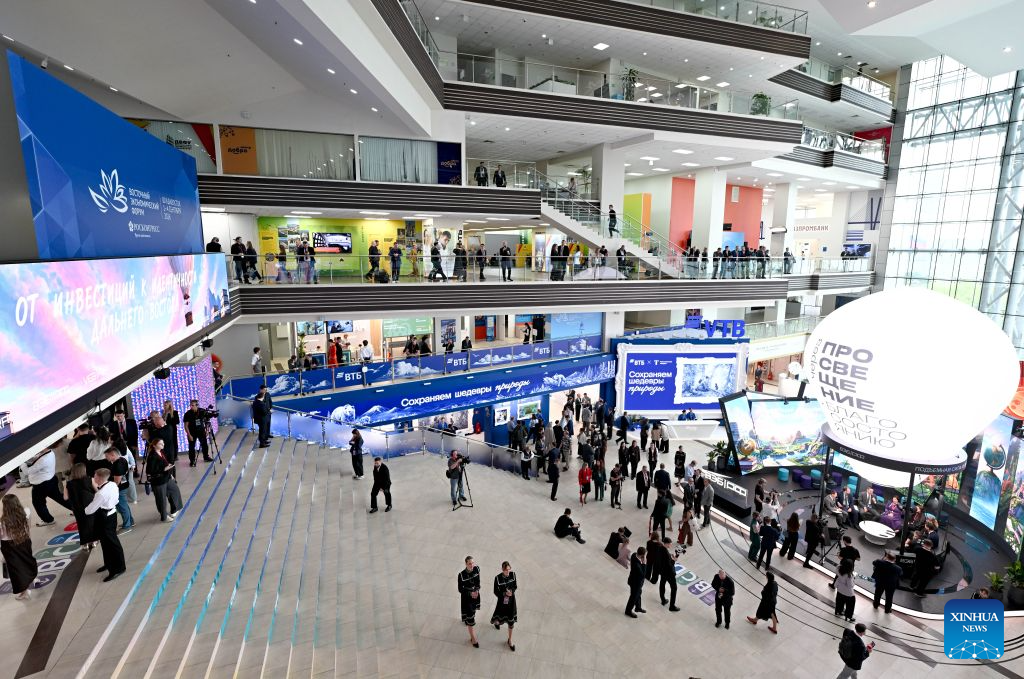
The 11th Eastern Economic Forum closed on September 4 with 318 agreements worth almost 7 trillion rubles, excluding deals whose values remain commercially confidential. More than 9,300 participants including media representatives came from 78 countries. The largest Asian delegations included China, Indonesia, Japan, Vietnam, South Korea, India and Myanmar.
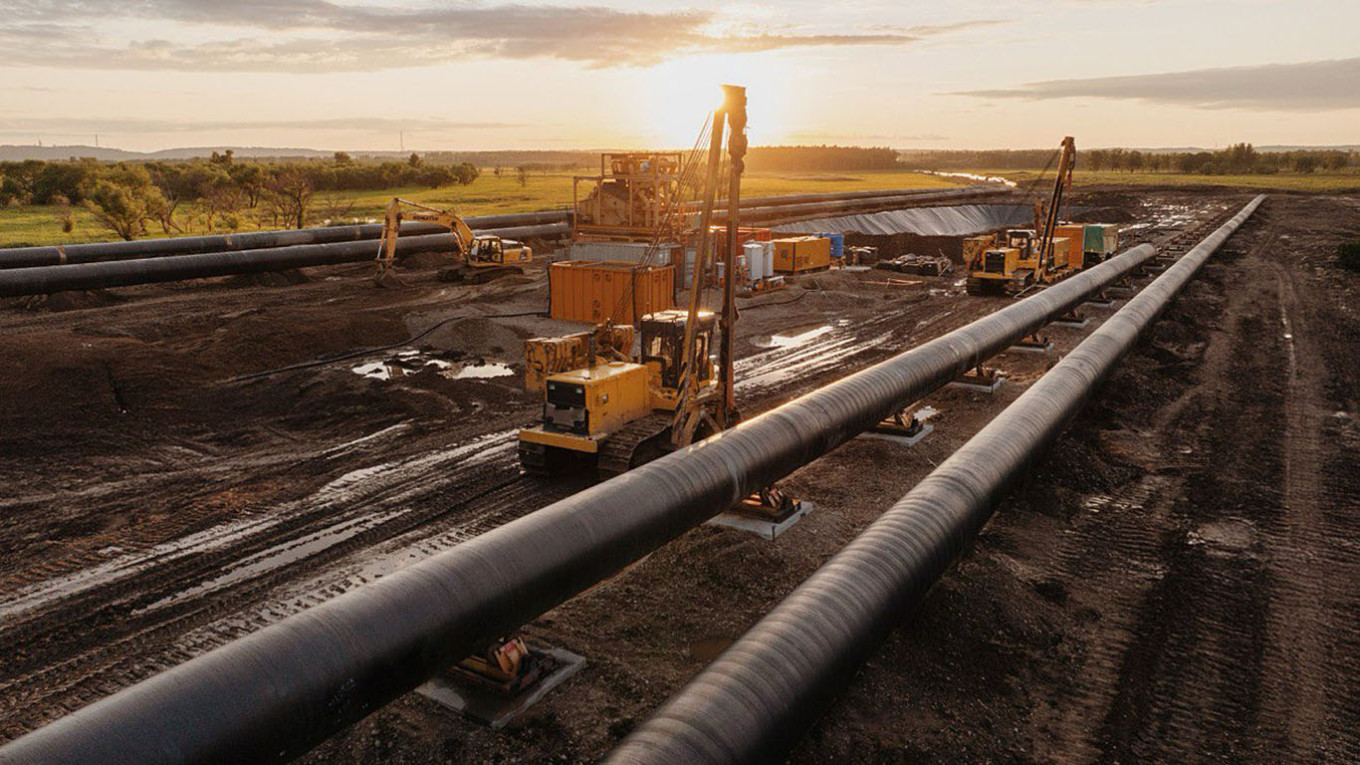
Transport again occupied a central position. Among the projects announced or advanced were the proposed Mohe–Nayba international corridor linking China with Yakutia, new mechanisms for development of the Arctic and Trans-Arctic route, and continuing investment in Russia's eastern railway and port infrastructure. FESCO also signed a logistics partnership with Vietnam Maritime Corporation linking Vladivostok's commercial port with Saigon.
Russian officials emphasised not only oil and gas exports but pipelines, ports, electricity infrastructure, transport corridors and greater settlement in national currencies. The message was increasingly clear: Russia wants its relationship with Asia to move from simple commodity exports toward a more integrated production and logistics system.
“The final day was dominated by the Russia-China Energy Business Forum.”
EuroAsia.News
From distant periphery to investment region
Perhaps the most important figures presented at the forum concerned what has already happened.
According to figures cited by both RBC and Kommersant, approximately 25 trillion rubles of capital investment have gone into the Far Eastern regions over the past 11 years. The region's combined gross regional product has increased more than threefold, while investment, industrial growth and construction have consistently outpaced Russian averages.
The investment numbers require some distinction. The 25 trillion rubles represents overall capital investment. Within the government's preferential investment system, around 6.8 trillion rubles has already been invested in supported projects, while approximately 3,000 projects with a planned investment value of 15.9 trillion rubles are currently in the portfolio. Moscow's target is to bring supported investment to 12 trillion rubles by 2030.
The transformation can also be seen in construction.
Kommersant reports that around 7 million square metres of housing is currently under construction across the Far East, more than three times the volume seven years ago. During the first half of 2026, completions of apartment housing increased 44% year-on-year, compared with only 8% for Russia overall.
RBC reports that the Far East was the only Russian federal district where total construction activity increased during the first half of 2026, rising 10% from a year earlier. Manufacturing grew 2.4%, compared with 0.7% nationally, while retail turnover also expanded faster than the Russian average.
Unemployment provides another striking comparison. It stood at around 8% two decades ago; today it is 2.2%, approximately the national average.
These statistics do not mean that the Far East's longstanding problems have disappeared. Distance, expensive logistics, severe climate, labour shortages and high consumer prices remain structural disadvantages. But they do show that the region is no longer economically standing still.
The experiment of giving away one hectare
One of the most unusual elements of Russia's Far East policy has had little to do with billion-ruble factories.
The Far Eastern Hectare programme, launched in 2016, allows Russian citizens to receive up to one hectare of state land free of charge for five years. The land can be used for a home, agriculture, tourism or business. If the recipient demonstrates that the land is genuinely being developed, it can subsequently be transferred into ownership or long-term lease.
Ten years later, the programme has reached a meaningful scale.
Deputy Prime Minister Yury Trutnev told Kommersant this week that 180,000 people had received Far Eastern hectares by August 2026. Recipients have used them to build homes, establish greenhouses and apiaries, create hotels, open small manufacturing businesses and develop tourism projects.
Kommersant reports that more than 35,000 participants have already converted their plots into ownership or long-term leases. Interest has not disappeared with time either: RBC reported that almost 19,000 plots covering more than 13,000 hectares were granted in 2025 alone, with 85% of allocations located in the Far East and the remainder in the programme's Arctic extension.
The hectare programme cannot by itself be credited with reversing demographic decline. It operates alongside employment growth, Far Eastern mortgages at preferential rates, new housing, infrastructure investment and higher wages in some industries.
But its underlying purpose was precisely demographic: to give people a tangible reason to settle, remain and invest their own labour in the region.
And there is now at least one significant demographic signal. Trutnev told Kommersant that for the first time in roughly 30 years the long-term migration outflow from the Far East has been stopped.
That may ultimately be more important than any single forum contract.
The next stage: 2036
The policy now moves into another phase.
From January 2027 Russia plans to introduce a single preferential investment regime across the Far East and Arctic, replacing a patchwork of geographically defined special zones with a broader menu of benefits linked to the type of investment project. Existing benefits for residents of advanced-development territories and the Free Port of Vladivostok are to remain. (
The new strategy runs to 2036 and places greater emphasis on processing resources locally, digital infrastructure, artificial intelligence, biotechnology, energy, logistics and urban development.
That makes the final balance of EEF 2026 more interesting than the headline figure of seven trillion rubles.
The first decade of Far East policy was largely about creating incentives strong enough to overcome geography. The next decade will test whether those incentives have created a self-sustaining economy.
Ports can be built, railways expanded and factories subsidised. Even land can be given away.
The real measure of success will be whether people and businesses decide that the Russian Far East is no longer somewhere they must be persuaded to stay — but somewhere they actively choose to build their future. And this you can already see, more people decide to stay or move to the Far East than people moving away.