With weak growth, declining purchasing power and expensive government borrowing, the country faces a difficult combination of financial and political pressures.
France's economic problems are no longer confined to government budgets and financial markets. They are increasingly visible in businesses, shopping centres and city streets.
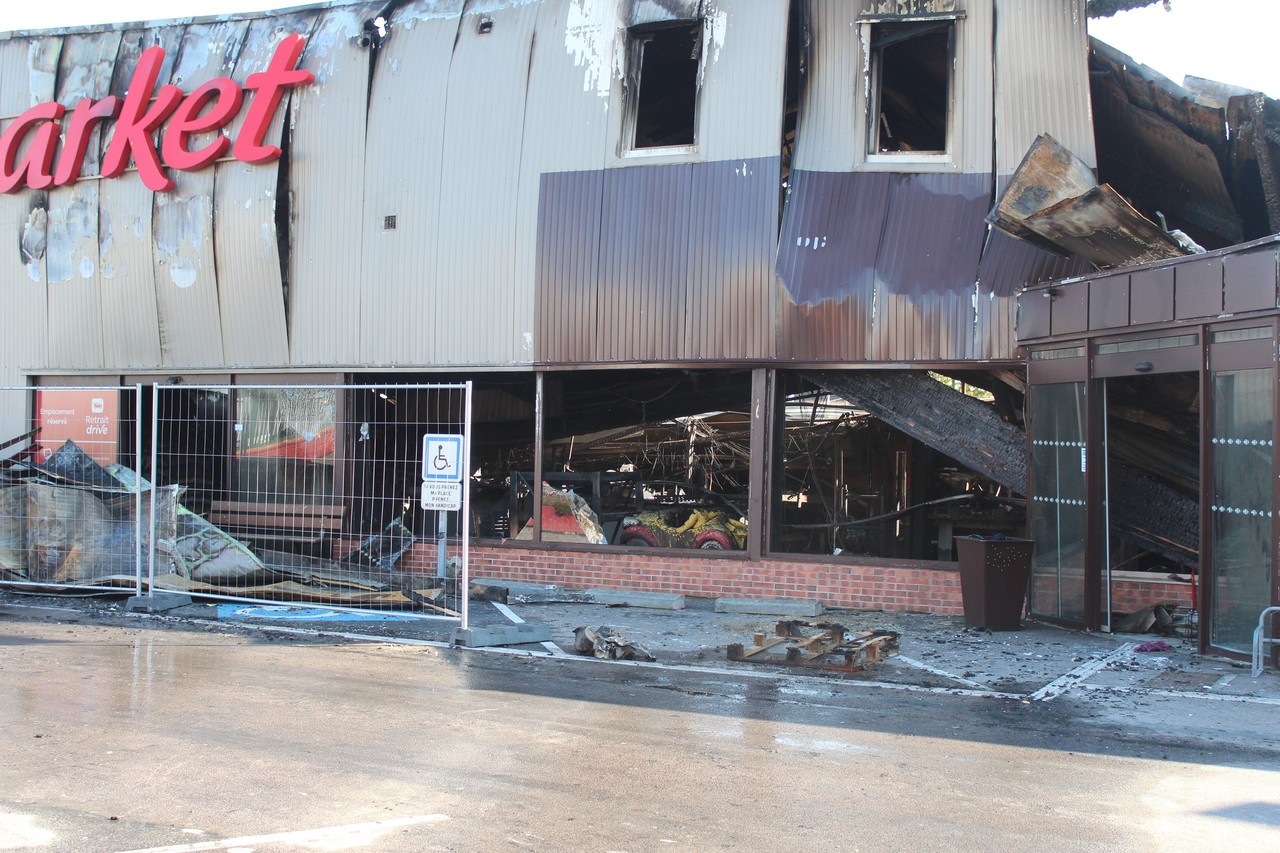
The demonstrations and violence of October 2026 have created a new financial burden for an economy already experiencing weak growth and declining consumer confidence.
The company estimates that riots, looting, store closures and additional security requirements could reduce its 2026 operating income by €80 million to €200 million.
Approximately 50 Carrefour stores were attacked during the first day of serious disturbances, according to the company's management.
The losses include damaged buildings, stolen merchandise, destroyed equipment, additional security expenditure and sales lost because stores were unable to operate normally.
“One of the clearest indications came from Carrefour, one of Europe's largest retailers.”
EuroAsia.News, reporting from Paris
The true cost extends beyond physical destruction
Carrefour's warning illustrates a problem affecting many businesses: the cost of unrest continues after damaged premises have been repaired.
Customers avoid shopping districts, restaurants lose reservations, transport disruptions prevent employees from reaching work, and retailers face uncertainty over opening hours.
For supermarkets and department stores, the timing is particularly damaging.
The final quarter normally includes some of the year's most important trading periods, including Black Friday and Christmas.
A decline in consumer spending during these weeks can significantly affect annual profitability.
Carrefour has already reduced its planned French capital expenditure from €1.7 billion to €1.6 billion — a €100 million reduction.
That matters because lower investment affects suppliers, contractors and employment beyond the directly damaged stores.
France's economy was already struggling
According to revised figures from national statistics institute INSEE, France's GDP contracted by 0.2% in the first quarter of 2026 and stagnated in the second.
Household purchasing power declined by 0.6% per consumption unit during the second quarter, while consumption of goods fell by 0.5% in August.
October's business climate index stood at 98, below its long-term reference level of 100. Retail trade was considerably weaker, at 93.
These figures indicate that consumer-oriented businesses were under pressure even before the latest disturbances.
The Banque de France's June forecast projected just 0.5% economic growth for 2026.
Such limited growth leaves little room to absorb major disruptions.
The government faces a financial squeeze
France's public finances make the situation especially difficult.
The government faces a budget deficit exceeding 5% of GDP and substantial refinancing requirements. Investors have demanded higher interest rates for French government bonds amid political uncertainty and fiscal concerns.
French ten-year borrowing costs approached or exceeded 5% during the recent turmoil.
Higher government borrowing costs ultimately compete with expenditure on education, healthcare, infrastructure and other public services.
A government already struggling to control its deficit cannot easily respond to economic dissatisfaction through additional spending without increasing its financing needs.
This creates a potentially damaging cycle: weak growth reduces tax revenues, public spending constraints intensify dissatisfaction, and instability further discourages consumption and investment.
The comparison with earlier protests
France has experienced similar economic disruption before.
During the Yellow Vest protests of late 2018, household consumption stagnated in the final quarter after increasing by 0.4% in the preceding quarter.
INSEE research reviewing earlier social movements found an average negative effect of approximately 0.1 percentage point on quarterly GDP, although estimates vary and are not always statistically significant.
The current situation could prove more difficult because energy prices, borrowing costs and fiscal pressures are substantially different.
The demonstrations have also spread beyond a single social or occupational group, incorporating grievances about education, public services, fuel prices and living standards.
A problem extending beyond France
France is the euro area's second-largest economy. Persistent weakness can affect suppliers, banks, investors and trading partners across Europe.
Germany faces industrial restructuring, Italy has its own fiscal limitations, and higher energy costs are affecting businesses throughout the continent.
However, direct riot losses should not be confused with the total macroeconomic impact. Estimates for individual retailers, insured damage and changes in GDP measure different things and cannot simply be added together.
The central challenge for France is broader than restoring public order.
Without improved purchasing power, credible public finances and stronger economic growth, the underlying pressures behind the unrest may persist long after the demonstrations end.
France's government must therefore address not only the immediate security crisis, but also the weakening economic conditions that make each new disruption increasingly expensive.