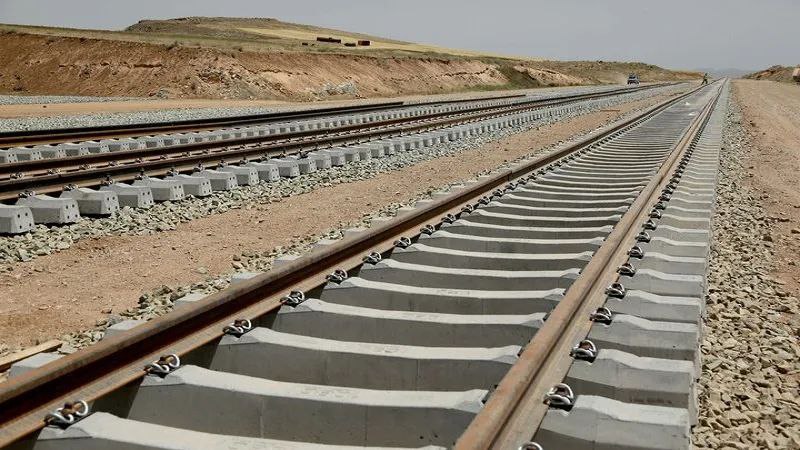
The project is modest compared with the region's major transport investments, but its historical significance could make it one of the most symbolic steps towards restoring relations between two long-divided neighbours.
A medieval bridge that once connected important commercial routes between Anatolia and the Caucasus is moving closer to reconstruction.
On 26 October 2026, Turkish Transport and Infrastructure Minister Abdulkadir Uraloğlu confirmed that the tender process for rebuilding the historic Ani Bridge had been completed.
The project is to proceed under a joint Turkish–Armenian commission, reflecting an agreement reached between representatives of the two countries in Yerevan on 4 May.
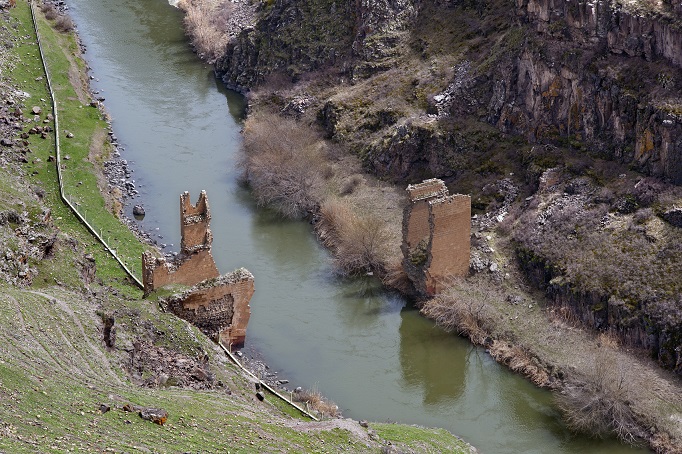
The bridge, originally constructed during the medieval period, crossed the Akhuryan River near the historic city of Ani. Only surviving structural remains stand today.
“The reconstruction contract was signed on 28 September, following a tender held on 16 September by Türkiye's General Directorate of Highways.”
EuroAsia.News, reporting from Istanbul
Ani: A forgotten commercial metropolis
Ani was once among the most important cities of medieval Armenia.
During the tenth and eleventh centuries, it flourished as a royal capital, religious centre and trading city, positioned along routes connecting the Caucasus with Anatolia, Persia and territories further east.
Merchants carried textiles, metals, agricultural products and other commodities through the region.
The city subsequently experienced repeated changes of political control, military conflict, commercial decline and eventual abandonment.
Its churches, fortifications and archaeological remains testify to the region's rich Armenian, Byzantine, Georgian and other historical influences.
Ani was inscribed on UNESCO's World Heritage List in 2016.
The historic bridge represents a particularly powerful symbol because its original function was straightforward: allowing people and goods to cross a river separating communities.
A frontier closed since 1993
The modern border between Armenia and Türkiye has been closed to regular overland trade since 1993, when Türkiye shut the frontier during the conflict involving Armenia and Azerbaijan over Nagorno-Karabakh.
For more than three decades, the closure complicated transport between the neighbouring countries.
Goods frequently travelled through Georgia rather than crossing directly between Armenia and Türkiye.
That geographical detour increases transport costs and limits commercial opportunities in border regions.
Türkiye and Armenia have pursued successive normalisation initiatives, but progress has repeatedly stalled because of political disagreements and regional tensions.
Their dispute also includes differing interpretations of the Ottoman-era mass killings and deportations of Armenians in 1915, recognised as genocide by Armenia and numerous other countries, while Türkiye rejects that designation.
The restoration of Ani Bridge cannot resolve these historical disagreements, but it creates a practical project on which the two governments have agreed to cooperate.
Economic opportunities beyond tourism
A functioning border could change the economic position of eastern Türkiye and western Armenia.
The Turkish province of Kars, for example, has long faced the disadvantages of being located beside a largely closed international frontier.
Armenian businesses would gain more direct access to Turkish suppliers, ports and consumer markets.
Tourism could benefit from easier connections between archaeological sites, historic cities and natural attractions.
The Armenian–Turkish border also forms part of wider discussions about restoring regional railway and road connections.
However, reconstruction of the Ani Bridge does not automatically mean that it will become a regular commercial border crossing. Its future operating status, customs arrangements and permissible traffic have not been established.
The distinction matters: restoring a historic monument is not the same as reopening an international freight corridor.
A historical project with modern significance
The restoration fits into broader developments across the South Caucasus.
Armenia and Azerbaijan have pursued diplomatic agreements, while regional governments discuss new transport routes linking Central Asia with Türkiye and Europe.
Türkiye lifted an important restriction on direct trade documentation with Armenia in May 2026, another step towards normalisation.
Both countries have also restored direct air services and introduced limited visa-related improvements.
The Ani project now adds a visible historical dimension to that process.
Its real significance may lie less in the number of vehicles that eventually cross the river than in the cooperation required to rebuild it.
For centuries, the Silk Road connected communities across political and cultural boundaries.
Reconstructing the Ani Bridge would demonstrate how a structure from that trading history can again become a connection between neighbours — even before all their political differences have been resolved.