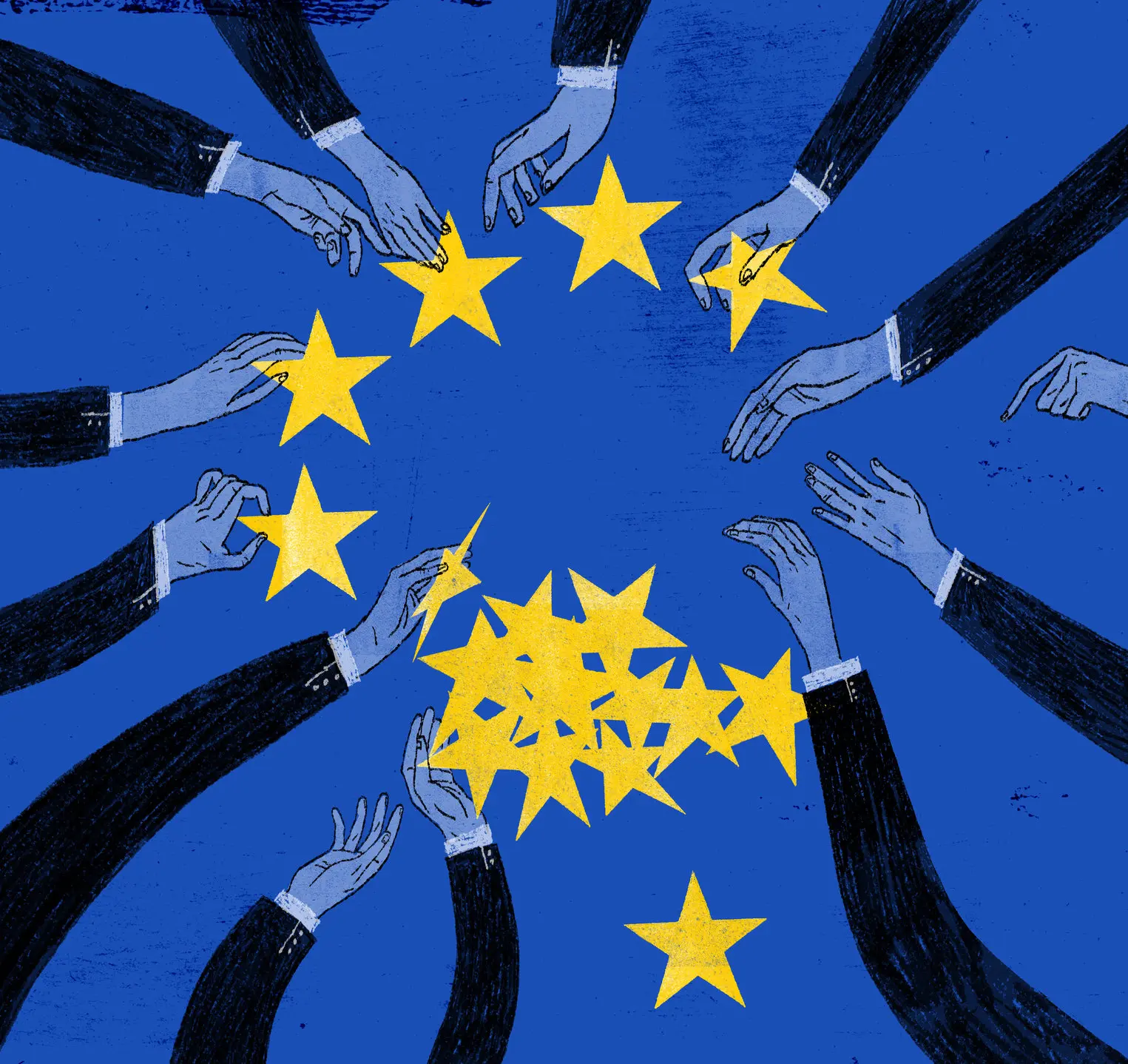
Europe is in the midst of a profound identity crisis. The question "What does it mean to be European?" has become a battleground, polarising politics across the continent and exposing deep fissures between competing visions of the past, present, and future . At the heart of this struggle lies a fundamental tension: how to reconcile the 18th-century ideals that shaped modern Europe with the 21st-century realities of globalisation, migration, and a multipolar world.
The 18th Century Legacy: Enlightenment and Its Paradoxes
The idea of Europe as a "Christian Republic" gave way to the concept of Europe as culture—European identity was its culture . This period also gave birth to the universalist aspirations that still underpin EU rhetoric today: the belief in natural rights, individual liberty, and human equality .
“The 18th-century Enlightenment marked a turning point in European self-understanding.”
EuroAsia.News Editorial
Yet this legacy is deeply contested. The universalist ideals of the French Enlightenment—which the European Commission frequently presents as both universally valid and distinctly European —always carried an exclusionary shadow. As scholars have shown, modern European states were built not on tolerance and inclusion, but on religious intolerance and the exclusion of minorities, which "provided the glue that bound together the remaining populations" . The "liberal, secular Western political traditions were founded on the basis of illiberal, intolerant origins" .
This darker reading of European history challenges the standard narrative of a linear progression from Greek and Roman civilisation through the Enlightenment to modern democracy—a narrative that many scholars now argue is "ideologically driven" and serves to legitimise Western expansion and colonialism .
The Post-War Project and Its Failure
The catastrophes of the first half of the 20th century shattered Europe's cultural self-confidence. The idea of Europe as a unified culture was replaced by the "Zukunftsprojekt Europa"—the European project of integration across economics, politics, and society . As Jacques Delors, former President of the European Commission, put it, the goal was to "give Europe a soul" .
Yet this project has not succeeded in creating a genuine European identity. The failure of the European Constitution and the Lisbon Treaty referendums revealed that Europeans remain strongly influenced by nationalism and have not internalised the necessity of European unity . Today, the EU's proclaimed values—multiculturalism, diversity, tolerance—appear "enlightened and ideal rather than reality-based," more a statement of hope for the future than a reflection of shared experience .
The Present Polarisation
The identity question now lies at the heart of a continent-wide culture war . On one side stands the "hegemonic values promoted by the cultural elite"—a value system that sociologist Frank Furedi describes as "administratively created" and "value-free," embracing American-style DEI concepts like diversity and inclusion as ends in themselves .
On the other side, traditionalists and nationalists seek to preserve "the legacy of Europe's experience and of its achievements," grounding identity in national sovereignty and historically rooted cultural traditions . This division maps onto a broader struggle between universalist and particularist visions: the EU's self-universalisation against the counter-ideal of a "Europe of nations," which emphasises national traditions and culturally specific forms of political belonging .
This polarisation is not merely intellectual. The Hungarian government has invested heavily in think-tanks like MCC Brussels to provide a "formidable counter-weight to the liberalism of the so-called Brussels bubble," promoting a vision of Europe's future rooted in "its traditional past" .
East-West and New Generational Divides
The identity crisis is compounded by geopolitical tensions. As the EU has expanded eastward, internal agreement on its future direction has become more fragile . A recent conference of the youth wing of the European People's Party revealed a stark east-west split. Delegates from eastern Europe—the first generation to have grown up entirely within the EU—tend to favour more integration and see the benefits of membership. Their counterparts from western and northern Europe are more sceptical, questioning whether Brussels should expand its remit further while domestic pressures like housing and living costs mount .
The Way Forward: Coherence Over Unity
Historian Wolfgang Schmale suggests that the old paradigm of European identity as a "unity of essence" is giving way to a new paradigm of "coherence in European and global diversity" . Future European identity, he argues, should be understood less as a fundamental unity and more as a process of forming coherence across difference . Whether this vision can prevail over the forces of polarisation remains the defining question for Europe's future.