On World Food Day, October 16, agricultural organisations warned that extreme weather, rising production costs, low farm-gate prices and inadequate support systems are threatening the survival of family farms across the continent.
The summer of 2026 has intensified the crisis. Severe heatwaves and drought reduced Europe's expected grain harvest by 16.7 million tonnes, representing approximately €3.2 billion in lost agricultural production, according to the Energy and Climate Intelligence Unit (ECIU).
According to Eurostat, the European Union had approximately 14.4 million farms in 2005 but only 9.1 million in 2020 — a reduction of 37%.
That represents almost 970 farms disappearing from the statistics every day over 15 years. Many were absorbed into larger agricultural businesses rather than simply abandoned.
Smaller farms suffered disproportionately: 4.6 million of the lost holdings were under five hectares. Meanwhile, the number of farms larger than 100 hectares increased.
“Europe Has Already Lost 5.3 Million Farms The decline is not new.”
EuroAsia.News, reporting from Brussles
France: Europe's Largest Agricultural Losses
France suffered the largest estimated grain-production losses from this summer's heat and drought.
ECIU calculations indicate that French production forecasts declined by 5.8 million tonnes between June and September, representing approximately €1.47 billion in lost output.
Vegetable producers also faced serious difficulties. The French growers' association Légumes de France warned that losses in certain sectors could reach 50%.
For smaller farms already facing high labour, energy and equipment costs, another unsuccessful harvest can threaten their economic viability.
Hungary: A €723 Million Agricultural Shock
Hungary was among the countries hardest hit.
The ECIU estimates that heat and drought reduced Hungary's expected grain production by 3.1 million tonnes, equivalent to approximately €723 million.
Maize-growing regions were particularly exposed. European Commission monitoring documented severe crop stress, premature maturation and deteriorating soil moisture.
Hungary is now exploring unconventional water-management solutions, including redirecting water from fish farms onto agricultural land. The initiative could eventually reuse up to 300 million cubic metres of water annually.
Spain and Italy: Mediterranean Farming Under Pressure
Spain lost an estimated 1.2 million tonnes of forecast grain production, worth approximately €220 million.
Farmers increasingly face irregular rainfall, extreme summer temperatures and competition for irrigation water.
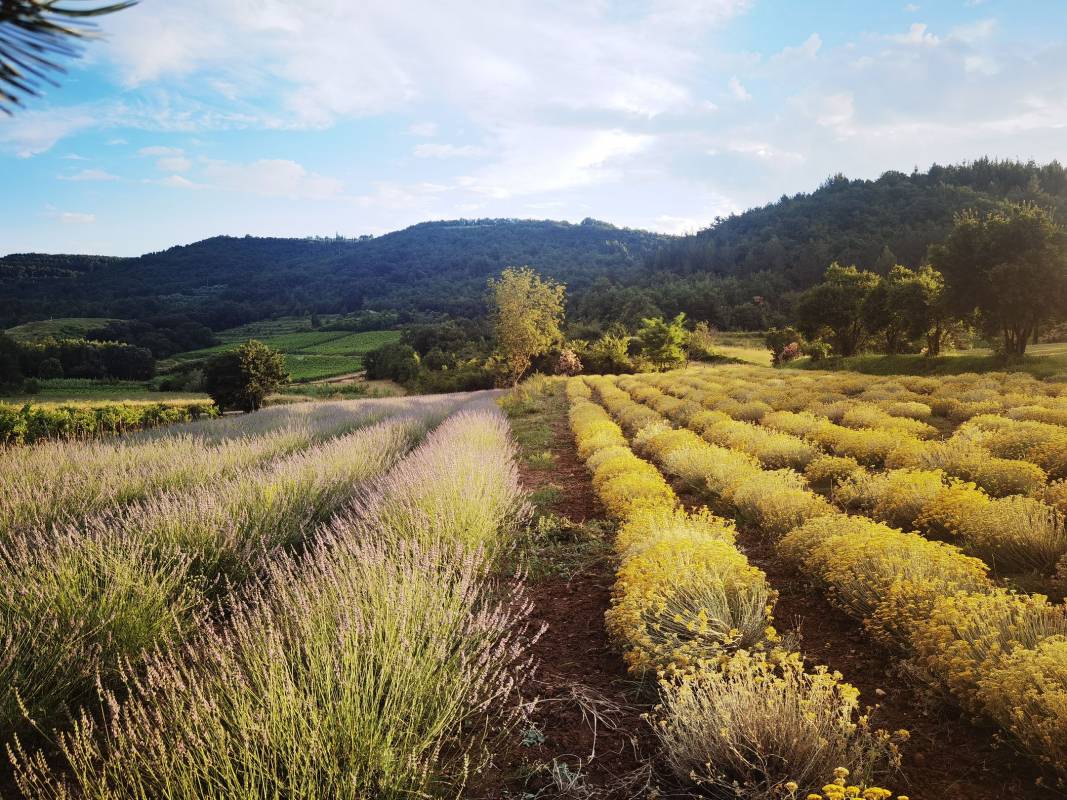
In Murcia, some farms are diversifying away from traditional cereals toward drought-tolerant crops such as pistachios, rosemary and lavender.
Italy faces similar difficulties, particularly in its northern and central agricultural regions. European Commission assessments identified severe heat and moisture stress affecting summer crops, while rice production forecasts also weakened.
Both countries illustrate a growing challenge: traditional agricultural systems must adapt to weather patterns that are becoming increasingly unpredictable.
Poland: Falling Harvests Add to Farmers' Problems
Poland's situation differs from the Mediterranean countries, but its agricultural outlook is also deteriorating.
Statistics Poland estimates that the 2026 cereal harvest will reach approximately 35.5 million tonnes, 5% below 2025.
Rapeseed production is forecast to decline by 17.3%, potatoes by 15.4% and sugar beet by 15.5%.
These reductions add pressure to agricultural businesses facing fluctuating commodity prices, rising operating costs and intense competition.
Are EU Subsidies Protecting the Right Farms?
The European Union spends billions of euros supporting agriculture through its Common Agricultural Policy.
However, traditional area-based payments favour businesses managing more eligible farmland, raising questions about whether assistance reaches the most vulnerable producers.
Farmers advocating regenerative agriculture propose an alternative: reward measurable achievements such as improved soil health, greater water retention, biodiversity and reduced environmental damage.
Crop diversification could also reduce dependence on a single harvest. Combining cereals, vegetables, legumes and drought-resistant crops spreads agricultural risk.
Nevertheless, diversification requires investment, technical expertise and reliable markets. It cannot eliminate losses from extreme weather.
The EU's own agricultural network acknowledges that smaller family farms need more stable support and better access to diversification opportunities.
Europe's Food Security Is Becoming an Economic Question
The disappearance of farms does not automatically mean an equivalent reduction in food production. Larger farms can maintain output through consolidation and mechanisation.
But concentrating production among fewer businesses creates different vulnerabilities, including the decline of rural communities, reduced agricultural diversity and greater dependence on large suppliers.
For Europe, the central challenge is no longer simply producing more food.
It is ensuring that farming remains economically viable while adapting to drought, extreme temperatures and changing market conditions.
After a summer that destroyed billions of euros in expected production, World Food Day 2026 has highlighted an uncomfortable reality: Europe cannot preserve its agricultural future through subsidies alone.
Without profitable farms, effective water management and agricultural systems capable of surviving increasingly extreme weather, Europe's long-term food security will face growing pressure.