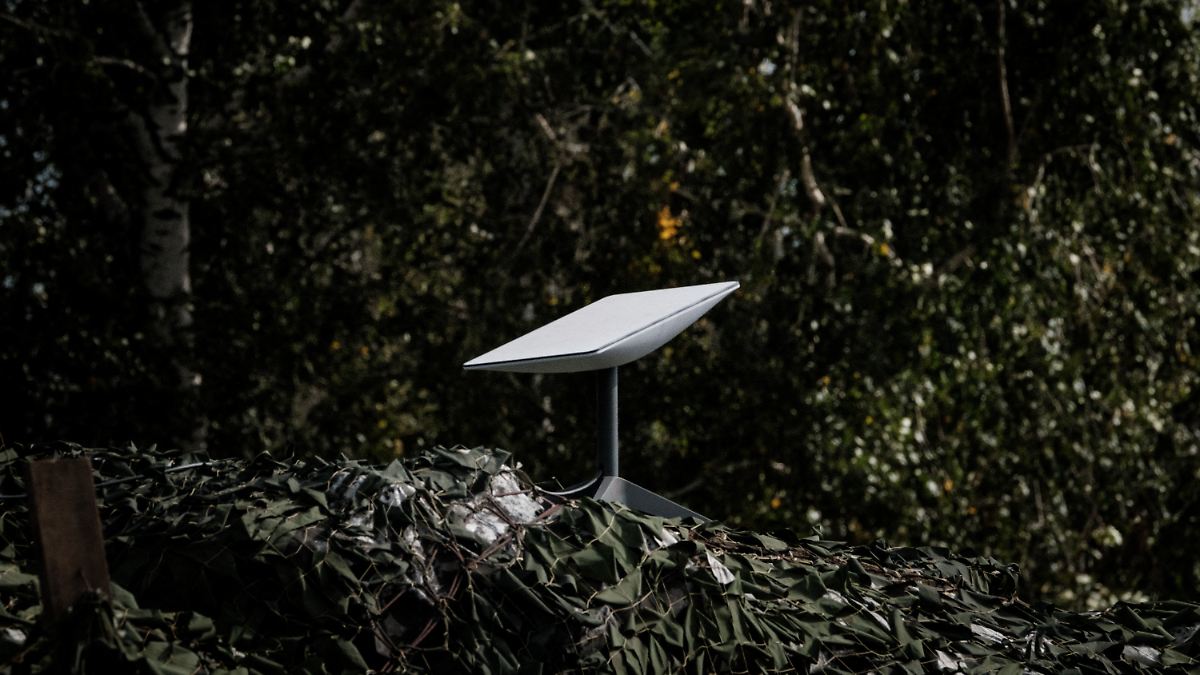
Following unexpected restrictions on SpaceX's military Starshield service, Ukrainian officials are urgently examining alternatives while European governments confront an uncomfortable reality: despite billions invested in space programmes, Europe cannot yet fully replace Starlink.
The disruption particularly affected high-speed military drones and battlefield communications. Ukrainian officials reported restrictions affecting equipment travelling faster than approximately 160 km/h. President Volodymyr Zelensky described the situation as deliberate, while US President Donald Trump denied responsibility. The precise chain of decisions remains disputed.
Its low-Earth-orbit satellite network provides internet access to civilians, businesses and military users worldwide.
“Starlink and Starshield: Who Controls Ukraine's Communications? Starlink is operated by SpaceX, the American company led by Elon Musk.”
EuroAsia.News
Starshield is a separate defence-oriented SpaceX offering, developed for government and military applications.
Musk maintains that the US government controls the relevant Starshield capabilities and their operational restrictions. However, the contractual division between government authority and SpaceX's technical control is not fully public.
For Ukraine, this creates a strategic vulnerability: essential military capabilities depend on decisions made outside the country.
A temporary disruption was reportedly resolved, but restrictions affecting fast-moving equipment remained under discussion on October 17.
Eutelsat OneWeb: Europe's Only Immediate Large-Scale Alternative
The strongest European alternative is Eutelsat OneWeb, operating approximately 600 low-Earth-orbit satellites.
Unlike SpaceX, Eutelsat is a European-listed company with significant French and British government backing, alongside other international shareholders.
OneWeb already provides services in Ukraine. Its chief executive recently stated that Ukrainian satellite capacity was sold out, with thousands of antennas in use.
However, its network is considerably smaller than Starlink's, and its terminals are generally designed for enterprise, government and specialist applications rather than mass-market consumer deployment.
Replacing Starlink would require new equipment, expanded capacity and considerable investment.
Investor expectations have nevertheless surged: Eutelsat shares rose approximately 20% on October 16, taking their weekly gain to 31%.
IRIS²: Europe's €10 Billion-Class Answer — But Not Yet Operational
The European Union's flagship project, IRIS², is intended to establish independent, secure satellite communications.
An agreement signed in August 2026 expanded the planned main constellation to 348 satellites.
The programme is managed by the European Commission and implemented by SpaceRISE, a consortium comprising France's Eutelsat, Luxembourg's SES and Spain's Hispasat.
European governmental services are expected from around 2029–2030.
That leaves a substantial gap between Ukraine's immediate military requirements and Europe's long-term satellite ambitions.
IRIS² also illustrates an important distinction: European control over a satellite network does not necessarily mean that every European military user can obtain unrestricted capacity whenever required.
GOVSATCOM: Already Working, But With Limits
Europe does have another operational system.
EU GOVSATCOM began providing secure governmental communications in January 2026, pooling satellite resources contributed by France, Greece, Italy, Luxembourg and Spain.

It is managed by the European Commission, with services coordinated through the EU Agency for the Space Programme.
However, GOVSATCOM is primarily a shared-capacity service for authorised government users, not a dedicated Starlink-equivalent constellation. It cannot immediately replace thousands of Ukrainian mobile terminals.
Full operational capabilities are being developed through 2029.
Germany Develops Its Own Military Network
Germany is pursuing a separate solution through SATCOMBw Stage 4.
In June 2026, defence manufacturer Rheinmetall and satellite company OHB established a joint venture to develop secure military satellite communications for the Bundeswehr.
The proposed network would connect soldiers, military vehicles, drones and command centres while reducing dependence on external providers.
The project remains under development and is not an operational alternative for Ukraine today.
Amazon and Russia Enter the Competition
Amazon Leo, formerly Project Kuiper, is deploying its own broadband constellation. It is a possible future competitor to Starlink, but remains American-controlled and therefore would not solve Europe's underlying sovereignty problem.
Russia is simultaneously developing its Rassvet network. Moscow aims to introduce capabilities from 2027, although technical and industrial challenges make the timetable uncertain.
Ukraine fears that Russian access to comparable satellite communications could change the balance of drone warfare.
Europe's Satellite Independence Remains Years Away
The current options reveal a fragmented market: OneWeb operates today but lacks Starlink's scale; GOVSATCOM provides secure governmental connectivity but limited capacity; IRIS² promises European strategic control but remains years from full deployment; Germany's military project is still being developed.
For Ukraine, switching providers would involve much more than changing a subscription. Thousands of terminals, communications infrastructure and operating systems would require adaptation.
The wider lesson extends beyond Ukraine. Europe's military communications, intelligence and increasingly its critical infrastructure remain dependent on technologies controlled by foreign companies and governments.
Europe has the companies, engineering expertise and financial resources to develop independent satellite communications. What it lacks today is a complete, operational replacement available at Starlink's scale.
For the foreseeable future, Europe must combine existing commercial networks with new sovereign systems while managing continued dependence on the United States.