The political divide over Ukraine is widening dramatically. While US President Donald Trump openly questions whether peace can be achieved under Volodymyr Zelensky, European Union leaders are strengthening their commitment to Kyiv. Meanwhile, Zelensky has demanded another €70 billion in European support for 2027 and threatens that Ukraine's collapse could send 20 million refugees into Europe.
At the same time, a remarkable parliamentary vote in Germany has challenged Berlin's Ukraine policy, demonstrating that opposition to continued military and financial assistance is gaining political expression.
On October 10, he publicly declared that Ukraine should replace Zelensky, accusing the Ukrainian president of repeatedly missing opportunities to negotiate an end to the war.
“Trump: Ukraine Needs a New President Trump's position has become increasingly confrontational.”
EuroAsia.News, reporting from Brussels
Trump has also criticised Ukrainian attacks against Russian oil refineries, arguing that they contribute to rising international energy prices. His recent agreement with Moscow concerning Russian diesel exports has further widened the distance between Washington and Kyiv.
On October 16, Trump described Zelensky as more difficult to negotiate with than Russian President Vladimir Putin.
The message from Washington is unmistakable: Trump increasingly regards Ukraine's leadership as an obstacle to his diplomatic approach. However, he has not formally declared that peace is impossible under Zelensky.
Brussels Moves in the Opposite Direction
While Washington increases pressure on Kyiv, European leaders are reaffirming their support.
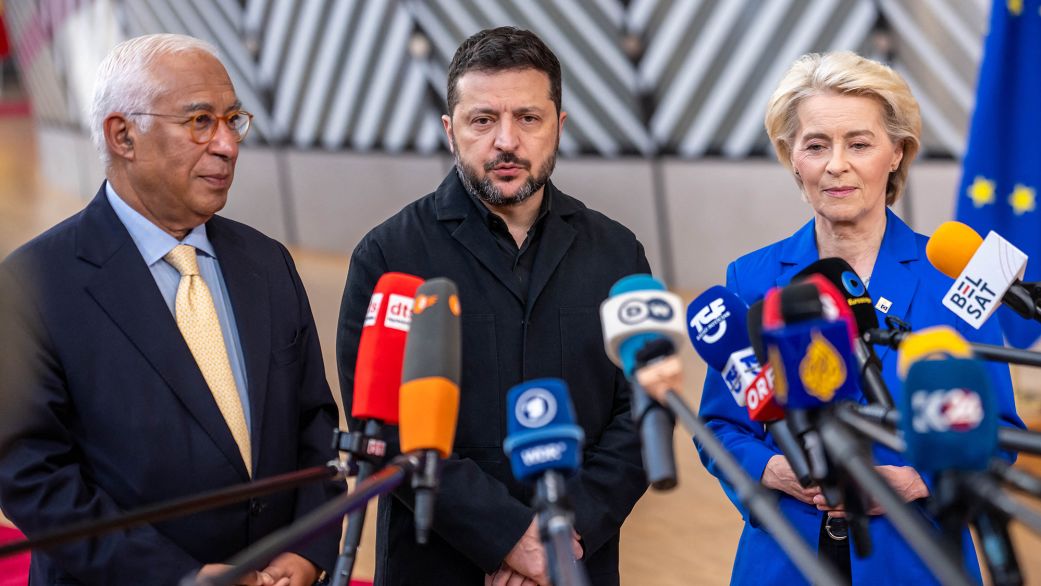
At the October 16 EU summit, Zelensky received strong backing from European governments, including Germany and France. Discussions focused on additional financial assistance, military supplies and maintaining Ukraine's ability to resist Russian attacks.
Zelensky requested another €70 billion for 2027, explaining that Ukraine's total war-related requirements could reach €155 billion next year.
This comes on top of existing European commitments, including a €90 billion EU support loan covering 2026 and 2027.
For European taxpayers, the figures raise increasingly important questions about long-term financing, public borrowing and reduction of social services.
EU governments argue that supporting Ukraine is essential for European security and preventing further Russian aggression. Critics question whether escalating expenditure without a clearer diplomatic settlement can remain sustainable.
However, it looks more and more that the so-called European security and preventing further Russian aggression is just an excuse for covering up political ambitions. The only reason Russia moved into the Donbass region, was the bombing of the region by Ukraine forces with EU and US support since the breakaway votes in May 2014. For 8 years Russia has asked and warned to stop the bombings.
Zelensky Threatens Europe of 20 Million Refugees
Perhaps the most striking statement came from Zelensky himself.
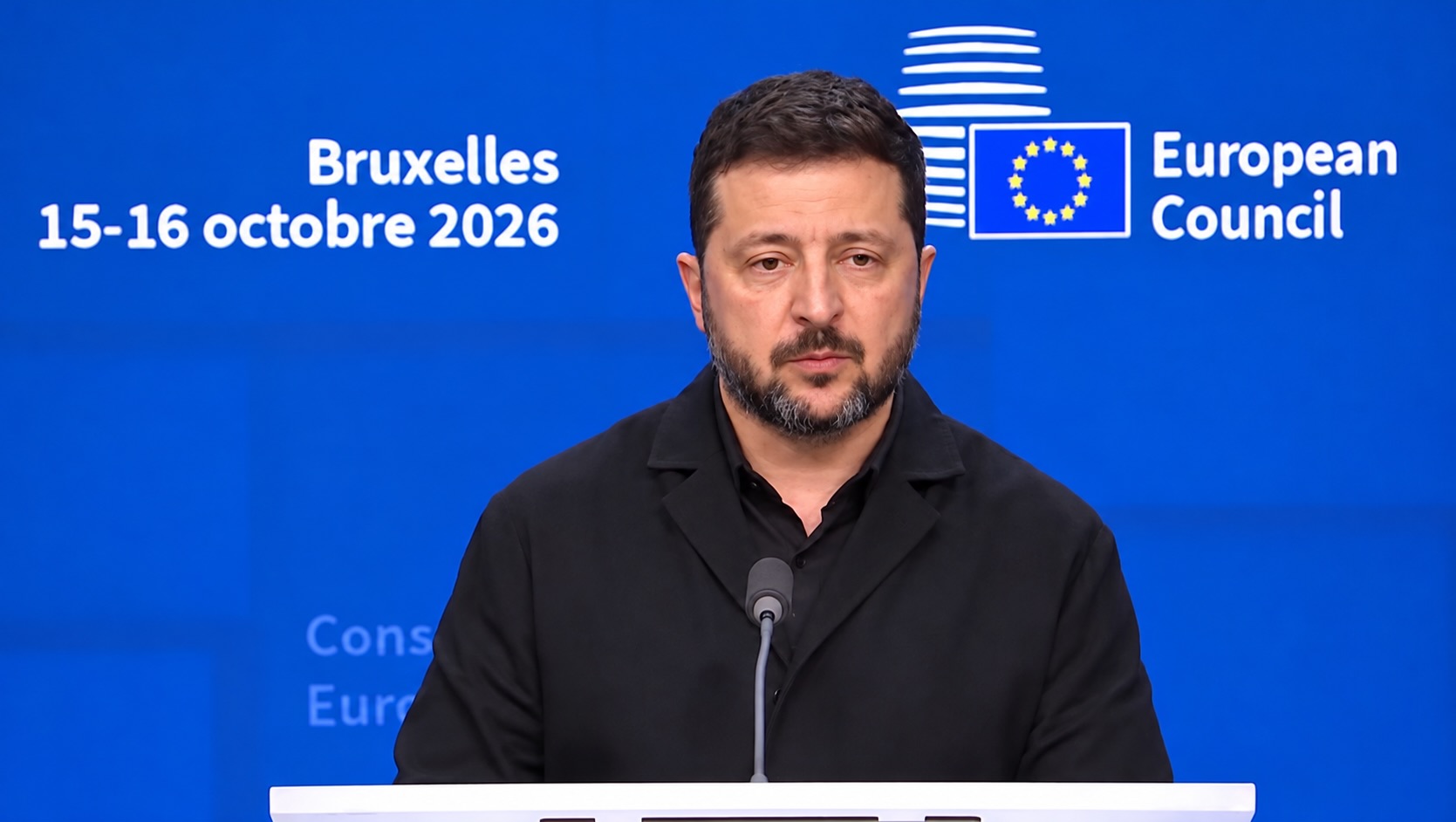
Speaking in Brussels on October 16, the Ukrainian president warned that a Ukrainian defeat could result in approximately 20 million people fleeing to Europe.
He argued that Russia could destroy Ukrainian communities and force millions to abandon their homes.

The threat came alongside his appeal for additional European assistance.
But the reality on the ground is, that people are happily moving back into areas freed by the Russian army. What Zelensky tries to let the EU believe is that everybody in the Ukraine is Ukrainian. All the eastern part of the Ukraine including Crimea is Russian speaking. After officially forbidding Russian language in schools, media and public life, despite his vows during election not to do so, the Donbass regions and Crimea voted in a referendum for independence from Ukraine.
Germany: AfD and BSW Win Parliamentary Vote
Meanwhile, a significant political development occurred in Germany.
On October 14, the regional parliament of Saxony-Anhalt approved a joint motion introduced by Alternative für Deutschland (AfD) and the Bündnis Sahra Wagenknecht (BSW).
The motion calls for an end to German assistance to Ukraine, the lifting of sanctions against Russia and a renewed diplomatic approach to ending the conflict.
Its approval represents an important parliamentary success for two parties that have repeatedly challenged Germany's Ukraine strategy.
However, foreign policy remains the responsibility of Germany's federal government. The regional resolution cannot itself terminate military assistance or sanctions.
The vote nevertheless demonstrates that opposition to Berlin's established position is no longer confined to parliamentary speeches and election campaigns.
Europe Faces an Increasingly Difficult Choice
These developments reveal three competing political approaches.
Trump is pressing for a negotiated settlement while openly challenging Zelensky's leadership. EU governments continue supporting Kyiv militarily and financially, arguing that concessions without credible security guarantees could invite further aggression. Meanwhile, AfD and BSW advocate ending assistance and sanctions in favour of renewed negotiations.
Russia's continued military success and Ukraine's consistent attacks on Russian refineries despite Trumps request not to do, remain fundamental obstacles to any agreement.
The central question is whether Europe can maintain its current strategy as American policy shifts, financial requirements increase and domestic political opposition becomes more visible.
With another €70 billion requested, a "threat" of 20 million potential refugees and Germany's regional parliamentary challenge, the debate is increasingly about more than Ukraine's battlefield situation.
It is also about, who finances it and what diplomatic conditions might finally bring the war to an end.