Yet only 7.86 million people lived there at the beginning of 2025, producing a density of 1.1 inhabitants per square kilometre, compared with Russia’s 8.5. Chukotka has only 0.1 person per square kilometre; Yakutia and Magadan about 0.3. There is no city with one million residents. Most people are concentrated in Vladivostok, Khabarovsk, Ulan-Ude, Chita and other southern centres. Indigenous peoples include the Sakha, Evenki, Even, Chukchi, Nanai and Nivkh.
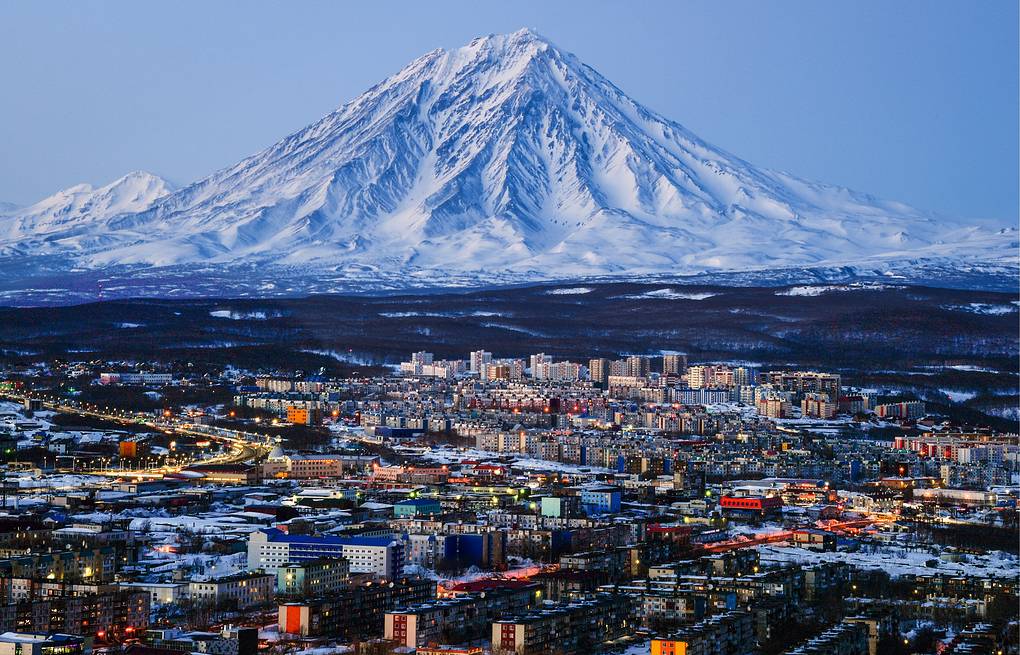
The region extends around 4,500 kilometers from the Arctic to latitudes comparable with northern Italy. It includes tundra, taiga, permafrost, river valleys, volcanic peninsulas and Pacific islands. Kamchatka has 29 active volcanoes, including Klyuchevskaya Sopka, Eurasia’s highest active volcano.
Official monitoring estimated 751–787 Amur tigers in Russia, including 200–210 cubs—a dramatic recovery from perhaps 30–40 animals in the 1940s. Adapted to severe winters, the tiger has dense fur and a layer of abdominal fat; a male’s territory may cover 800 square kilometres. In southwestern Primorye, camera traps recorded 129 adult Far Eastern leopards and at least 14 cubs. It remains the world’s rarest large cat, although its territory is expanding.
“This climatic range has created a major Eurasian wildlife refuge.”
EuroAsia.News
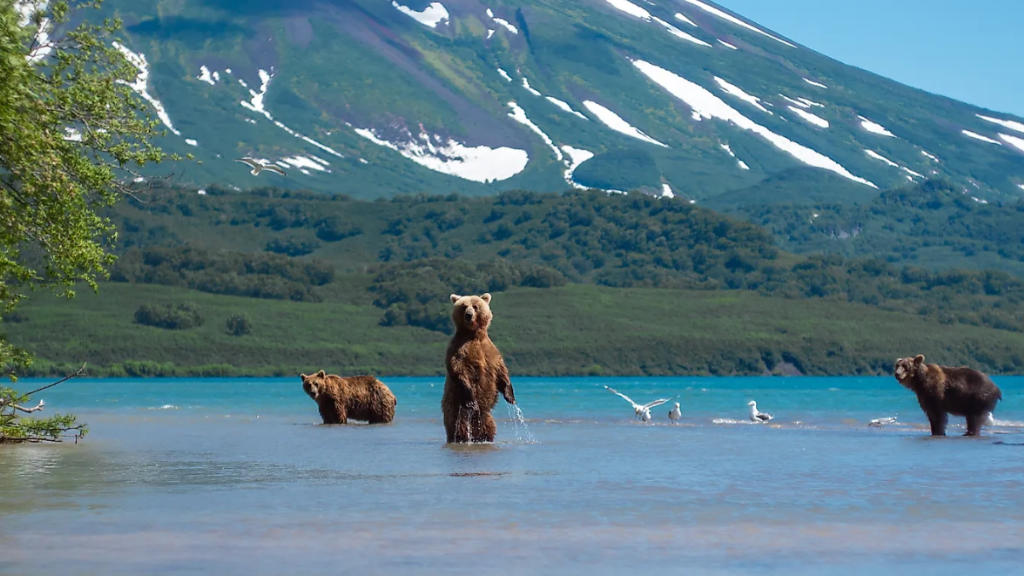
Kamchatka supports an estimated 25,000 brown bears, one of the largest concentrated wild populations on Earth. During salmon runs, bears gather beside rivers and lakes; fish remains carried into the forest transfer marine nutrients to the land. Offshore live gray and bowhead whales, orcas, walruses, sea otters and Steller sea lions. The Steller’s sea eagle—the region’s largest raptor—has a global population of no more than about 14,000. Hundreds gather at ice-free salmon waters around Kurile Lake in winter. Amur and Lake Khanka wetlands are important stops for cranes, geese and other migratory birds.
Counting the watercourses is difficult because inventories include countless streams and seasonal channels. Yakutia alone reports more than 700,000 rivers and streams and over 800,000 lakes. Khabarovsk Krai adds more than 210,000 rivers and 58,000 lakes. The Lena and Amur rank among the world’s great rivers, while the Kolyma, Indigirka, Yana, Aldan, Zeya and Ussuri provide transport, fishing and immense hydropower potential. Lake Baikal’s eastern shore lies within Buryatia, while Lake Khanka is shared by Russia and China.
Below the surface lies the Far East’s greatest economic attraction. The wider eastern region produces almost all Russia’s diamonds and tin, more than half its gold and holds major reserves of silver, copper, tungsten, coal, iron ore and rare metals. Yakutia is the centre of diamond mining, while Magadan, Chukotka, Khabarovsk and Amur are major gold provinces. Sakhalin holds oil and gas, and southern Yakutia enormous deposits of coking coal.
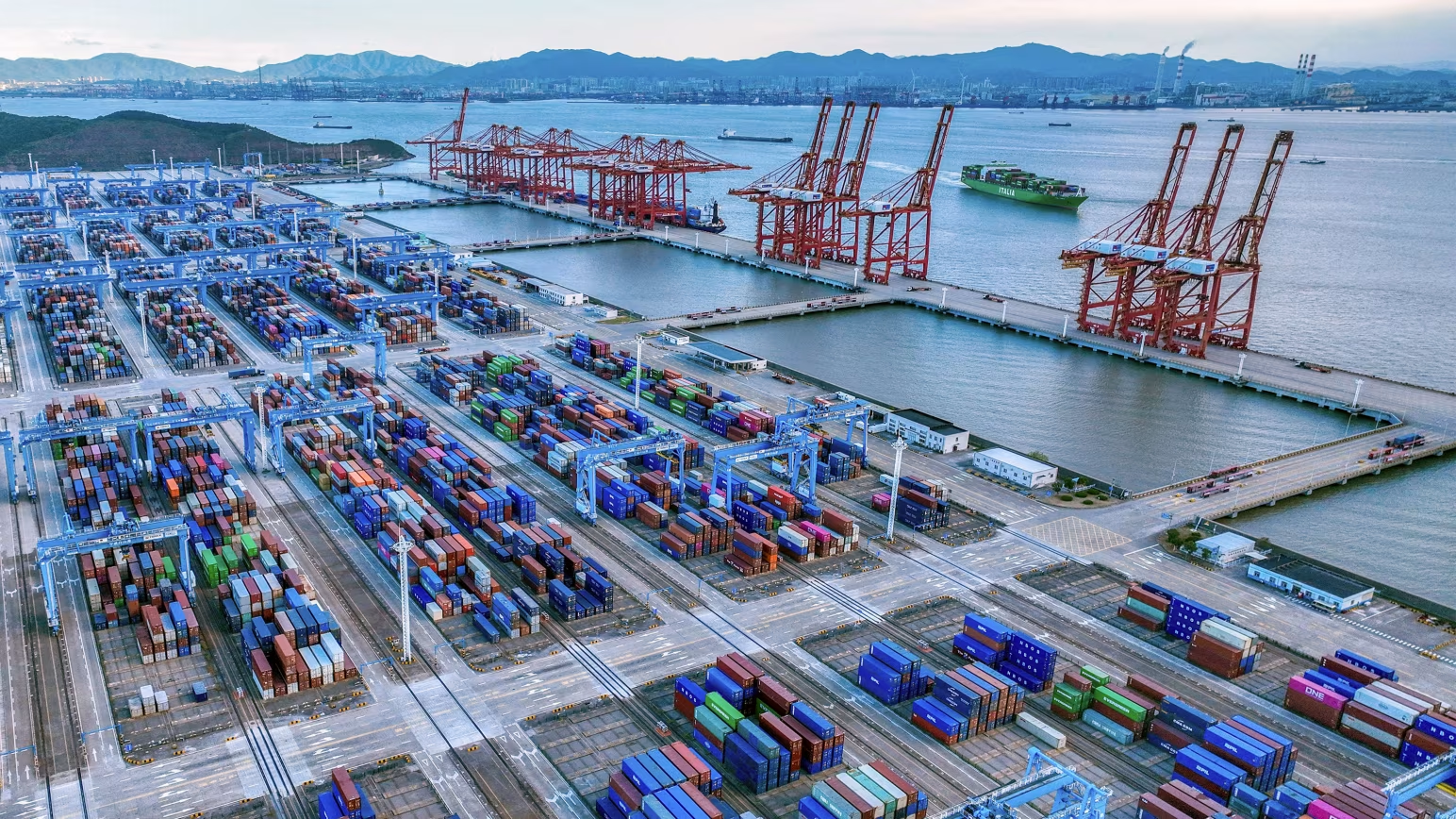
Resources are only part of the economy. The Far East produces more than 70% of Russia’s marine catch. Other industries include seafood processing, forestry, metallurgy, oil and gas, hydropower, aircraft manufacturing in Komsomolsk-on-Amur and shipbuilding near Vladivostok. Amur and Primorye grow soybeans and grain, while Pacific ports connect Russia with Asian markets.
Transport illustrates the challenge of living at this scale. More than 220 settlements across the eastern Arctic lack dependable year-round road access; for many, regional aircraft or helicopters provide the only regular passenger connection. Rivers, winter roads and coastal shipping remain essential for delivering fuel, food and construction materials.
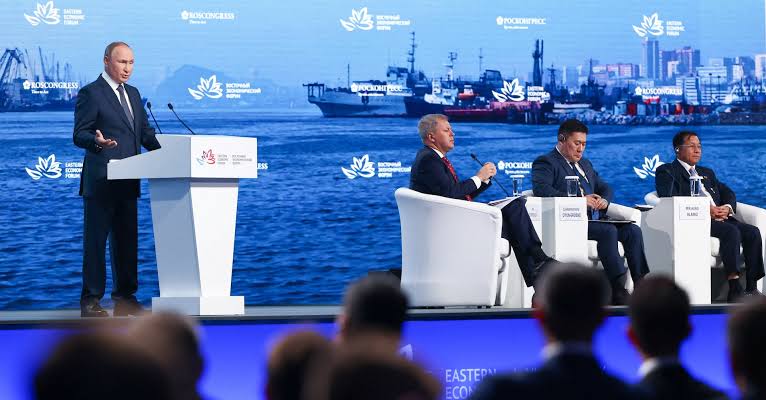
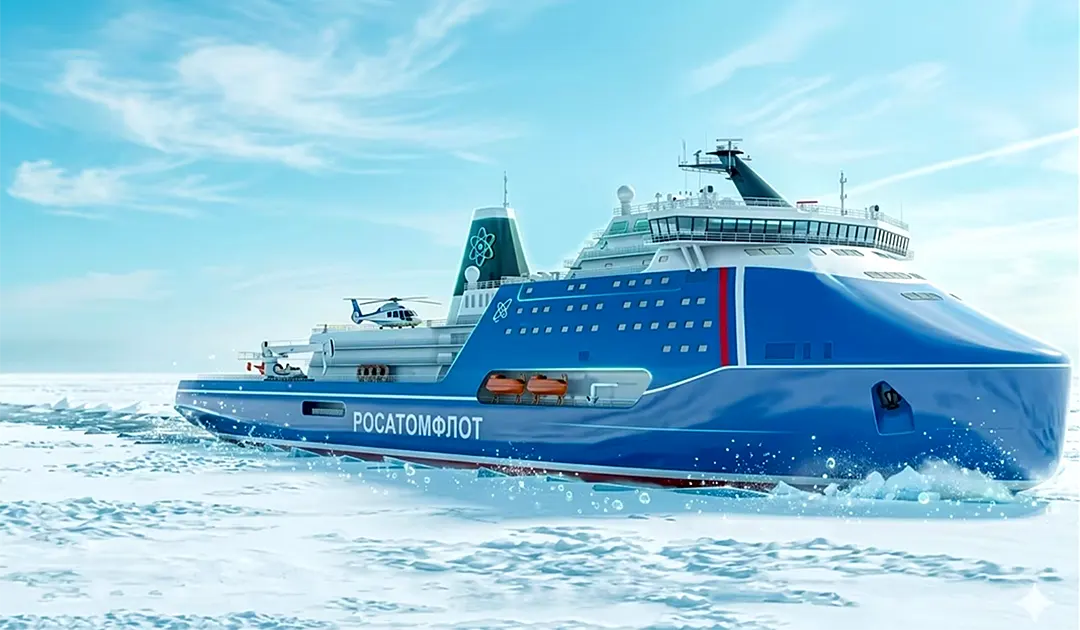
A new development phase is attempting to overcome distance, high costs, limited transport capacity and population decline. Priorities include expanding the Baikal-Amur and Trans-Siberian railways, Pacific ports and Northern Sea Route links, the Amur gas-processing complex, Vostochny Cosmodrome, new energy projects, and bridges to China. Master plans for 22 cities and urban areas contain 875 measures valued at more than RUB 4.4 trillion.
The Russian Far East’s paradox is its scale. It possesses land, water, energy, minerals, forests and access to the Asian economy—but too few people and too little infrastructure to exploit them easily. Its future depends not simply on extracting resources, but on building liveable cities, processing industries and reliable connections while protecting one of the planet’s last great wilderness regions.