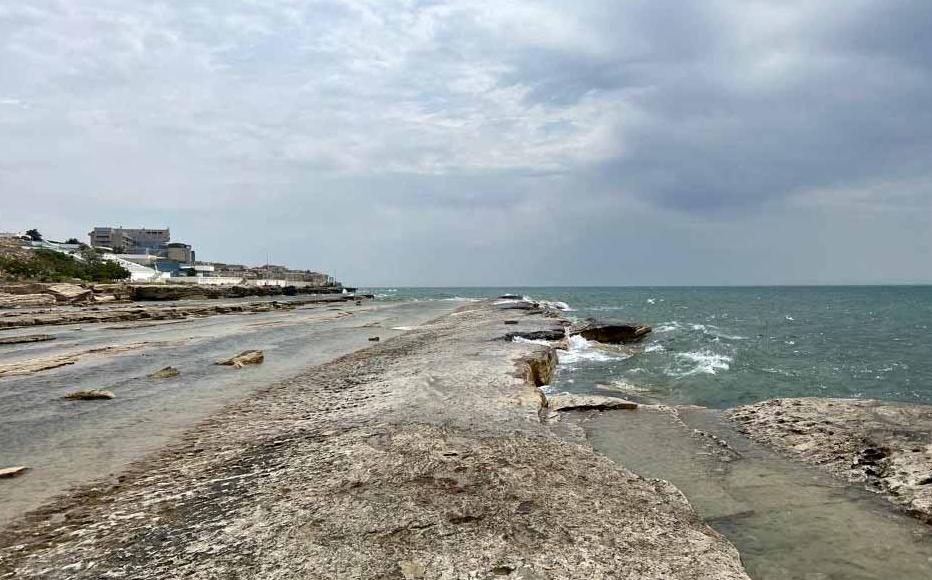
The Caspian Sea is retreating at an alarming rate. Water levels have fallen by approximately 2.5 meters over the past 30 years, including almost one meter since 2020. In its shallow northern basin, the shoreline has moved kilometers from former fishing communities and ports. Scientists now project a further decline of 9–21 meters by 2100 under medium- to high-emission scenarios.
Unlike an ocean, the Caspian has no outlet. Its level depends on the balance between river inflow, rainfall and evaporation. Rising temperatures are accelerating water loss, while dams, irrigation and industrial consumption reduce the volume arriving from the Volga, which provides roughly 80% of the sea’s inflow.
Ports and shipping routes are already requiring dredging. Fishing grounds and coastal wetlands are shrinking, while oil and gas infrastructure may be left far from the water. A ten-meter decline could eliminate most breeding areas of the endangered Caspian seal and destroy critical sturgeon habitats. Exposed seabed could create salt-and-dust storms similar to those that devastated communities surrounding the Aral Sea.
“The consequences will extend across Russia, Kazakhstan, Turkmenistan, Iran and Azerbaijan.”
EuroAsia.News Editorial, reporting from Baku
Yet the Aral also provides an unexpected reason for hope.
The wider Aral Sea was largely destroyed after the Soviet Union diverted the Syr Darya and Amu Darya rivers to irrigate cotton fields. Its southern basin remains severely degraded, but Kazakhstan has demonstrated that partial recovery is possible in the Northern Aral Sea.
The Kok-Aral Dam, completed in 2005 with World Bank support, prevents water entering the northern basin from escaping southward. Combined with improved management of the Syr Darya, it stabilised the lake’s volume at about 27.5 cubic kilometers. Between 2006 and 2020, its surface expanded from roughly 2,800 to 3,400 square kilometers, while salinity fell substantially. Fish returned, commercial catches recovered and some abandoned communities regained an economic future.
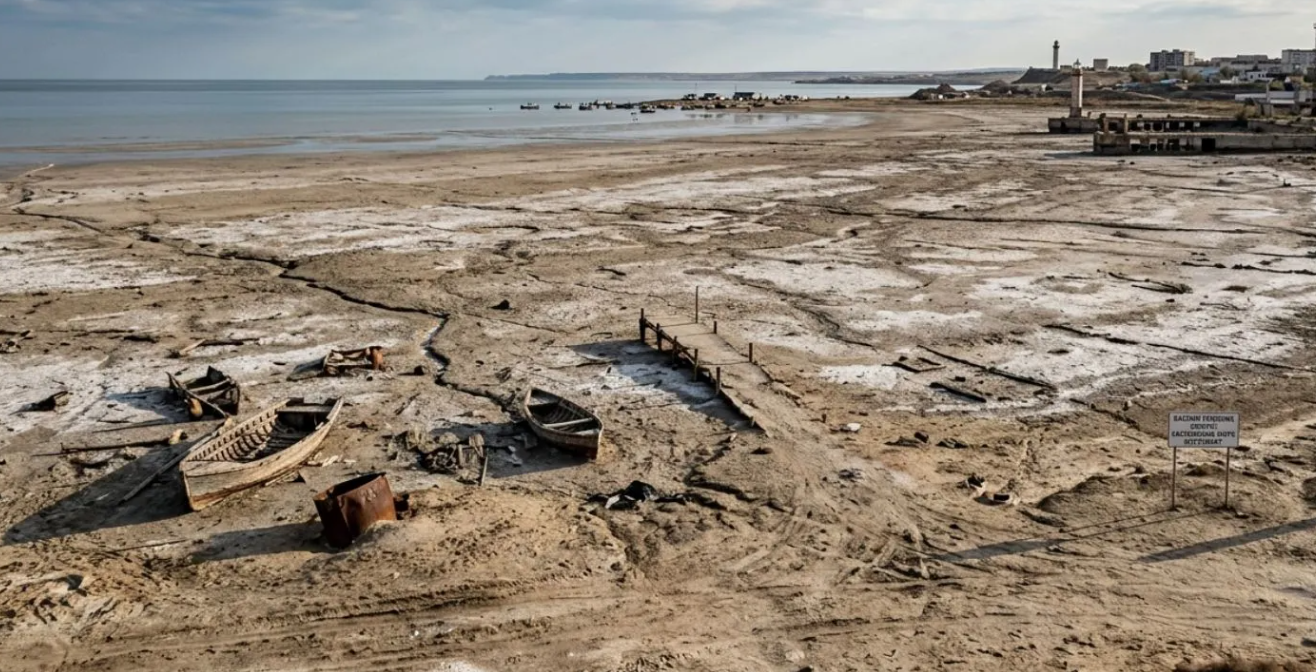
Restoration work is continuing. Since October 2025, Kazakhstan has channeled around 1.4 billion cubic meters of water into the Northern Aral. Authorities are preparing a second phase that could raise the Kok-Aral Dam, expand the water surface and restore additional wetlands and lake systems. Recent figures place the sea’s volume at 23.5 billion cubic meters, with salinity falling to 7.9 parts per thousand.
The comparison has limits. The Northern Aral is much smaller than the Caspian, and a dam cannot stop climate-driven evaporation across the world’s largest lake. Nor has the Aral Sea as a whole been restored. Nevertheless, Kazakhstan’s experience proves that environmental collapse is not always irreversible. Engineering, controlled river flows, efficient irrigation and long-term political commitment can raise water levels and rebuild ecosystems.
The five Caspian states are considering a regional monitoring framework, but measurement alone will not save the sea. They need binding cooperation on river management, water extraction, wetlands and climate adaptation. The Northern Aral shows what coordinated action can achieve. The disappearing Caspian shows the cost of waiting.