In the deserts of southern Oman, an experiment is being planned that could become far more important than another ambitious Gulf development. Al Najd Agricultural City in Dhofar is designed as a settlement where farming is not pushed to the outskirts but forms the economic and physical structure of the city itself.
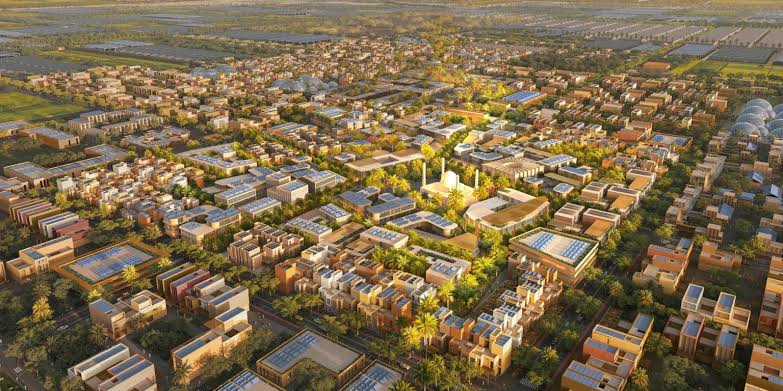
Foster + Partners, working with Dar Al-Handasah for Oman’s Ministry of Housing and Urban Planning and Ministry of Agriculture, Fisheries and Water Resources, has designed a 54-million-square-foot agricultural development on fertile land in the Al Najd region. The planned urban centre would accommodate around 13,000 residents and create approximately 6,500 jobs.
A compact centre is surrounded by agricultural plots ranging from about 10 to 200 hectares, while productive landscapes continue into parks, boulevards, courtyards and public spaces. Shaded pedestrian routes connect homes with schools, healthcare, shops, cultural and religious facilities and public transport.
“The concept reverses the conventional relationship between cities and agriculture.”
EuroAsia.News, reporting from Muscat
But the project's importance lies primarily in how it intends to produce food.
Planned crops include date palms, greenhouse vegetables such as tomatoes and industrial crops. Agriculture will be supported by shade structures, agrivoltaics, aquaponics and advanced irrigation, while processing facilities are intended to produce frozen and dried foods, oils, compost and fertilisers. Water would come from a combination of groundwater, runoff collected from nearby mountains through dams and desalinated seawater, with monitoring systems designed to minimise consumption.
Earlier planning work also examined vertical farming, hydroponics, aquaponics and AI-assisted agriculture, together with agricultural education, research and agri-tourism. The objective is therefore not merely to grow crops but to create an entire agricultural value chain—from cultivation and research to processing, employment and distribution.
That makes Al Najd particularly relevant in the age of climate change.
The Middle East and North Africa is already the world's most water-stressed region; according to FAO material, 14 of the world's 17 most water-stressed countries were located there. Oman itself faces water depletion, soil salinisation, desertification and increasing climate vulnerability. Its national Sustainable Agriculture and Rural Development Strategy identifies climate change and severe natural-resource scarcity as fundamental threats to the country's agricultural future.
Traditional agriculture in extremely dry regions therefore cannot simply be expanded indefinitely. More fields can mean more groundwater extraction, greater salinity and eventually declining productivity. Future food security depends instead on producing substantially more food from every litre of water and every hectare of suitable land.
Other Gulf states are moving in the same direction. In Saudi Arabia, NEOM's food programme is developing climate-resilient agriculture, aquaculture, water recycling and controlled production systems. NEOM itself notes that agriculture currently accounts for around 80 percent of Saudi freshwater consumption, illustrating why conventional desert farming cannot provide a sustainable long-term solution.
The UAE has meanwhile become an important testing ground for controlled-environment agriculture. Companies such as Pure Harvest have demonstrated that tomatoes and other vegetables can be produced commercially in high-tech greenhouses even where outside temperatures can exceed 45°C. Vertical farms, hydroponics and desalination-powered agriculture are increasingly being investigated across the Gulf precisely because dependence on imported fresh food represents both an economic and strategic vulnerability.
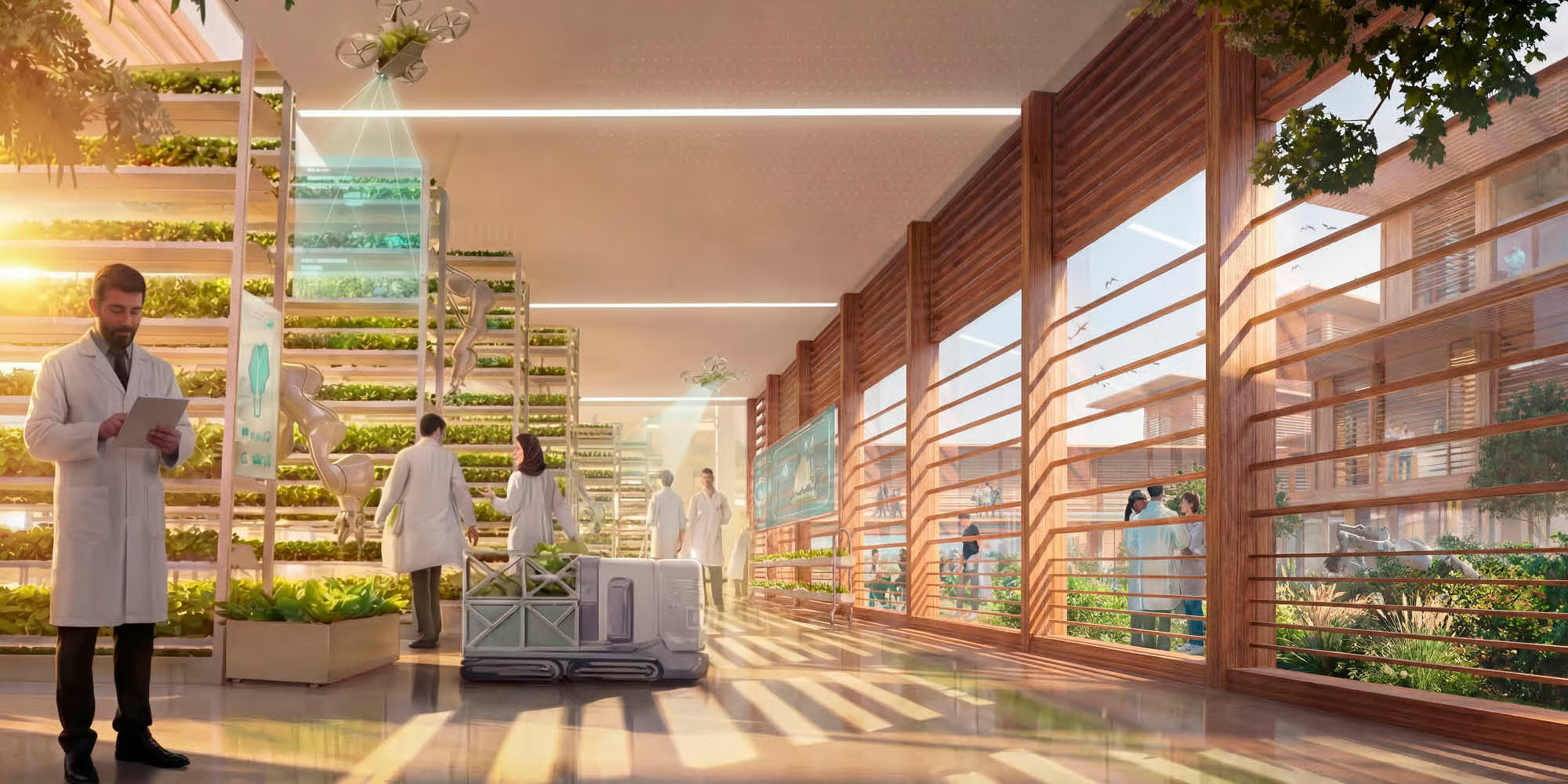
Al Najd, however, attempts something larger: combining these technologies with an actual community.
This is important because climate adaptation cannot ultimately consist of isolated greenhouses surrounded by conventional urban development. Food production requires energy, water, logistics, workers, processing facilities, storage and markets. Integrating these systems from the beginning could allow agricultural waste to become compost, renewable electricity to power irrigation and cooling, treated water to be reused and food to be processed close to where it is grown.
The project is consequently also part of Oman's economic diversification strategy. The country's SARDS 2040 programme explicitly calls for agriculture that is not only environmentally sustainable but commercially competitive, capable of generating employment and strengthening rural communities.
There are nevertheless limits to the model. Desalination requires considerable energy, controlled-environment agriculture can be expensive, and hydroponics or vertical farming are far better suited to vegetables and high-value crops than to staples such as wheat or rice. Agricultural cities will therefore not eliminate food imports.
Their strategic value is different.
As climate change brings hotter temperatures, irregular rainfall, drought and increasing pressure on agricultural land, countries will need more resilient local production alongside international trade. Al Najd represents an attempt to design that resilience deliberately rather than waiting for shortages to force change.
If successful, the project could become a model not only for Oman but for arid regions stretching from North Africa through the Gulf to Central Asia. The central question is no longer whether farming can survive in a harsher climate.
It is whether cities themselves can be redesigned around the food, water and energy systems required to survive it.