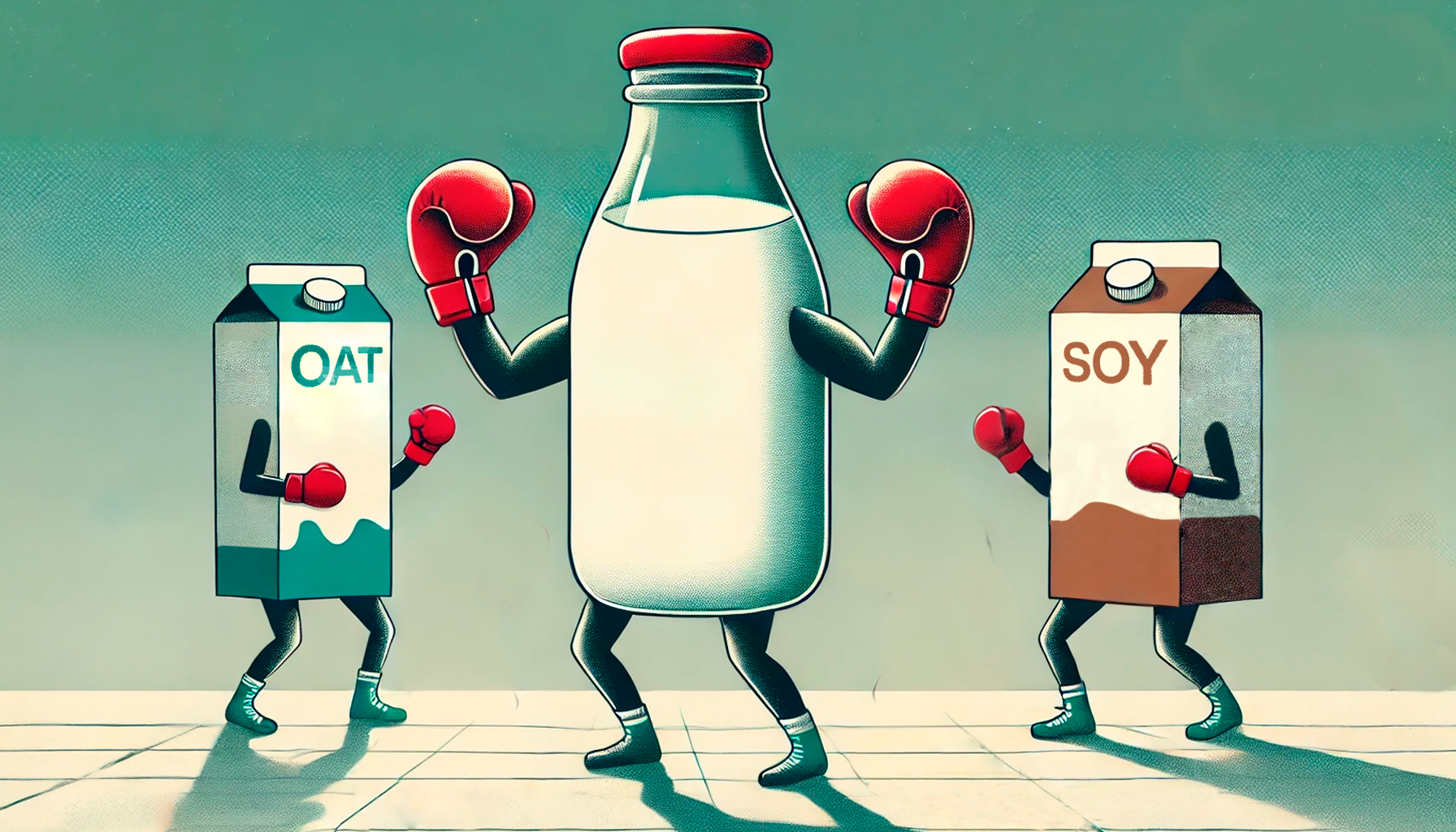
In the United States, retail sales of plant-based milk fell about 6% in 2025, while dairy increased its share of the combined milk-and-alternative market for a fourth consecutive year. NielsenIQ has also reported falling sales for almond, oat and soy drinks, while lactose-free dairy has become one of the strongest-growing parts of the category. Price matters, but it is not the whole story. Consumers are increasingly looking at what is actually inside the carton.
Cow’s milk is naturally nutrient-dense. It provides complete protein as well as calcium, phosphorus, potassium, iodine, riboflavin and vitamin B12. Its casein and whey proteins also contain the full range of essential amino acids.
Oats, almonds or rice do not naturally produce a liquid nutritionally comparable with milk. Manufacturers grind plant material with water and frequently add oils, stabilisers, emulsifiers, vitamins and minerals to reproduce the texture and nutritional characteristics consumers expect.
“Plant drinks are different products.”
EuroAsia.News, reporting from London
That does not automatically make plant drinks unhealthy.
But their nutritional quality varies considerably.
A major 2025 assessment by Britain’s Scientific Advisory Committee on Nutrition and Committee on Toxicity concluded that none of the almond, oat or soy drinks assessed was nutritionally equivalent to cow’s milk. Almond and oat drinks generally contain considerably less protein; soy comes much closer. Fortification can add calcium, vitamin B12, vitamin D and other micronutrients, but the committees also noted uncertainty over whether added nutrients are absorbed as effectively as those naturally present in milk.
Iodine is a particularly important example. Cow’s milk is one of the main iodine sources in Britain, yet many plant alternatives contain very little unless manufacturers deliberately fortify them. Research modelling dairy replacement found that unfortified alternatives could provide only a fraction of the iodine found in milk. Another UK study using supermarket purchasing data found that 83% of people switching from milk to alternatives reduced their purchases of iodine, calcium and vitamin B12.
Those differences matter. Iodine is essential for thyroid function, while calcium, protein and other micronutrients contribute to bone, muscle and metabolic health.
Protein quality differs as well. A 2024 digestion study comparing cow’s milk with soy, oat and almond drinks found milk protein to have the highest overall digestibility. Oat was relatively limited in lysine, while almond was particularly weak in several essential amino acids. For an adult eating a varied diet this can easily be compensated for. For children, older people or anyone relying heavily on a single milk substitute, it becomes more relevant.
Then comes the increasingly controversial issue of ultra-processed food.
Most commercial plant drinks meet the NOVA definition of ultra-processed food. Because particles of oats, nuts and vegetable oils do not naturally remain suspended in water, manufacturers may use emulsifiers, gums and stabilisers to prevent separation and improve shelf life.
High overall consumption of ultra-processed foods has repeatedly been associated with poorer cardiovascular, metabolic and some gastrointestinal outcomes. Research into particular emulsifiers is also beginning to suggest effects on the gut microbiome, intestinal permeability and short-chain fatty-acid production. Human evidence remains limited, however, and researchers caution against assuming that every additive or every ultra-processed product produces the same effect.
It would therefore go too far to claim that drinking oat or almond milk inevitably causes digestive problems. Soy milk, for example, has shown favourable effects on LDL cholesterol and several cardiovascular risk markers in controlled trials. Cow’s milk itself can cause bloating, diarrhoea and abdominal discomfort in people with lactose intolerance.
What is changing is the assumption that “plant-based” automatically means “healthier.”
Consumers are increasingly distinguishing between eating whole plants and consuming a manufactured drink made from them.
Dairy has adapted as well. Lactose-free milk removes one of dairy’s biggest disadvantages while retaining most of its natural protein and micronutrient profile. In Britain, farm-gate milk prices in July 2026 were 20% below a year earlier, although supermarket prices have not fallen nearly as quickly.
Plant alternatives will not disappear. They remain important for vegans, people with milk allergy, consumers who prefer their taste and those concerned about dairy’s environmental footprint.
But the market is becoming more mature.
The question is no longer simply “dairy or plant-based?”
It is increasingly: What nutrients are actually in the product, how much processing was required to put them there, and what does the rest of the diet provide?
For a growing number of consumers, that closer examination is bringing the cow back into the conversation.